What Causes Leg Cramps at Night? Deficiencies & Prevention
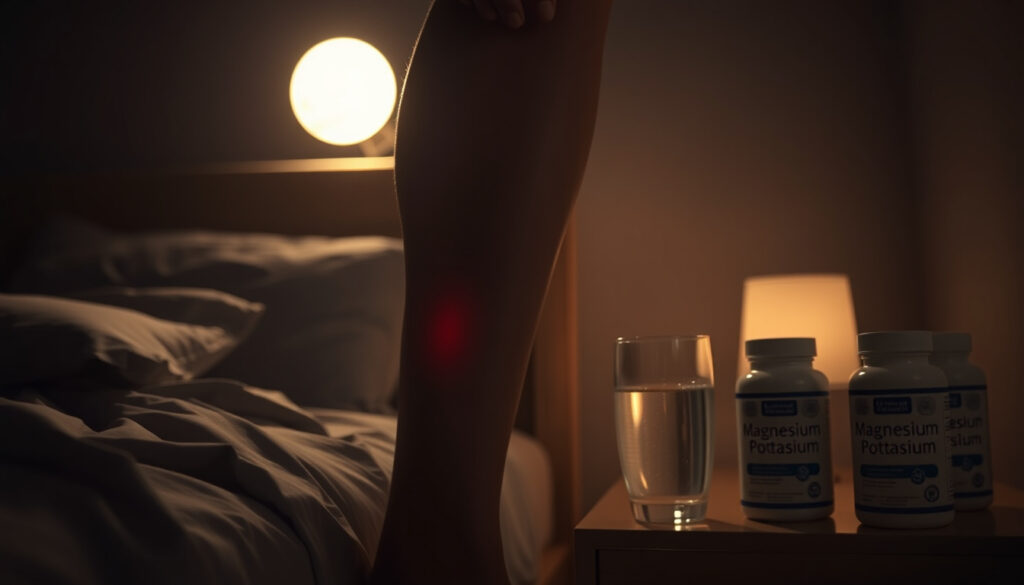
You’re asleep, sound and still, when suddenly your calf muscle seizes up like a fist. That sharp, unmistakable pain jolts you awake — and you’re not alone. Night leg cramps are one of the most common sleep disruptions, and while they often pass quickly, the question of what causes them can linger long after the muscle relaxes. We’ll walk through the evidence behind the usual suspects — from vitamin gaps to hidden conditions — and what you can actually do about it.
Adults affected by nocturnal leg cramps: Up to 60% of adults · Women affected more often than men: Yes · Risk increases with age: Over 50: >50% occurrence · Commonly linked to electrolyte imbalance: Magnesium, potassium, calcium
Quick snapshot
- Dehydration and electrolyte imbalance can trigger nocturnal leg cramps (Healthline (consumer health resource)).
- Muscle fatigue from prolonged sitting or standing is a risk factor (Cleveland Clinic (U.S. nonprofit medical center)).
- Certain medications (diuretics, statins) are associated with cramps (NHS (UK national health authority)).
- The exact mechanism of idiopathic nocturnal leg cramps remains unknown (American Family Physician (peer-reviewed journal)).
- The role of vitamin D deficiency is debated without strong evidence. (American Family Physician (peer-reviewed journal))
- Effectiveness of many home remedies (e.g., pickle juice) lacks rigorous trials. (American Family Physician (peer-reviewed journal))
- Cramps usually last a few seconds to minutes (Mayo Clinic (leading U.S. medical center)).
- Most cases resolve without treatment, but recurrence is common. (Mayo Clinic (leading U.S. medical center))
- Stretch calf and hamstring muscles before bed (Healthline (consumer health resource)).
- Stay hydrated and balance electrolytes (Sleep Foundation (sleep health nonprofit)).
- See a doctor if cramps are accompanied by swelling, redness, or warmth. (Healthline (consumer health resource))
Five key facts about nocturnal leg cramps, one pattern: most cramps are brief and benign, but the underlying causes vary widely from simple dehydration to serious medical conditions.
| Fact | Value |
|---|---|
| Prevalence | Up to 60% of adults experience nocturnal leg cramps. |
| Age factor | Risk increases significantly after age 50. |
| Gender difference | Women report more frequent attacks than men. |
| Common trigger | Mild dehydration or electrolyte imbalance. |
| Duration | Cramps usually last a few seconds to minutes. |
What is the body lacking when you have leg cramps?
Electrolyte and vitamin deficiencies are often the first suspects when leg cramps strike at night. But the evidence is more nuanced than a simple “take magnesium” fix.
What vitamin deficiency causes leg cramps?
- Magnesium deficiency is a commonly cited contributor. Harvard Health (university-affiliated health publication) notes that low magnesium or potassium can impair muscle relaxation.
- GoodRx (digital health platform) points out that deficiencies in vitamin D, vitamin B1, and vitamin B12 may also contribute, especially when deficiency is significant.
- Small studies suggest B12 deficiency can cause muscle cramps, though the evidence is not definitive (GoodRx (digital health platform)).
What minerals are essential for muscle function?
- WebMD (consumer health publisher) states that low levels of sodium, potassium, calcium, and magnesium may be associated with leg cramps.
- Dehydration worsens electrolyte depletion, making cramps more likely (Sleep Foundation (sleep health nonprofit)).
Despite the hype, the evidence base does not strongly support routine mineral supplementation as a universal fix for nocturnal leg cramps (Medical News Today (health news outlet)). Targeted supplementation only helps if a true deficiency exists.
The implication: a blood test to check magnesium, potassium, vitamin D, and B12 is more useful than guessing with supplements.
What disease starts with leg cramps?
Sometimes leg cramps are a symptom of a deeper problem. Several medical conditions can trigger or mimic nocturnal leg cramps.
What medical conditions cause nocturnal leg cramps?
- Peripheral artery disease (PAD) can cause leg cramps during activity and at night. The NHS (UK national health authority) lists circulation problems as a possible cause.
- Diabetes-related nerve damage (neuropathy) is a known cause. Cleveland Clinic (U.S. nonprofit medical center) includes diabetic nerve damage in its list of contributors.
- Kidney failure and cirrhosis can lead to electrolyte disturbances and cramps (NHS (UK national health authority)).
- Thyroid disorders and Parkinson’s disease have been associated with leg cramps, per Women’s Health (consumer magazine).
Can peripheral artery disease trigger leg cramps?
Yes — PAD cramps often occur during walking but can also strike at night. The narrowing of arteries reduces blood flow to leg muscles, causing pain and cramping. Harvard Health (university-affiliated health publication) notes that circulation issues are a less common but serious cause.
If cramps are accompanied by leg pain when walking, skin changes, or hair loss on the legs, PAD screening is warranted. Ignoring it can lead to more severe complications.
The pattern: while many cramps are benign, persistent cramps with vascular or metabolic red flags deserve a medical workup.
How do I stop my legs from cramping at night?
Prevention is the name of the game. Here are the steps with the strongest evidence.
What stretches help prevent leg cramps?
- Stretching the calf and hamstring muscles before bed reduces cramp frequency. Healthline (consumer health resource) recommends this as a first-line home remedy.
- Mayo Clinic (leading U.S. medical center) suggests stretching leg muscles or riding a stationary bicycle for a few minutes before bedtime (source).
- Cleveland Clinic (U.S. nonprofit medical center) adds that daily leg exercise and brief walking or biking before bed can help.
When should I use heat or ice?
- Applying a warm towel or heating pad can relax tight muscles during a cramp (Healthline (consumer health resource)).
- Ice massage may help if the muscle is sore afterward.
- Hydration throughout the day is crucial — Sleep Foundation (sleep health nonprofit) notes that consistent hydration may reduce cramp frequency.
- Stretch calf and hamstring muscles before bed.
- Stay hydrated throughout the day, especially in the evening.
- Limit alcohol and caffeine, which can dehydrate.
- Exercise legs daily with walking or cycling.
- Review medications with a doctor if cramps persist.
If you experience chest pain on the left side alongside leg cramps, check our guide on chest pain for warning signs — but for cramps alone, start with stretching and hydration.
For the average person, the most effective prevention is a pre-bed stretching routine and staying well-hydrated. Supplements should only be considered after a confirmed deficiency.
The trade-off: simple measures work for most, but if cramps persist despite these steps, look deeper — medication side effects or an underlying condition may be at play.
What can I drink before bed to prevent leg cramps?
Drinks are a popular home remedy, but not all are equally effective or safe.
Is tonic water effective for leg cramps?
Tonic water contains quinine, which has been shown to reduce cramps in some studies. However, the NHS (UK national health authority) warns that quinine can cause serious side effects, and the FDA advises against its use for cramps due to risk of bleeding and heart rhythm problems.
What about pickle juice or cherry juice?
- Pickle juice is a popular folk remedy. Some evidence suggests it may shorten cramp duration by triggering a nerve reflex, but Medical News Today (health news outlet) points out that rigorous trials are lacking.
- Cherry juice is rich in antioxidants and anti-inflammatory compounds, but evidence for cramps is limited.
- Electrolyte drinks containing sodium, potassium, and magnesium can help after heavy sweating (WebMD (consumer health publisher)).
What this means: water is the safest and most effective drink. Electrolyte drinks are useful after exercise, but tonic water and pickle juice should be approached with caution.
When to worry about leg cramps at night?
Most cramps are harmless, but certain signs demand attention.
What are the red flags for deep vein thrombosis?
- Seek medical attention if cramps are accompanied by swelling, redness, or warmth in one leg. Mayo Clinic (leading U.S. medical center) warns that these symptoms could indicate a blood clot (DVT).
- Sudden severe pain with leg swelling is a medical emergency.
When should I see a doctor?
- Cramps that persist despite self-care or interfere with sleep warrant evaluation (NHS (UK national health authority)).
- Underlying causes like medication side effects (e.g., statins, diuretics) or metabolic disorders should be ruled out (Cleveland Clinic (U.S. nonprofit medical center)).
- A doctor can check for deficiencies, nerve issues, or circulation problems.
The catch: ignoring red flags can delay diagnosis of serious conditions like PAD or DVT. If cramps come with any of the above, don’t brush them off.
Confirmed facts vs. what’s unclear
Confirmed facts
- Dehydration and electrolyte imbalance can trigger nocturnal leg cramps (Healthline (consumer health resource)).
- Muscle fatigue from prolonged sitting or standing is a risk factor (Cleveland Clinic (U.S. nonprofit medical center)).
- Certain medications (diuretics, statins) are associated with cramps (NHS (UK national health authority)).
What’s unclear
- The exact mechanism of idiopathic nocturnal leg cramps remains unknown (American Family Physician (peer-reviewed journal)).
- The role of vitamin D deficiency is debated without strong evidence.
- Effectiveness of many home remedies (e.g., pickle juice) lacks rigorous trials.
“Most of the time, there’s no known cause for night leg cramps. In general, they’re likely the result of tired muscles and nerve issues.”
— Cleveland Clinic (U.S. nonprofit medical center)
“Night leg cramps often occur for no apparent reason, but factors like poor posture, prolonged sitting, and dehydration may contribute.”
— Mayo Clinic (leading U.S. medical center)
For most people, nocturnal leg cramps are a nuisance, not a crisis. But the evidence is clear: what you eat, how you move, and what you take matters. Looking for energy-boosting nutrition? Our guide on what to eat for energy covers vitamins and minerals that fuel your body and may also help with muscle function.
For the person waking up night after night with a clenched calf, the takeaway is straightforward: start with stretching and hydration, check your medication list, and see a doctor if cramps persist or come with swelling. The alternative — ignoring the clues — risks missing a treatable underlying condition.
Frequently asked questions
Can leg cramps be a sign of pregnancy?
Yes, leg cramps are common during pregnancy, especially in the second and third trimesters. The exact cause is unclear but may involve changes in circulation, electrolyte balance, and pressure on nerves.
Do leg cramps occur more often in winter?
Some people report more cramps in cold weather, but there is no strong evidence linking temperature to nocturnal leg cramps. Dehydration in winter due to indoor heating may be a factor.
Are leg cramps common in athletes?
Yes, athletes frequently experience exercise-associated muscle cramps, often due to dehydration and electrolyte loss. Night cramps may also occur after intense training.
Can certain medications cause leg cramps?
Yes, diuretics, statins, and some blood pressure medications are associated with leg cramps. The NHS (UK national health authority) advises reviewing medications with a doctor if cramps are frequent.
Is there a link between leg cramps and sleep apnea?
Some studies suggest a correlation, but a direct causal link is not established. Sleep apnea may contribute to muscle cramps through oxygen desaturation or disrupted sleep.
How long do nocturnal leg cramps typically last?
Most cramps last from a few seconds to a few minutes. Prolonged cramps lasting more than 10 minutes are less common and may need medical evaluation.
Can stretching during the day prevent nighttime cramps?
Yes, Healthline (consumer health resource) and Mayo Clinic (leading U.S. medical center) both recommend regular stretching, especially of the calf and hamstring muscles, as a preventive measure.
More related posts
 Head Hunters Motorcycle Club: History, Facts, and Patch Meanings
 When Does Lent End? 2026 Dates for Catholic & Orthodox
 Compare Car Insurance in NZ: Best, Cheapest & How to Save
 Best Hair Curlers 2026: 10 Expert-Tested & Reviewed
 Christmas Crafts for Kids: 75+ Easy Ideas & Fun Projects
 Best App for Stocks: Top 5 Trading Platforms Compared
 Five Stages of Grief: Full Guide to the Kübler-Ross Model
 Pak’nSave Guide: Online Shopping, Specials & Locations