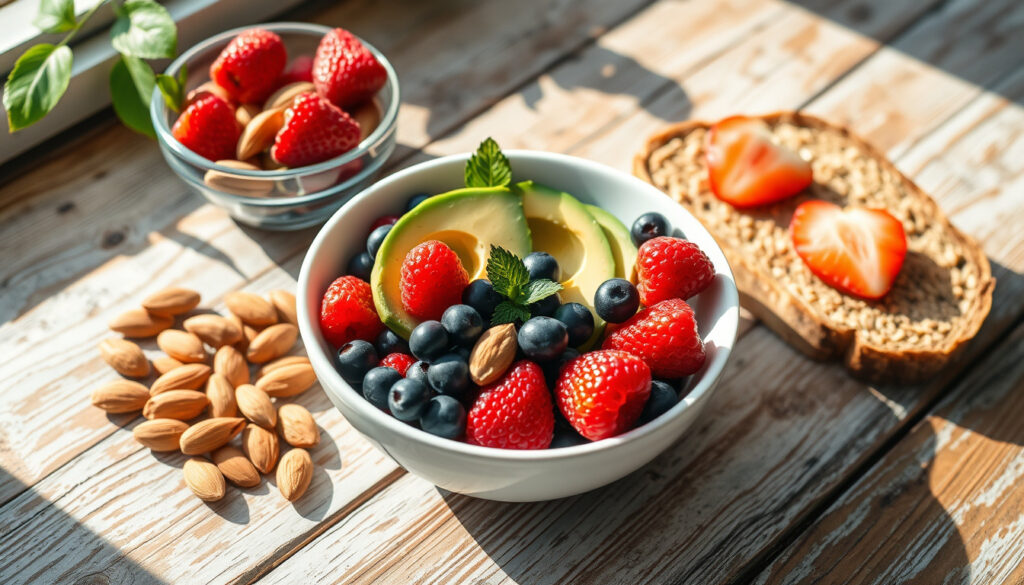
What to Eat for Energy: Best Foods for Vitality and Stamina
You know that mid-afternoon slump when your energy drops and you reach for anything sugary? The right foods can keep you going strong all day, and this evidence-backed guide reveals exactly which foods to choose and which to avoid for steady vitality.
Calories per gram of fat: 9 kcal ·
Calories per gram of carbohydrates: 4 kcal ·
Medium banana (100g) energy: 105 kcal ·
Almonds (100g) energy: 579 kcal ·
Daily energy intake recommendation (adult): 2000–2500 kcal
Quick snapshot
- Oats, quinoa, brown rice provide steady energy from complex carbs. (Health Service Executive (Ireland) (national health authority))
- Bananas, apples, oranges offer quick energy with vitamins. (PMC / Essentials of Healthy Eating (peer-reviewed medical journal))
- Almonds, walnuts, chia seeds pack calories and healthy fats. (Abbott Newsroom (global healthcare company))
- Chicken, fish, eggs, avocado supply protein and healthy fats for satiety and sustained energy. (Health Service Executive (Ireland) (national health authority))
Six key facts show how different macronutrients and foods stack up for energy density.
| Label | Value |
|---|---|
| Calories per gram of fat | 9 kcal |
| Calories per gram of carbs | 4 kcal |
| Calories per gram of protein | 4 kcal |
| Recommended daily energy intake (adult) | 2000–2500 kcal |
| Banana (100g) energy | 105 kcal |
| Almonds (100g) energy | 579 kcal |
What is the food that gives the most energy?
Which foods are highest in calories and energy density?
- Nuts, seeds, and avocados are calorie-dense, with almonds providing 579 kcal per 100g. (Abbott Newsroom (global healthcare company))
- Complex carbs like oats and quinoa provide sustained energy through slow digestion. (Health Service Executive (Ireland) (national health authority))
How do carbohydrates, proteins, and fats compare for energy?
- Fats contain 9 kcal per gram, the most per gram of any macronutrient. Carbohydrates and proteins each provide 4 kcal per gram. The WHO recommends limiting total fat to 30% or less of daily energy intake to prevent unhealthy weight gain. (World Health Organization (UN health authority))
Calorie-dense foods like nuts give quick energy, but portion control matters: just 30g of almonds (roughly 170 kcal) is a smart snack, not a full meal. Pair them with complex carbs to avoid a short-lived spike.
The implication: No single food is the ultimate energy source. The best approach is combining macronutrients for a steady release, not just a high calorie count.
What to eat for immediate energy?
Which foods provide quick energy for athletes?
- Bananas and honey are sources of simple carbs for quick energy. (Health Service Executive (Ireland) (national health authority))
- Dried fruits like dates offer rapid glucose and are popular among athletes. (PMC / Essentials of Healthy Eating (peer-reviewed medical journal))
How to use simple sugars for instant boost
- Caffeine can provide short-term alertness; green tea is a moderate source. (Mayo Clinic (academic medical center))
- However, high-sugar foods can cause energy crashes. The WHO notes that choosing nutrient-dense foods over sugary snacks supports steady energy. (World Health Organization (UN health authority))
Simple sugars give a fast spike but often lead to a crash within an hour. For lasting performance, athletes pair simple carbs with protein or fat, like a banana with almond butter.
What this means: For immediate energy, reach for fruit or a small portion of dried fruit, but don’t rely on sugar alone. Combine with a bit of protein to smooth out the curve.
What to eat to never feel tired?
What are the best foods for sustained energy throughout the day?
- Iron-rich foods (lean meat, spinach, legumes) prevent anemia-related fatigue. (Health Service Executive (Ireland) (national health authority))
- B vitamins in whole grains and eggs aid energy metabolism. (Abbott Newsroom (global healthcare company))
- Complex carbs from whole grains, beans, and vegetables provide steady glucose release. (PMC / Essentials of Healthy Eating (peer-reviewed medical journal))
How to combine macro and micronutrients to prevent fatigue
- The NHS Eatwell Guide recommends basing meals on starchy carbohydrates, with plenty of fruits and vegetables, and including protein sources. (NHS (UK national health service))
- Low-glycemic index foods – GI ≤ 55 – are digested slowly, causing a smaller rise in blood sugar and fewer energy dips. (Harvard T.H. Chan School of Public Health (academic nutrition research institute))
The pattern: No single food eliminates tiredness. A consistent intake of iron, B vitamins, and low-GI carbohydrates throughout the day is the most reliable strategy.
How to get rid of tiredness immediately?
What immediate dietary interventions help when feeling tired?
- Hydration and a small snack with protein and carbs can help restore energy quickly. Green tea provides moderate caffeine and L-theanine for alertness without a jittery crash. (Mayo Clinic (academic medical center))
Are supplements like B12 or iron effective for instant energy?
- Vitamin B12 plays a role in energy metabolism, but supplements only help if you are deficient. (NHS (UK national health service))
- Iron supplements should be taken only if diagnosed with deficiency; excess iron can be harmful. (Health Service Executive (Ireland) (national health authority))
Energy drinks and high-sugar snacks promise an instant boost but often lead to a worse crash later. Stick to whole food snacks like an apple with a handful of almonds for reliable immediate energy.
Why this matters: For quick relief, food trumps supplements. A balanced snack plus water is the safest and most effective immediate intervention for occasional tiredness.
What is the most powerful energizer?
Which natural energizers are most effective?
- Caffeine is a potent stimulant – a cup of coffee can increase alertness for several hours. (Mayo Clinic (academic medical center))
- Beetroot juice has been shown to improve blood flow and energy delivery to muscles. (PMC / Essentials of Healthy Eating (peer-reviewed medical journal))
- Maca root is traditionally used as an energizer, though evidence is largely anecdotal. (Abbott Newsroom (global healthcare company))
How do stimulants like caffeine compare to whole foods?
- Whole foods provide a broader energy package: fiber, vitamins, and antioxidants that stimulants lack. (World Health Organization (UN health authority))
- The WHO recommends that caffeine intake be moderate and not replace nutrient-dense foods.
The trade-off: The most powerful short-term energizer is caffeine, but whole foods offer sustained energy without side effects. For most people, combining a moderate amount of caffeine with a balanced meal is the most effective approach.
How to Build an Energy-Boosting Meal Plan
- Choose low-glycemic carbohydrates. Opt for whole grains, legumes, and vegetables instead of refined options. Low-GI foods keep blood sugar steady. (Harvard T.H. Chan School of Public Health (academic nutrition research institute))
- Include lean protein at each meal. Chicken, fish, eggs, or beans provide amino acids for muscle function and satiety. (Health Service Executive (Ireland) (national health authority))
- Add healthy fats in moderate amounts. Avocado, nuts, and olive oil supply long-lasting energy and support nutrient absorption. (Abbott Newsroom (global healthcare company))
- Stay hydrated throughout the day. Even mild dehydration can cause fatigue.
- Time your meals every 3–4 hours. Frequent, smaller meals prevent blood sugar dips and maintain steady energy levels. (NHS (UK national health service))
Confirmed facts
- Complex carbs provide sustained energy. (HSE (health authority))
- Caffeine increases alertness temporarily. (Mayo Clinic (academic medical center))
- Iron deficiency causes fatigue. (HSE (health authority))
What’s unclear
- Exact optimal ratio of macronutrients for energy varies per individual.
- Long-term effects of energy drinks vs whole foods on energy levels remain under study.
- The efficacy of maca root as an energizer is supported only by anecdotal evidence.
The best cereals and superfoods for energy are those that combine complex carbohydrates with a small amount of protein and healthy fat – this combination keeps blood sugar stable and provides lasting vitality.
Dr. Alessandro Targhetta, nutritionist, quoted on Medicinamoderna.tv
A healthy diet should include at least five servings of fruits and vegetables daily, with an emphasis on whole grains and lean proteins to support energy metabolism.
NHS England (UK national health service guidelines)
For anyone looking to maintain steady energy without crashes, the choice is clear: prioritize whole foods with low glycemic impact, pair them with protein and healthy fats, and stay hydrated. Your body’s energy levels will thank you for it.
aimgrouppc.com, hydroassoc.org, berrystreet.co, youtube.com, goodrx.com
For those looking to optimize their energy before exercise, a detailed pre-workout nutrition guide offers practical timing and food recommendations.
Frequently asked questions
Can coffee be considered a food for energy?
Coffee provides caffeine, which is a stimulant that temporarily increases alertness, but it is not a food. The Mayo Clinic notes that moderate caffeine intake can boost short-term energy, but it should not replace nutrient-dense whole foods. (Mayo Clinic (academic medical center))
Are energy bars good for immediate energy?
Many energy bars are high in refined sugar and can cause a blood sugar spike followed by a crash. Look for bars with whole ingredients like oats, nuts, and dried fruit, and with at least 3g of fiber and 5g of protein.
What is the role of water in energy levels?
Even mild dehydration (1–2% of body weight) can cause fatigue, reduced concentration, and headaches. Staying hydrated is essential for energy metabolism. (Mayo Clinic (academic medical center))
Does vitamin B12 boost energy?
Vitamin B12 plays a key role in energy production, but supplements only improve energy if you have a deficiency. Most people get enough from animal products like meat, eggs, and dairy. (NHS (UK national health service))
How soon after eating do you feel energy?
Simple carbs can raise blood sugar within 15–30 minutes, providing a quick energy boost. Complex carbs take longer (45–60 minutes) but provide more sustained energy. (Harvard T.H. Chan School of Public Health (academic nutrition research institute))
Is it better to eat small frequent meals for energy?
Small, balanced meals every 3–4 hours can help maintain steady blood sugar and energy levels. The NHS Eatwell Guide supports eating regular meals based on starchy carbohydrates with protein and vegetables. (NHS (UK national health service))
What are the best energy snacks for work?
Good options include an apple with almond butter, a handful of nuts, a small Greek yogurt, or whole-grain crackers with hummus. These combine protein, healthy fats, and complex carbs to sustain energy.
More related posts
 Things to Do in Rome: Must-Sees, 3-Day Guide & Tips
 Specific Purpose Work Visa: Requirements & Application
 Original 7 Wonders of the World: Complete Guide & List
 Best Hair Curlers 2026: 10 Expert-Tested & Reviewed
 BNZ KiwiSaver Withdrawal Form: Step-by-Step Guide
 Free Healthy Homes Assessment: How to Get Grants & Referrals
 eufy X10 Pro Omni Review: 8000 Pa Robot Vacuum Tested