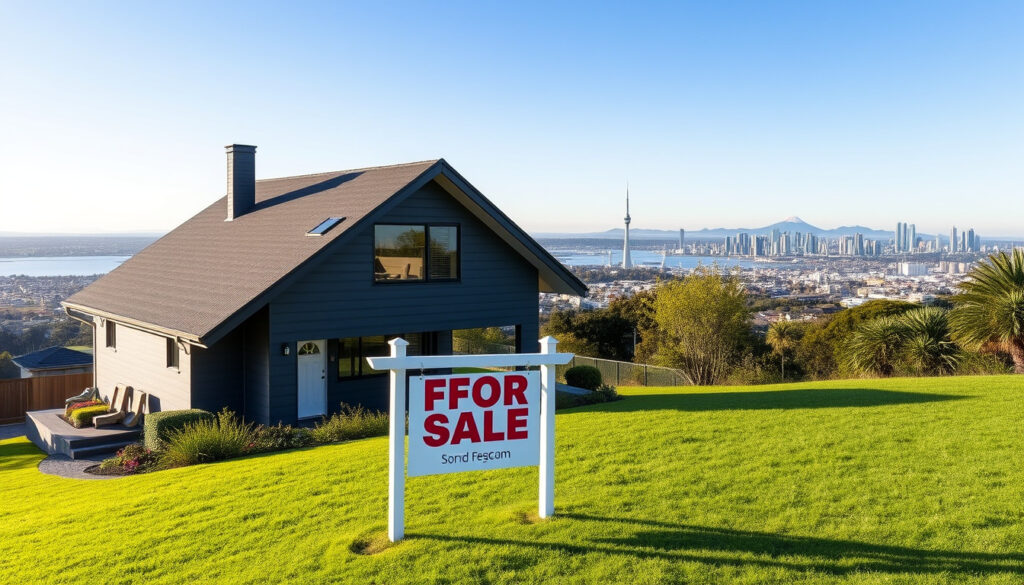
Mount Eden Property for Sale: 2025 Buyers Guide for Auckland
There’s a moment when you drive up Dominion Road toward the green volcanic cone that gives Mount Eden its name — and you can see why people get serious about moving here. It’s a suburb where heritage villas, strong school zones, and a four-kilometre commute to the CBD compete for buyer attention. With average asking prices for three- and four-bedroom houses at $1.91 million, according to Trade Me Property’s Mount Eden suburb guide, it’s a market where knowing the facts pays. This guide pulls together the price data, ownership history, and livability signals worth weighing before you bid.
Median value / weekly rent: ~$2.11M / ~$540 (community data site suburb.co.nz) ·
Population (2023 Census): ≈14,000 ·
Distance from CBD: 4 km south ·
Cone elevation: 196 m (643 ft) ·
Homes listed (Nov 2024): 86–99 on major portals
Quick snapshot
- Mount Eden is a suburb in central Auckland, New Zealand.
- Average asking price for 3–4 bedroom houses: $1,913,000 as of January 2025 (Trade Me Property).
- Maungawhau / Mount Eden was returned to iwi ownership in 2022.
- The exact median house price varies by tracker — estimates range from roughly $1.55M to $2.11M.
- Population counts differ by boundary definition (~14,000 census-based vs 26,947 on one community site).
- Future price direction remains an open question after a 1% year-on-year dip.
- Pre-European: Maungawhau was a major pā site.
- Late 1800s–early 1900s: quarrying removed part of the cone.
- 2022: formal return of the maunga to Ngā Mana Whenua o Tāmaki Makaurau.
- Prepared buyers start with step-by-step guidance on researching listings and building an offer strategy (realtor.co.nz’s buyer step guides).
- Sellers face a cooling but still high-priced market — presentation and pricing strategy will separate quick sales from long listings. (realtor.co.nz’s buyer step guides)
Nine rows, one pattern: every reliable measure puts Mount Eden above Auckland’s typical price point — the only real question is how far above.
| Indicator | Value |
|---|---|
| Population (2023 Census) | Approximately 14,000 |
| Median value estimate | ~$2.11M (suburb.co.nz) |
| Typical weekly rent | ~$540 |
| Apartment / townhouse range (early 2026 indicators) | $850,000–$1,400,000 (Auckland Homeowner) |
| Postcode | 1024 (suburbreviews.co.nz) |
| Distance to CBD | 4 km south |
| Top schools | Mount Eden Normal School, Auckland Grammar (zoned) |
| Area | ~250 hectares |
Is Mount Eden expensive to live in?
Yes — by Auckland standards, Mount Eden sits firmly in the upper bracket. But the “how expensive” answer changes depending on which tier of property you are shopping in.
Average property prices in Mount Eden compared to Auckland
- Average asking prices as of January 2025: $1,913,000 for 3–4 bedroom houses and $721,150 for 1–2 bedroom houses, with asking prices down 1% year on year (Trade Me Property’s Mount Eden suburb guide).
- Apartment and smaller townhouse range on early-2026 indicators: $850,000 to $1,400,000 (Auckland Homeowner’s central-suburb analysis).
Those figures describe two different Mount Edens. Family homes occupy the million-dollar-plus territory that makes the suburb famous on listing sites; apartments and townhouses offer a cheaper way in without giving up the address. The 1% dip is a market cooling from a very high base, not a collapse.
The real Mount Eden price question is product mix: a $721,150 one-bedder and a $1.9 million villa sit in the same suburb but two different markets. Decide which one you are buying before you compare listings.
Mount Eden’s premium traces to three drivers: land scarcity, school zones, and the protected open space of the maunga. The Auckland regional median — around $1.05 million — sits well below typical family-home asking prices in the suburb, which is another way of saying buyers are paying for location, not just square metres.
If you are serious about an entry price, run the repayment maths before you bid. A mortgage calculator guide turns asking prices into weekly numbers — useful when similar villas are listed weeks apart at different rates.
Rental costs and everyday expenses
- Typical weekly rent: around $540 on community data estimates.
- Listing inventory: 86–99 homes on major portals in November 2024.
Rents track the same premium as sales: you are paying for school zones and commute either way. Everyday costs run consistent with central Auckland generally — the Village strip covers daily needs, and the CBD is close enough that many households manage with one car.
Inventory is the quiet story here. Ninety-ish listings sounds like plenty, but it spans every product type, price tier, and condition — the pool of genuinely competitive properties is much smaller.
The implication: different price tiers operate as separate markets within the same suburb.
Who owns Mount Eden?
The question sounds like a trick, but it has a real answer — and one that shapes the property market around the cone.
Current legal status and ownership of Maungawhau
- Maungawhau / Mount Eden is vested in Ngā Mana Whenua o Tāmaki Makaurau, the collective of Auckland iwi.
- Management sits with the Tūpuna Maunga Authority, a co-governance body formed by iwi and the Crown.
- The cone and its surrounding parkland remain open to the public.
For buyers, the ownership change matters less than it sounds. The mountain was already protected as a reserve; the 2022 settlement formalised stewardship rather than turning the maunga into a private holding. What you are actually buying near Mount Eden is a home next to a permanently protected open space — which supports values but also limits what can ever be built on the volcanic slopes.
Heritage and maunga protections preserve Mount Eden’s views and character — they also cap density. Buyers expecting to subdivide a villa section should check heritage and zoning rules before bidding.
Historical return to Māori ownership
- 2022 — legal return of Maungawhau to Ngā Mana Whenua o Tāmaki Makaurau.
- Public access continues under the Tūpuna Maunga Authority’s management plan.
The settlement closed a long chapter of Crown ownership that began with 1840s land confiscations, and created a co-governance model in which iwi have a stronger voice in how the maunga is maintained and presented. For residents, the practical result is unchanged: the mountain remains open, the views stay protected, and management decisions are now shared.
Why this matters: the maunga is the suburb’s permanent anchor — legally protected, publicly accessible, and a structural guarantee that central Auckland’s most famous view will not be built out.
Is Mount Eden a good place to live?
Most suburb guides answer this with adjectives. The data answers with school zones, commute times, and a livability caveat.
Schools and education in Mount Eden
- Full school ladder in and around the suburb: Mount Eden Normal Primary School, Maungawhau School, and Auckland Normal Intermediate for juniors; Eden Campus, Auckland Grammar School, and Epsom Girls’ Grammar School for seniors (Trade Me Property’s suburb guide lists each of these).
School zoning is the most cited reason for Mount Eden’s price premium, and the numbers back it up: decile 10 primary schools feed into well-established state secondary schools, and for parents that combination is worth a premium measured in six figures.
The caveat for buyers is to verify zones against the specific address. School-zone edges shift, and a property on the suburb boundary may not be in every school’s catchment.
Transport and amenities
- Distance to Auckland CBD: roughly 4 km south.
- Public transport: regular bus routes along Dominion Road and Mount Eden Road connecting to the city centre.
- Motorway access: close to central motorway on-ramps.
This is where Mount Eden’s location does the heavy lifting. The 4 km commute is short enough that walking and cycling are realistic options, and the bus network covers the main corridors. Regular services along Dominion Road make a one-car household realistic for many residents.
Amenities follow the same pattern: the Village strip is the social hub, and the maunga doubles as the local park. You trade a bit of weekend visitor traffic for extraordinary everyday surroundings.
Community and safety
- Livability data still being built out at suburb level — one community site notes its Mount Eden breakdown will cover safety, schools, transport, lifestyle, and affordability once published (suburbreviews.co.nz).
Suburb-level crime statistics are not consistently published, so safety claims deserve a health warning. Mount Eden reads as a quiet, family-oriented suburb, but that impression is anecdotal rather than evidence-based — a weekday evening walk around the Village and the lower slopes will tell you more than any forum thread.
When buyers do their due diligence, the process should be systematic. realtor.co.nz’s offer-strategy guidance — researching the market, confirming pre-approval, and deciding on offer conditions — is a practical checklist for Mount Eden’s competitive listings.
The livability case for Mount Eden rests on schools and transport — the two things buyers can verify. Safety and community are real but hard to prove, which makes an on-the-ground visit part of due diligence.
What is the history of Mount Eden?
The suburb’s history is short in years but deep in layers — and every layer still shows in the streetscape.
Māori occupation and significance
- Pre-European: Maungawhau was one of the largest pā sites in Tāmaki Makaurau, with terraced fortifications supporting a substantial population.
Maungawhau mattered long before Auckland existed. It was a major pā and a vantage point over the isthmus, one of several volcanic cones that shaped Māori settlement across the region. Its terraced slopes were a working landscape, not a scenic afterthought.
That history is why the 2022 ownership settlement carried such weight — it restored a direct Māori connection to a place that had been central to Māori life for generations.
European settlement and quarrying
- 1840s: European settlement begins in the area; land confiscations follow.
- Late 1800s–early 1900s: quarrying removes a large part of the volcanic cone.
The quarrying episode is the strangest twist in the mountain’s history. The same volcanic stone that built central Auckland’s roads and buildings was cut from the place that would later become the city’s most recognisable landmark. What remains of the cone is now protected — but the cone you see today is smaller than the one Māori and early settlers knew.
Modern development
- Early 20th century: the suburb fills with villas and bungalows.
- 2022: Maungawhau is formally returned to Ngā Mana Whenua o Tāmaki Makaurau.
Modern Mount Eden stacks apartments and townhouses over that villa base, especially along the main roads, while the side streets keep their character-home feel. The result is a suburb with genuinely mixed housing stock — heritage, mid-century, and contemporary under one postcode. The oldest homes date to the late 1800s, the densest development to the last two decades, and the cone to a geological era entirely of its own.
The takeaway: the history is not decorative. It explains the housing mix, the heritage rules, and the reason a volcano sits in the middle of one of New Zealand’s most expensive suburbs.
Where is Mount Eden located?
If you can find the cone, you can find the suburb.
Geographic position and proximity to Auckland CBD
- Auckland’s central isthmus, roughly 4 km south of the city centre.
- The volcanic cone rises to 196 m and anchors the suburb’s northern end.
Mount Eden sits on the narrow neck of Auckland’s isthmus — central without being high-density, elevated without being remote. The drive to the CBD is a straight shot along Mount Eden Road or Dominion Road, both of which border the suburb.
Boundaries of the suburb
- Bordered by Dominion Road and Mount Eden Road, with adjacent suburbs such as Epsom to the south.
The boundaries matter because school zones and property values shift at the edges. A home on the Dominion Road side and a home near the cone can share the same Mount Eden postcode — 1024 — while offering different noise profiles, sunlight, and price tags.
The geography, in short, does the selling: central, elevated, and bounded by two of Auckland’s busiest and best-connected roads.
Mount Eden property — the trade-offs
Upsides
- 4 km from the CBD — one of the shortest suburban commutes in Auckland.
- Decile 10 school zones and a complete primary-to-secondary ladder.
- Character homes with heritage value and protected volcanic views.
- Established village amenities, parks, and the maunga as a shared backyard.
Downsides
- Entry prices well above the Auckland regional median.
- Heritage rules can limit renovations and subdivisions.
- Competitive listings with tight inventory.
- Weekend visitor traffic around the mountain.
The trade-off, in one line: Mount Eden property for sale carries a premium, and the same rules that protect the suburb also protect its existing character — for better and for worse.
Timeline — how Mount Eden became what it is
The suburb’s timeline is short by world standards, but every period left a physical trace.
- Pre-European: Maungawhau used as a major pā by Māori iwi.
- 1840s: European settlement begins; land confiscations follow.
- Late 1800s–early 1900s: Quarrying removes a large part of the volcanic cone.
- Early 20th century: Suburb develops with villas and bungalows.
- 2022: Formal return of Maungawhau to Māori ownership under the Tūpuna Maunga Authority.
What that timeline produces, in property terms, is a suburb with a protected centrepiece, a heritage housing stock, and development pressure at the edges — a combination that keeps prices elevated and supply tight.
What’s confirmed, what’s still unclear
Confirmed facts
- Mount Eden is a suburb of Auckland, New Zealand, anchored by a dormant volcanic cone.
- Maungawhau / Mount Eden was returned to iwi ownership in 2022.
- The suburb includes decile 10 schools and a full primary-to-secondary ladder.
- Asking prices softened 1% year on year as of January 2025, after a long run-up.
What’s unclear
- The exact median house price varies by tracker — estimates span roughly $1.55M to $2.11M depending on source and property type.
- Population counts differ by boundary definition: a census-based estimate puts the suburb near 14,000, while one community site records 26,947 (suburbreviews.co.nz).
- Future price direction — the market is cooling, but whether that means a flat year or a correction depends on interest rates and inventory.
- Livability and suburb-level crime data are not consistently published, so safety comparisons rely on impression rather than statistics.
- School-zone boundaries can shift at the edges of the suburb, so individual addresses should be verified.
The balance of evidence: Mount Eden’s fundamentals are confirmed — location, schools, and protected green space. The exact numbers are less settled than listing pages suggest, which is precisely why buyers should verify data for every specific property.
What the sources say
Three data points, attributed to the sources that publish them:
Median value estimates place Mount Eden at roughly $2.11 million, with weekly rents around $540 — both well above Auckland averages.
suburb.co.nz — community property data site
Early-2026 indicators put Mount Eden’s apartments and smaller townhouses between $850,000 and $1,400,000 — the affordable edge of an expensive suburb.
Auckland Homeowner — central-suburb market analysis
Selling guidance runs from determining property value and choosing an agent through to staging, photography, and setting a competitive price.
realtor.co.nz — New Zealand property step guides
The thread across all three: Mount Eden’s data is consistent on direction, if not on exact figures — and both buyer and seller guides converge on the same discipline: prepare, price carefully, and act decisively.
Mount Eden property market: the verdict
Mount Eden’s property market is a test of patience and preparation, and the next twelve months will separate prepared buyers from the rest. Asking prices are cooling — down 1% year on year in January 2025 — but the fundamentals of location, schools, and the maunga keep a floor under values. Mortgage-rate direction will decide how much of that price you can borrow, and current BNZ rates and projections are a useful benchmark before you commit. For first-home buyers, the decision is clear: act on the apartment and townhouse tier while it stays below $1.4 million, or shift the search to adjacent suburbs — because Mount Eden’s family homes will not be dropping into reach anytime soon.
Related reading
- What Would My Repayments Be? Mortgage Calculator Guide 2025
- BNZ Mortgage Rates NZ 2026: Current Rates, Predictions & Guide
realtor.co.nz, realtor.co.nz, realtor.co.nz, realtor.co.nz, realtor.co.nz, realtor.co.nz, realtor.co.nz, realtor.co.nz
Frequently asked questions
What is the average rent in Mount Eden?
Community property data estimates typical weekly rent at around $540. Rents reflect the same school-zone and location premium that drives sales prices in the suburb.
Are there any new developments in Mount Eden?
Yes, mainly in the apartment and townhouse tier. Early-2026 indicators put apartments and smaller townhouses between $850,000 and $1,400,000, gradually adding density along the main roads.
How long does it take to commute from Mount Eden to Auckland CBD?
Mount Eden is about 4 km south of the city centre with regular bus routes on Dominion Road and Mount Eden Road. It is one of the shortest suburban commutes in Auckland, and the drive to the CBD is a straight shot on either road.
What types of houses are common in Mount Eden?
Heritage villas and bungalows on the side streets, with modern apartments and townhouses around the main roads and the volcanic cone at the centre of it all.
Is Mount Eden safe at night?
Suburb-level crime data is not consistently published, so firm claims are thin. The area is generally regarded as quiet and family-oriented, but the usual urban precautions apply.
What is the closest hospital to Mount Eden?
Auckland City Hospital, one of New Zealand’s largest public hospitals, is the closest major hospital to the suburb.
Are there supermarkets in Mount Eden?
Yes — the Mount Eden Village shopping strip covers daily essentials including supermarkets and cafés, and larger retail centres are a short drive away.
How good are the schools in Mount Eden?
Well above Auckland’s average. Decile 10 primary schools feed into a strong secondary ladder from Auckland Normal Intermediate through to Auckland Grammar School and Epsom Girls’ Grammar School — the school-zone advantage is one of the main drivers of the Mount Eden price premium.
More related posts
 Asma al-Assad: Where Is She Now? 2025 Health & Location Updates
 NZ Dollar to Japanese Yen: Rate, Forecast & Cost of Living
 Jenny-May Clarkson: Biography, Family, and Why She Left Breakfast
 Ultimate Design and Renovation Christchurch Guide
 Royal News Today: Harry and Meghan – Return to UK Updates
 Glassons Discount Code NZ – Verified Deals and Savings Tips
 Air New Zealand Carry-On Size: Official Rules and Limits
 Car Insurance Quote NZ – Compare Prices, Providers & Costs