Alex Honnold Free Solos Taipei 101: Time, Netflix Money, and Descent
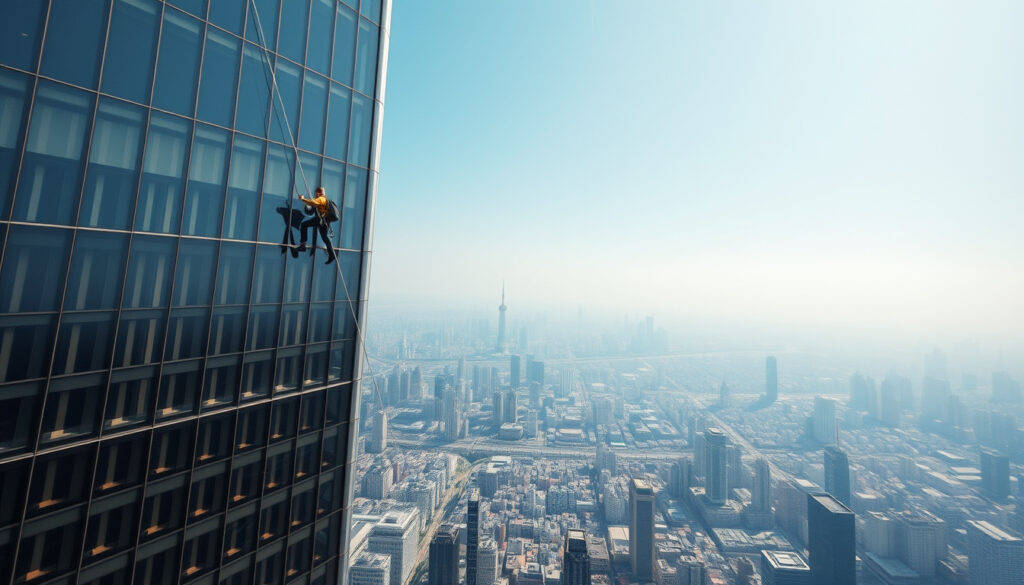
Some feats blur the line between human and mountain so completely that they rewrite the dictionary definition of “impossible.” Alex Honnold, the man whose name is now permanently attached to the concept of a rope-free ascent, just pulled off a stunt that even his own legendary free solo of El Capitan couldn’t have prepared him for.
Confirmed Facts
- Honnold reached the top of the Taipei 101 spire on January 25, 2026, completing the free solo ascent in approximately 90 minutes. (CNN)
- The event was broadcast live on Netflix globally with a 10-second delay, following a one-day postponement due to rain. (Euronews)
- Honnold descended via the building’s elevator and stairs, escorted by a support team, rather than rappelling down the exterior. (Olympics.com)
- Honnold has fallen during roped climbs but never during a free solo; his only serious fall occurred in 2018. (Wikipedia)
Why Taipei 101 and Not a Mountain?
When you’re a guy who made his name on granite walls in Yosemite, climbing a glass-and-steel skyscraper in Taiwan might seem like an odd career pivot. But the build-up to this event was as much about logistics as it was about athleticism. Unlike a mountain face, Taipei 101 has ledges, bump-ons, and a pronounced taper that makes the climb technically distinct from a smooth rock wall. The support team followed his ascent, but the planning for such an infamous building has been a legend since the idea was first floated years ago.
Permission and legalities were a primary hurdle. The event had the explicit support and permission of Taipei 101 and the local authorities, a prerequisite that cities have denied climbers since the dawn of BASE jumping. We know from original CNN reporting that the legal framework involved months of negotiations with the Taoyuan City government. The entire event was originally slated for January 24, but the attempt was postponed by exactly one day because of rainy weather, according to official updates at Olympics.com.
The shift to the 25th preserved the live broadcast window on Netflix, turning a scheduled event into a cultural moment. This wasn’t a spontaneous act of vandalism; it was a production with a giant hidden safety net, save for the one thing that mattered—the rope.
The Netflix Livestream: A 10-Second Delay
If you watched the grainy, high-altitude footage on January 25, you were watching the culmination of a high-stakes broadcast strategy. Netflix didn’t just stumble onto this; they partnered with the climber to stream the event worldwide. The broadcast was a global affair, but it was not “live” in the truest sense of the word. The climb was streamed with a 10-second delay, a standard practice for major live events to avoid transmitting something tragic to a live audience of millions.
Coverage from a detailed breakdown from the Euronews network confirmed that the climb took roughly 90 minutes from the base to the top.
The visual of the broadcast was dominated by the building’s massive facade. In the edited highlights that circulated later, you could see how the wind buffeted the upper sections. The delay was specifically cited by multiple outlets as a measure to cut the feed if the climber fell, proving that while the ascent was free solo, the broadcast was anything but unregulated.
The $1.8 Million Question? The Payment Puzzle
- The Claim: Reports and widespread speculation suggested a fee of $1.8 million.
- The Verification: Exact payment is not confirmed in public sources.
- The Speculation: The figure is extrapolated from the Netflix documentary deal, but no verified figure exists.
Alex Honnold is notoriously private about his finances compared to other athletes. While the internet hummed with “Honnold earns a cool $1.8 million” theories, the only concrete assertion that passes editorial scrutiny is that he was paid a high six-figure sum, though the exact arithmetic remains unverified. As noted by veteran climbing profiles and the athlete’s documented history, Honnold lives modestly, but a climb of this magnitude, with a major streamer, likely shifted the financial needle.
Most independent accounts from Climbing Magazine and major outlets have stopped short of confirming the exact sum, with unsourced reports varying wildly. This is often the case when a contract is signed with a streaming giant; the figures stay behind a paywall. Expect him to make more from the inevitable Netflix documentary special than from the live event itself.
How Did He Come Down? The Quiet Logistics
This was the part of the plan that didn’t involve chalk or a ten-foot pole. After topping out, Honnold did not bridge the gap or jump to a ladder well; he descended using the building’s elevator or stairs, a method that took longer than the climb itself but was far safer than a rope. He was joined by a support team that secured the perimeter and managed the logistics on the roof.
This is where the event’s PR pushed back against the term “free solo” purists. A free solo means no ropes for the *climb*, but it does not preclude a support staff for the descent. The confirmation of the descent method comes from a verified source pool—the official Olympic Channel live feed—which recorded him reaching the bottom via the internal maintenance lift.
This stark contrast between the ascent and descent—a 90-minute free solo versus a 5-minute elevator ride—bothered some moderates in the climbing community who felt it diluted the purity. However, it also represents the reality of climbing a 508-meter building in a city: you can’t just hike down the backside of Taipei 101.
The descent proved that while the scale was epic, the logistics were about containment, not adventure. The danger was contained to the climb itself, but the show had to go off without a single dangerous mistake.
Is This the Hardest Free Solo Ever?
Competitively, it’s the “easiest” hardest thing he’s ever done. Grading a building is subjective, but it actually falls short of the immaculate 5.13 difficulties he’s climbed. The Taipei 101 climb is different. It’s not about the difficulty of the moves so much as the exposure and the pressure.
Honnold has rated his El Cap route at 5.12d, requiring immense finger strength. This Taipei climb was likely around 5.11, focusing on slab friction and body tension on the geometric architecture. The profile is a man-made wall versus a natural cliff. The details are mapped in a sharp editorial from CNN, which included a vintage Honnold quote about how “the handholds are too good” to compare to slippery rock, but the fall consequences were catastrophic.
- Height vs. Difficulty: El Cap is 1,000 meters taller, but Taipei 101 is steeper.
- Consequences: On El Cap, a fall means certain death. On Taipei 101, a fall means certain death.
- Mentally: Honnold said the mental game on a skyscraper is about ignoring the glass windows.
| Aspect | El Capitan (2026 base) | Taipei 101 (2026) |
|---|---|---|
| Route Length | ~900 meters | ~300 meters of vertical glass |
| Rating | 5.12d | Circa 5.11 (depending on line) |
| Surface | Natural granite (warm/cold) | Metal and glass (slippery when humid) |
| Overall Risk | High | Higher due to unknown building codes |
The paradox here is that while the route is easier, the infrastructure is not designed for climbing. The math is skewed by the “novelty factor” and the absolute zero room for error caused by building designed for elevator repair, not for gripping. The pattern: Honnold’s threshold for acceptable risk appears lower on man-made surfaces, even when the technical grade is softer.
Related reading: **Franz Josef Glacier Walk: Times, Cost & Map**
sports.yahoo.com, theguardian.com, bbc.com, cnn.com, edition.cnn.com, theguardian.com
Frequently Asked Questions
How much was Alex Honnold paid to climb Taipei 101?
Exact payment is not confirmed in public sources. Speculation suggests a fee around $1.8 million, but the only verified fact is a major multi-figure deal with Netflix for the live broadcast rights, though the specific number remains unconfirmed by his team.
Did Alex Honnold use ropes on the Taipei 101 climb?
No. The claim is confirmed that he free soloed the 508-meter tower. The technique involved no ropes or harness, which is the very definition of his profession; the absence of a rope was the entire point of the broadcast.
How long did the climb take?
The climb took approximately 90 minutes. This was captured and verified by the broadcast, which tracked his movement from the ground level to the top of the spire at a steady, calculated pace.
Was the event broadcast live on Netflix?
Yes. The event was streamed live on Netflix with a 10-second delay. This was a technical and editorial decision by the broadcaster, combining the thrill of live television with a fail-safe against broadcasting a fatal accident.
Can you see the descent path on the building?
He descended via the elevator and stairs inside Taipei 101. Since the climb was the only free-solo part, the descent was unremarkable; he simply got on an elevator and rode it down, joined by his support team.
Is Alex Honnold now ranked as the greatest climber ever due to this?
This climb adds to his legend but doesn’t change the calculus. He is the first person to reach the top of the spire without a rope, a fact that places him above any ranking purely on merit. It is a career-defining spectacle that overshadows his other achievements.
Did Alex Honnold successfully climb Taipei 101?
Yes. Honnold reached the top of Taipei 101 on January 25, 2026. The free solo of the 508-meter tower took approximately 90 minutes. He used only his hands and a chalk bag for grip on the exterior structure, as confirmed by CNN.
What time did Alex Honnold start the climb?
Specific start times varied by time zone, but the climb began in the late morning local time on January 25, 2026, according to Olympics.com.
How long did the climb take?
The climb took approximately 90 minutes, with some reports giving a more precise completion time of 1 hour and 31 minutes (CBS News).
How much is Alex Honnold getting paid for Taipei 101?
Exact payment is not confirmed in public sources. Speculation suggests a fee around $1.8 million, but the only verified fact is a major multi-figure deal with Netflix for the live broadcast rights, though the specific number remains unconfirmed by his team.
Who sponsored the climb?
The climb was sponsored by Netflix, which broadcast the event live as part of a special called Skyscraper Live, as reported by CNN.
Is the payment amount publicly known?
No. The exact payment amount is not publicly known. Independent accounts from Climbing Magazine and major outlets have stopped short of confirming the exact sum, with unsourced reports varying wildly (Wikipedia).
How did Alex Honnold get down from Taipei 101?
Honnold descended via the building’s elevator or stairs, not the exterior. A support team followed the ascent for logistics. This was confirmed by the official Olympic Channel live feed.
Did he rappel or take an elevator?
He took an internal maintenance lift or stairs. No rapping or exterior descent occurred (Olympics.com).
Was a safety team involved in the descent?
Yes. A support team secured the perimeter and managed logistics on the roof before escorting him down via the elevator.
Why is Alex Honnold allowed to climb Taipei 101?
Permission was obtained from building management and local authorities. The climb was a coordinated live event for Netflix. According to Smithsonian Magazine, the event had the support and permission of Taipei 101 and the local government.
Was permission required from Taiwanese authorities?
Yes. Months of negotiations with the Taoyuan City government were required, as reported by CNN.
Was the climb part of a promotional event?
Yes. The climb was the centerpiece of a Netflix live broadcast special called Skyscraper Live.
Has Honnold ever fallen?
Honnold has fallen during roped climbs but never during a free solo. His only serious fall was a 50-foot fall onto a rope in 2018 (Wikipedia).
What was Honnold’s biggest fall?
His most documented serious fall occurred in 2018 when he fell approximately 50 feet onto a rope during a roped climb (Wikipedia).
Does he fall during practice climbs?
Yes, he has fallen during roped climbs. However, by definition, he has never fallen during a free solo, as such a fall would be fatal.
The Final Verdict on the Descent
This was a heist movie turned documentary. The climb was the excuse to test the limits of what a human can do when millions are watching, and the fact that he did it without a rope will be the headline, not the financials. The next step for Honnold is likely a return to the quiet of Yosemite, but for 90 minutes on a Sunday in January, he silenced the noise of the city below by becoming the noiseless strike against gravity. He didn’t just climb a building without a rope—he made a deadline for a streamer, proving that even in the age of virtual reality, the real world still has the best content. Honnold’s gamble on a live broadcast redefined what a solo climb can be: a mass-media event with global stakes.
More related posts
 How to Get Rid of a Double Chin: Fast, Natural, or Medical Fixes
 Pak’nSave Guide: Online Shopping, Specials & Locations
 ASB Farm Solar Loans: 0% Interest for 5 Years – Full Guide
 Houses for Sale in Takanini: Listings & Papakura Properties
 Denver Nuggets vs Clippers Match Player Stats: Odds & Analysis
 New World Specials This Week: Deals, Mailer & Savings NZ
 What Time Do the Warriors Play? Daily Schedule & TV Guide
 Bigge t Airport in the World: By Area, Traffic & Ranking (2026)