Matariki Stars Names and Meanings: Complete Guide to the 9 Whetū
Every winter, people across Aotearoa New Zealand look to the pre-dawn sky for a cluster of stars that marks the beginning of a new year. The names and meanings of those stars — the Matariki whetū — carry generations of iwi knowledge, environmental wisdom, and a few lingering disagreements.
Number of stars commonly recognised: 9 (whetū) · Distance from Earth: 444 light-years · Māori New Year begins: late June / early July · Also known as: Pleiades or Seven Sisters · Type of rising: heliacal (first pre-dawn appearance) · Primary knowledge source: oral tradition and iwi narratives
Quick snapshot
- Matariki is the Māori name for the Pleiades cluster, observed as the Māori New Year (Te Papa – national museum of New Zealand)
- Nine whetū are commonly named: Matariki, Pōhutukawa, Tupuānuku, Tupuārangi, Waitī, Waitā, Waipunarangi, Ururangi, Hiwa-i-te-rangi (Te Papa)
- The heliacal rising in late June/early July signals the start of the Māori New Year (New Zealand Tourism – official tourism body)
- Pōhutukawa is the star of the departed, connected to remembrance (Te Papa)
- Whether different iwi originally recognised 7 or 9 stars — some traditions count only those visible to the naked eye (Christchurch City Libraries – regional library network)
- Gender of individual stars: Matariki is often called a mother with six daughters, but some iwi assign male traits to stars like Ururangi (Te Pā Tū – Tamaki Māori Village – cultural tourism operator)
- Precise translations of star names vary (e.g. Tupuānukuānuku vs Tuku-ā-nuku) (Christchurch City Libraries – regional library network)
- Heliacal rising of Matariki: late June/early July — Māori New Year begins (New Zealand Tourism
- 2022: Matariki becomes a national public holiday in New Zealand (New Zealand Tourism)
- Annual Matariki public holiday dates shift each year; planning for community events begins months ahead (Te Taura Whiri i te Reo Māori – Māori Language Commission)
- Growing interest in iwi-specific traditions may lead to more regional star-count recognition (Te Taura Whiri i te Reo Māori – Māori Language Commission)
Seven key facts about the Matariki star cluster, from its astronomical identity to its cultural role.
| Attribute | Value |
|---|---|
| Total stars commonly counted | 9 |
| Traditional count (naked eye) | 7 |
| Brightest star in cluster | Matariki (Alcyone in Pleiades) |
| Apparent magnitude of Matariki | 2.87 |
| Constellation | Taurus |
| Best viewing period | Late – mid-July, pre-dawn |
| Declination | ~+24° |
What are the names of the 9 Matariki stars and their meanings?
Matariki (the mother star)
- Central star of the cluster; its name also refers to the entire group (Te Papa)
- Represents reflection, hope, and human connection to the environment
- AUT notes that a bright, high Matariki signals good fortune and for the year ahead (A University – tertiary education provider)
Pōhutukawa (star of the departed)
- Connected to those who have died; a time of remembrance when Matariki rises (Te Papa)
- Tied to the pōhutukawa tree, which blooms red around the same season
Tupuānuku (star of food grown in the ground)
- Associated with kūmara (sweet potato) and all garden produce (Te Papa)
- Brings abundance to crops planted under its influence
Tupuārangi (star of food from the sky)
- berries and birds, representing forest resources (Te Papa)
- Linked to the harvest of kererū and tūī in some iwi traditions
Waitī (star of fresh water)
- Connected to rivers, lakes, and freshwater food sources (Te Papa)
- Nurtures life in inland waters
Waitā (star of the ocean)
- Protects marine health and guides fishing and sea harvests (Te Papa)
- the bounty of the moana (ocean)
Waipuna-ā-rangi (star of rain water)
- Linked to rainfall and weather patterns that sustain growth (Te Papa)
- Influences the seasonal cycle of planting and harvesting
Ururangi (star of the winds)
- Determines wind patterns, important for navigation and planting (Te Papa)
- Some iwi treat Ururangi as a male star, in contrast to the female others (Te Pā Tū – Tamaki)
Hiwa-i-te-rangi (star of wishes and harvest)
- The youngest star, associated with dreams, aspirations, and the promise of the new year (Te Papa)
- Marks the end of the Matariki period and symbolises hope
.
What do the seven stars of Matariki represent?
The Seven Sisters in Māori tradition
- Matariki is often called “the Seven Sisters” in English, a reference to the Pleiades myth (New Zealand Tourism)
- The seven stars visible to the naked eye form a tight cluster in Taurus
Why some iwi recognise only seven stars
- Christchurch City Libraries notes that some Kāi Tahu traditions count seven, with Puaka (Rigel) as an additional herald (Christchurch City Libraries)
- The two fainter stars (Pōhutukawa and Hiwa-i-te-rangi) were often omitted in older oral records
Comparison of seven vs nine star systems
- Modern public education materials commonly use nine stars to include the fainter whetū (AUT University)
- The seven-star view aligns with the Greek Pleiades myth of seven sisters, but Māori tradition has its own independent genealogy
Bottom line: Neither count is wrong. The seven-star tradition reflects what can be seen with the unaided eye; the nine-star system restores stars described in whakapapa (genealogical chants) that are faint but culturally named. For anyone learning about Matariki, the key takeaway is that both systems are valid and rooted in different observational and oral traditions.
What are the Matariki star names in English?
Direct Māori to English translations
- Matariki translates roughly to “tiny eyes” or “eyes of God” (Te Papa)
- No direct English equivalents exist for the individual star names; they retain their Māori forms
Common English names for the Pleiades cluster
- The cluster is widely known as the Pleiades or Seven Sisters in astronomy and Greek mythology
- In English-language resources, the stars are usually referred to by their Māori names to preserve cultural meaning (Te Taura Whiri i te Reo Māori – language commission)
Why this matters
Using Māori names in English contexts isn’t just respectful — it carries the precise ecological and spiritual meanings that English labels like “Pleiades” cannot convey.
Are all the Matariki stars female?
Matariki as the mother
- Most commonly, Matariki is described as a mother star with her six daughters, totalling seven females (Tamaki Māori Village)
The children – gender variations
- Some iwi consider all nine stars female; others assign masculine traits to Ururangi and possibly Tupuānuku (Te Pā Tū)
- AUT’s guide refers to the whetū without specifying gender, reflecting the variability (AUT University)
Regional differences in star gender
Using Māori names in English contexts isn’t just respectful — it carries the precise ecological and spiritual meanings that English labels like “Pleiades” cannot convey.
The implication: the gender of Matariki stars is a living tradition, not a fixed doctrine. For anyone writing about the cluster, the safest course is to note the variation rather than assert a single answer.
What is the story behind the Matariki stars?
The flight of Matariki and her daughters
- A common legend tells of Matariki fleeing from a pursuer (sometimes the wind or a male star) and throwing her children into the sky to form the cluster (Te Pā Tū – Tamaki Māori Village)
- Another version says the stars are a family who were separated by a flood or a great wind
to the Māori New Year
- The heliacal rising — the first pre-dawn appearance of Matariki — marks the start of the Māori New Year (New Zealand Tourism)
Modern and celebrations
- Since 2022, Matariki has been a national public holiday in New Zealand, with community events across the country (New Zealand Tourism)
- Museum, museums hold star-gazing gatherings, kapa haka, and feasts
Editor’s note
The shift from iwi-specific observation to a nationwide holiday has both revived interest and raised questions about how to respectfully standardise traditions that were never meant to be uniform.
How to observe Matariki and celebrate the Māori New Year
- Find the right time: In Aotearoa, look for Matariki in the pre-dawn sky during late June to mid-July. Check local marae or astronomy groups for exact dates (New Zealand Tourism)
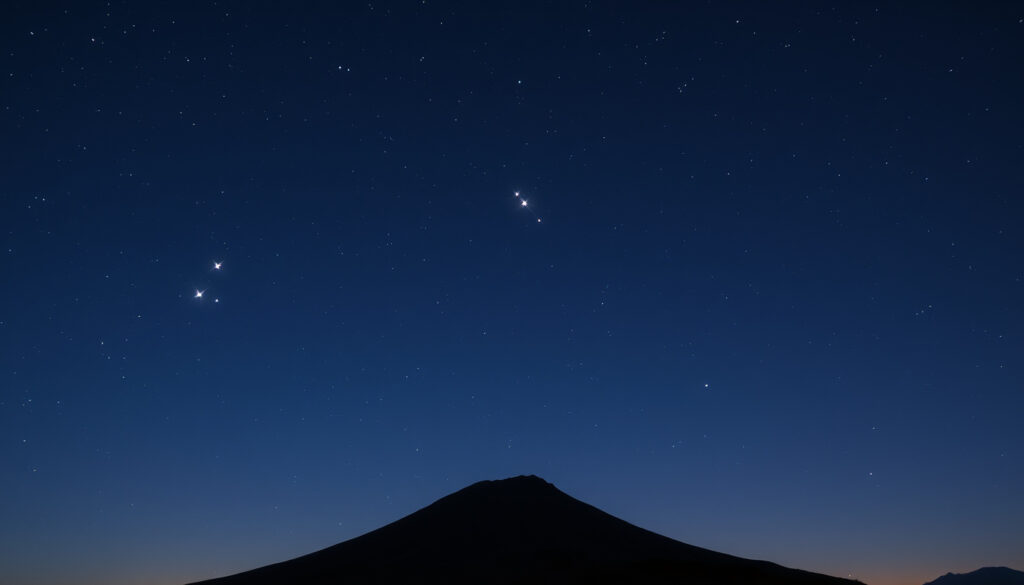
- Locate the cluster: Face north-east an hour before sunrise. Matariki rises near the horizon, appearing as a small group of stars in Taurus. Binoculars help reveal more detail.
- Attend a community event: Many cities host dawn karakia (prayers), kai (food) gatherings, and storytelling sessions. Check with local iwi or city councils.
- Learn the names and meanings: Spend time with the nine whetū — recite them aloud. Understanding what each star represents deepens the experience.
- Set intentions: Hiwa-i-te-rangi is the star of wishes. Many people write down hopes for the new year and offer them under the rising cluster.
The shift from iwi-specific observation to a nationwide holiday has both revived interest and raised questions about how to respectfully standardise traditions that were never meant to be uniform.
< class="n24-tip">
The convenience of a fixed public holiday date makes celebration easier, but it can disconnect people from the iwi-specific lunar calendars that historically determined the observation.
Timeline: Matariki through the ages
- Pre-colonial era: Iwi traditionally observed Matariki with ceremonies tied to planting, harvesting, and remembering the dead.
- Late June / early July (annual): Heliacal rising of Matariki — Māori New Year begins (New Zealand Tourism)
- Early 2000s: Revival of public celebrations in New Zealand, led by Māori communities and local councils.
- 2022: New Zealand government declared Matariki a public holiday, first observed on 24 June 2022 (New Zealand Tourism)
- Annual (varying date): Official Matariki public holiday now celebrated each June/July.
What’s confirmed and what’s still unclear
Confirmed facts
- Matariki is the Māori name for the Pleiades star cluster (Te Papa)
- Pōhutakawa is the star of the departed (Te Papa)
- Matariki became a national public holiday in 2022 (New Zealand Tourism)
What’s unclear
- Exact number of stars originally recognised by different iwi (7 vs 9) (Christchurch City Libraries)
- Gender of individual stars – varies by iwi
- Precise translations of star names (e.g. Tupuānuke vs Tupu
Pōhutukawa is connected to the deceased and to when Matariki rises.
— Te Papa (national museum of New Zealand)
Matariki signifies reflection, hope, and connection to the environment.
— Te Papa (national museum of New Zealand)
The revival of Matariki as a national holiday has brought immense visibility to Māori astronomy and iwi traditions. But with visibility comes pressure to standardise. For Māori communities across Aotearoa, the challenge is to share the cluster’s names and meanings without flattening the rich regional differences that have always defined Matariki. The choice ahead for educators and policymakers is clear: embrace the nine-star system as a living, inclusive framework, or risk losing the very diversity that makes the tradition resilient.Matariki is the mother star with her six daughters.
— Te Pā Tū – Tamaki Māori Village (cultural tourism operator)
For readers wanting to understand how Māori traditions intersect with contemporary politics, see our explainer on Māori vs Indigenous 2026 – Treaty Referendum Explained. And if you’re planning to stargaze during Matariki season, check New Zealand Severe Weather – Red Warnings Across Regions for conditions that might affect viewing.
Frequently asked questions
How can I find Matariki in the night sky?
Face north-east about an hour before sunrise in late June to mid-July. Matariki appears as a small, tight cluster low on the horizon in the constellation Taurus. Using binoculars helps resolve individual stars.
What does the word Matariki mean?
Matariki is often translated as “tiny eyes” or “eyes of God” — referring to the small, bright points in the cluster (Te Papa).
Is Matariki the same as the Pleiades cluster?
Yes. Astronomers call it the Pleiades (Messier 45) or the Seven Sisters. Matariki is the Māori name for the same star cluster (New Zealand Tourism).
What colour are the Matariki stars?
The cluster stars are blue-white in colour, with Matariki (Alcyone) being the brightest. They appear as a faint, bluish haze to the naked eye.
How long does the Matariki holiday last?
The public holiday is a single day in June or July, but the traditional period of Matariki observation lasts for several weeks — from the first rising until the next full moon.
What traditional foods are eaten during Matariki?
Kūmara (sweet potato), berries, fish, and birds are traditionally harvested and shared. Modern celebrations often include a shared kai (meal) with community (Te Papa).
Why are there sometimes 7 stars and sometimes 9?
Seven refers to the stars visible to the naked eye; nine includes two fainter stars (Pōhutukawa and Hiwa-i-te-rangi) that are culturally named but require dark skies or binoculars to see (Christchurch City Libraries).
Can I see Matariki from the Southern Hemisphere only?
Matariki (the Pleiades) is visible from both hemispheres, but it is most prominent in the southern winter sky. In the Northern Hemisphere, the cluster is best seen in autumn and winter — not associated with New Year.