What is Lyme Disease? Symptoms, Causes, Treatment, and Prevention
A tick no bigger than a poppy seed can set off a chain reaction that affects joints, nerves, and even the heart — that’s the reality of Lyme disease. Each year, roughly 476,000 Americans are diagnosed and treated for this bacterial infection, according to the CDC.
Annual U.S. cases diagnosed and treated: ~476,000 (CDC, 2022) · Erythema migrans rash occurrence: 70–80% of cases · Primary tick vectors: Ixodes scapularis and Ixodes pacificus · Incubation period after tick bite: 3–30 days · Cure rate with early antibiotic treatment: >95%
Quick snapshot
- Bacterial infection caused by Borrelia burgdorferi (CDC)
- Transmitted through the bite of infected blacklegged ticks (CDC)
- Not spread person-to-person in routine contact (Mayo Clinic)
- Early treatment with antibiotics (doxycycline, amoxicillin, cefuroxime) is highly effective (CDC)
- Typical course: 10–14 days for early localized disease (CDC)
Six key facts at a glance reveal the core landscape of Lyme disease, from the microscopic agent to the practical steps that keep people safe.
| Fact | Detail |
|---|---|
| Causative bacteria | Borrelia burgdorferi sensu lato |
| Vector | Ixodes ticks (deer tick, black-legged tick) |
| Incubation period | 3–30 days after tick bite |
| Common symptom | Erythema migrans rash |
| Treatment | Antibiotics (doxycycline, amoxicillin, cefuroxime) |
| Prevention | Tick avoidance, protective clothing, DEET |
What is Lyme disease in humans?
Lyme disease is a bacterial infection caused primarily by Borrelia burgdorferi and transmitted to humans through the bite of infected blacklegged ticks (Ixodes scapularis and Ixodes pacificus). It is not contagious between people in everyday contact, according to the Mayo Clinic (infectious disease specialists).
What causes Lyme disease?
- The bacteria Borrelia burgdorferi is the primary cause in North America, while Borrelia garinii and Borrelia afzelii are more common in Europe (WHO Europe).
- Infection occurs when an infected tick feeds on a person for at least 24–48 hours (CDC).
- Small rodents like mice serve as reservoirs, and ticks pick up the bacteria while feeding on them (PubMed Central (peer-reviewed review)).
How is Lyme disease transmitted?
- Transmission occurs exclusively through the bite of infected Ixodes ticks — no person-to-person spread, no airborne route (Mayo Clinic).
- Nymphal (young) ticks are the most common transmitters because they are tiny and difficult to spot (CDC).
- Prompt removal within 24 hours greatly reduces infection risk (CDC).
The vector is the entire story: remove ticks early and the infection chain breaks. A single unnoticed nymph can deliver Borrelia with enough time to establish infection before symptoms appear.
The implication: tick awareness and removal are the most powerful preventive measures against Lyme disease.
What are at least 5 early signs of Lyme disease?
Early symptoms typically appear within 3 to 30 days after a tick bite and mimic a mild viral illness, but with a distinctive skin clue.
What does a Lyme disease rash look like?
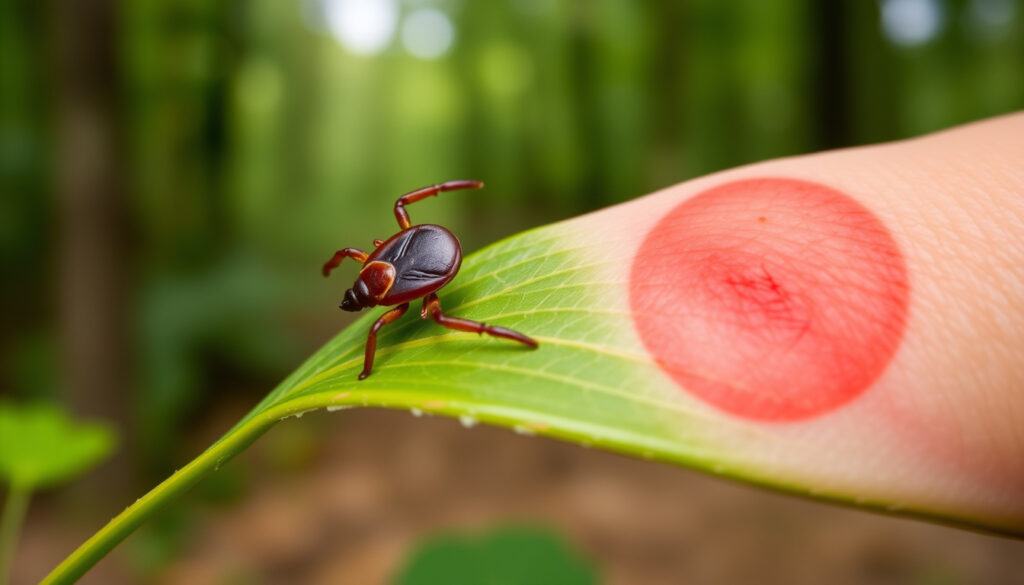
- Erythema migrans — often described as a bullseye rash — appears in 70–80% of infected people, according to the CDC.
- The rash expands gradually from the bite site and is usually not itchy or painful (Mayo Clinic).
- A Mayo Clinic Press report notes the rash typically appears 7–14 days after the bite, but it is possible to have Lyme without the rash.
What are flu-like symptoms of Lyme disease?
- Fever, chills, headache, fatigue, muscle and joint aches, and swollen lymph nodes are common early signs (FDA).
- These symptoms can easily be misattributed to other infections, delaying diagnosis — a key diagnostic challenge.
The pattern: early Lyme looks like a bad flu plus a rash. Without the rash, clinicians may miss it. The CDC emphasizes that awareness of tick exposure matters more than waiting for textbook symptoms.
What happens if Lyme disease is left untreated?
Without antibiotic treatment, the bacteria can disseminate from the skin to other tissues weeks to months after the initial bite.
What are the long-term effects of untreated Lyme disease?
- Irregular heartbeat (Lyme carditis), nervous system abnormalities such as facial palsy and meningitis, and severe joint pain may develop (FDA).
- WHO Europe warns that infection can spread to joints, heart, and nervous system without antibiotic therapy.
Can Lyme disease cause arthritis?
- Yes, Lyme arthritis — marked by recurrent, brief attacks of joint swelling and pain, usually in large joints like the knees — is a classic late-stage manifestation (CDC).
- Neurological complications, including encephalopathy, can arise months after infection (FDA).
“Later-stage symptoms may include irregular heartbeat, arthritis, and nervous system abnormalities.”
FDA (consumer health division)
The pattern: delayed treatment opens the door to systemic complications that can become chronic.
Is Lyme disease curable?
Yes — when caught early, Lyme disease is highly treatable. The CDC’s clinical care guidance states that early diagnosis and proper antibiotic treatment can prevent more serious forms of the disease.
How is Lyme disease treated?
- For early localized disease with erythema migrans, the standard regimen is doxycycline 100 mg twice daily for 10 to 14 days (CDC).
- Amoxicillin and cefuroxime axetil are alternatives for patients who cannot take doxycycline (CDC).
Can Lyme disease be cured with antibiotics?
- Yes, the cure rate exceeds 95% with a full course of appropriate antibiotics when treatment begins early (CDC).
- Late-stage or disseminated disease may require longer courses, sometimes intravenous antibiotics, but most patients still recover fully (CDC).
The window for a near-certain cure is narrow — typically weeks after the bite. After that, the infection can entrench itself, and patients face a harder road. The message: recognize early signs and treat fast.
The catch: the window for a near-certain cure is narrow; early treatment is critical.
Can you live a long life with Lyme disease?
For the vast majority of patients, yes. With timely treatment, Lyme disease does not shorten lifespan. However, a minority experience persistent symptoms.
Does Lyme disease ever go away?
- Most people with Lyme disease recover fully with appropriate antibiotic therapy, according to the CDC.
- In a small percentage of patients, symptoms such as fatigue, joint pain, and cognitive difficulties can last more than six months after treatment — a condition called post-treatment Lyme disease syndrome (PTLDS) (CDC).
Is Lyme disease permanent?
- No, the infection itself is eliminated by antibiotics in most cases — the Borrelia bacteria do not persist after effective antibiotic therapy.
- PTLDS is not the same as chronic infection; its causes remain unclear, but the CDC notes it is likely related to immune or tissue damage rather than ongoing bacterial presence.
The trade-off: early treatment gives a near-perfect outlook. Delayed diagnosis raises the risk of PTLDS, but even then, symptoms often improve over time. The uncertainty lies in why some people develop persistent symptoms — a question researchers are still exploring.
Confirmed facts
- Transmission occurs through tick bite
- Antibiotics cure early Lyme disease
- Bullseye rash is a hallmark sign
What’s unclear
- Exact cause of persistent symptoms in PTLDS
- Exact incidence in non-endemic areas
- Prevalence of co-infections from tick bites
“Early diagnosis and proper antibiotic treatment can help prevent more serious forms of Lyme disease.”
CDC (clinical care guidance)
“The bull’s-eye rash usually appears 7 to 14 days after the tick bite, but not everyone gets the rash.”
Mayo Clinic Press (patient education)
For anyone who spends time outdoors in tick-prone areas, the choice is clear: adopt daily tick checks, use repellents, and seek medical attention at the first sign of a bullseye rash or unexplained flu-like symptoms. The alternative — months of joint pain, neurological issues, and uncertainty — is avoidable with a few small habits and prompt antibiotic treatment.
my.clevelandclinic.org, cdc.gov, stacks.cdc.gov, cdc.gov, cdc.gov
Frequently asked questions
Can Lyme disease kill you?
Deaths from Lyme disease are exceedingly rare. Fatal complications like Lyme carditis (heart block) can occur if untreated, but with proper medical care the prognosis is excellent (CDC).
What kills ticks immediately?
Products containing permethrin kill ticks on contact. FDA recommends treating clothing and gear with 0.5% permethrin and using EPA-registered insect repellents on skin.
What smell do ticks hate most?
DEET, picaridin, and oil of lemon eucalyptus are known to repel ticks. The FDA recommends EPA-registered repellents for uncovered skin.
Can you feel a tick crawling on you?
Often, no. Ticks are very small (nymphs are poppy-seed-sized) and their bites are usually painless. That’s why daily tick checks are important (CDC).
What is a tick’s worst enemy?
Certain ants, spiders, birds, and parasitic wasps prey on ticks, but from a human perspective, prompt removal within 24 hours is the most effective enemy of Lyme transmission (CDC).
Can a person have Lyme disease for years and not know it?
Yes — some people never develop the rash or attribute symptoms to other illnesses. Late-stage neurological or arthritic symptoms may eventually prompt diagnosis. The CDC notes that untreated infection can persist for years.
Related reading
- Knee Pain Location Chart — Lyme arthritis often targets the knee joint.
- What Causes Leg Cramps at Night? — Muscle symptoms can overlap with Lyme disease.
More related posts
 Gale Force Winds South New Zealand: Warnings & Safety
 Christmas Crack Recipe NZ: Salada Toffee With Dark Chocolate
 New Zealand Severe Weather – Red Warnings Across Regions
 How to Turn Off Oppo Phone When Frozen or No Power Button
 What to Eat for Energy: Best Foods for Vitality and Stamina
 New Zealand Winter Mortgage Rates 2025: Forecast & Savings
 What is a Keynote Address? Purpose, Length, and How to Write One