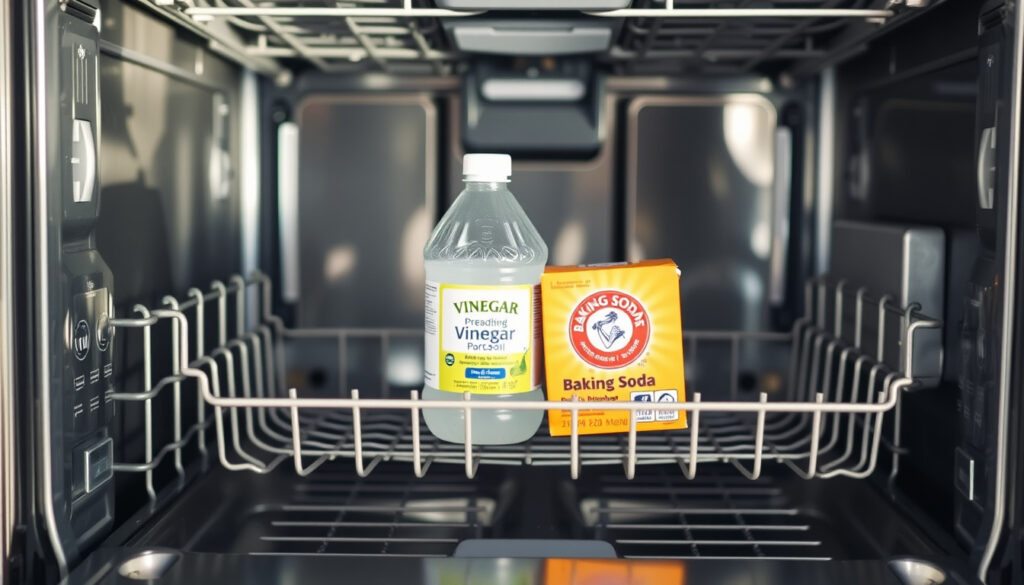
How to Clean Dishwasher: Vinegar & Baking Soda Steps
Opening the dishwasher after a cycle should feel like a small victory, not a gamble with sour smells or streaky glasses. If you’ve been eyeing that bottle of vinegar and box of baking soda under the sink, you’re on the right track—but the order and method matter more than you might think. In this guide, we’ll walk through a natural, step-by-step cleaning routine that separates the vinegar and baking soda cycles correctly, covers manual filter cleaning, and points out the safety guidance you shouldn’t ignore.
Tier 1 sources: Whirlpool, ARM & HAMMER | Tier 2 sources: Southern Living, The Maids | Claim confidence: High
Key Facts
- 1 cup white vinegar in a dishwasher-safe bowl on the top rack (per The Seep Company).
- Run a hot cycle; do not pour vinegar into the dispenser. (The Seep Company)
- Sprinkle 1 cup baking soda on the bottom (per One Good Thing by Jillee), then run a short hot cycle.
- Do not mix with vinegar—use in separate cycles (per Whirlpool).
- Remove filter and rinse under warm water (per ARM & HAMMER).
- Scrub lightly with toothbrush and baking soda if needed (per The Maids).
Why Vinegar and Baking Soda Work Best Separately
When you’re cleaning your dishwasher naturally, it’s tempting to dump vinegar and baking soda in at the same time and hope for a fizzy miracle. The reaction you see is fun, but it’s also a chemical giveaway: the acid and base are neutralizing each other, leaving mostly water, carbon dioxide, and a faint trace of salt. Whirlpool advises using vinegar and baking soda in separate cycles rather than together at the same time. When combined, the fizzy reaction is mostly visual drama—it does little to lift grease or dissolve limescale. Instead, you get more effective results by letting each do its job in its own cycle.
The first step is always manual. Before any natural cleaning agent goes near the tub, you need to address the filter. This is where the gunk hides, and no amount of vinegar or baking soda will magically dislodge it if the filter is clogged. ARM & HAMMER suggests rinsing the filter under warm water, then lightly scrubbing it with a toothbrush and baking soda. The The Maids add that soaking the filter in hot soapy water for about 20 minutes after the initial scrub can further loosen stubborn debris. Skipping this step means you’re just running vinegar over a layer of trapped food, which won’t solve the odor problem at its root.
Step-by-Step: The Natural Cleaning Workflow
Manual Filter Cleaning First
Start by pulling out the bottom rack so you can access the filter assembly. Twist and lift it out—your owner’s manual will show you the exact release mechanism. Rinse the filter under warm running water to remove loose debris, which is the first line of defense against odors. For tougher buildup, ARM & HAMMER recommends making a paste of 1/2 cup baking soda and 1–2 tablespoons water, then scrubbing the filter with a toothbrush. The filter is the workhorse of your dishwasher, and giving it a little manual attention makes the natural cycle far more effective.
The Vinegar Cycle
Pour 1 cup of white vinegar into a dishwasher-safe bowl or jug and place it on the top rack. Do not pour vinegar into the rinse-aid dispenser or the base of the machine—The Seep Company specifically warns against that. Run the hottest, longest cycle available with the dishwasher empty. Whirlpool recommends this method for a natural deep clean, and it’s also backed by ARM & HAMMER as a way to tackle limescale and hard-water film. After the cycle finishes, the interior should smell fresher and look cleaner, but you’re not done yet.
The Baking Soda Cycle
Once the vinegar cycle finishes, sprinkle 1 cup of baking soda evenly across the bottom of the dishwasher. Run a short hot cycle—this step deodorizes and gently scrubs away any remaining residue, leaving a fresh, clean scent. Do not add detergent, and do not run the vinegar cycle and baking soda cycle simultaneously; they must be two separate events. One Good Thing by Jillee notes this baking soda pass lifts residual odors that vinegar alone might miss. You might be tempted to combine the two for a shortcut, but resist the urge—the separate cycles are exactly what makes each ingredient effective.
What Not to Do: Common Mistakes and Safety
If you’ve read that combining vinegar and baking soda in the same cycle is a good idea, you’ve been misled. The fizz is a chemical reaction that produces salt, water, and carbon dioxide—nothing that scrubs your dishwasher’s interior. Southern Living echoes this warning: the acid and base cancel each other out, leaving you with a bubble show instead of a clean machine. You’re better off doing two separate cycles, as we’ve outlined above.
Another common mistake is skipping the filter cleaning and going straight to the vinegar pour. The key is following the right order and not cutting corners. A quick vinegar-only cycle might mask odors temporarily, but it won’t break down the greasy film on the filter or the limescale in the spray arms. Always check your manufacturer’s manual before trying any natural method. Whirlpool emphasizes that vinegar is safe for standard interiors but recommends confirming for your specific model. For Bosch or Beko owners, a quick look at the manual will tell you whether any gaskets or seals are sensitive to acidic cleaners.
Alternative Natural Cleaners (If You’re Out of Vinegar)
If you’re out of vinegar, lemon juice or citric acid are excellent substitutes for the descaling step. Both are mild acids that help dissolve limescale, though they lack vinegar’s broad deodorizing reach. ARM & HAMMER suggests that if you go the lemon route, you’ll likely need an extra baking soda cycle after to handle lingering food odors. This is a reliable backup, but for most routine cleanings, vinegar remains the simplest, most accessible option. The catch is that lemon juice can leave a sticky residue if not rinsed thoroughly, so you may trade one problem for another if you’re not careful.
How Often Should You Clean Your Dishwasher Naturally?
Experts suggest deep-cleaning your dishwasher with vinegar every 1–3 months to prevent buildup. If you have hard water, lean closer to monthly. The filter should be checked monthly but may need more frequent attention if you run the dishwasher daily or rinse dishes less thoroughly. Consistency is key—a small routine goes a long way in extending the life of your appliance. Think of it like a car oil change: you can ignore it for a while, but eventually, the inefficiency compounds into a bigger, smellier problem.
| Frequency | What to Do |
|---|---|
| Monthly | Run the full vinegar + baking soda routine to prevent buildup and odors. |
| Every 3 months | Descale with vinegar if you have soft water and notice no film. |
| As needed | If you notice a smell, run a quick vinegar-only cycle before the monthly deep clean. |
The pattern is clear: regular, small efforts prevent the need for harsh chemical interventions. A monthly routine is more effective than waiting for a visible problem, because odors and film form gradually. What this means for your schedule is that consistency matters more than perfection—even a basic vinegar rinse on a bad month keeps things moving in the right direction.
keeponhome.com, bakingsodarecipe.com, wecasa.co.uk, southernliving.com, homedepot.com, homewarranty.firstam.com
Frequently Asked Questions
How much vinegar should I use in the dishwasher?
Use 1 cup of white vinegar in a dishwasher-safe bowl on the top rack for a standard deep clean. Do not pour it into the rinse-aid dispenser.
Do I need to rinse the dishes before running the cleaning cycle?
Yes, remove food particles and scrape dishes before starting any cleaning cycle. The filter will remain clogged if large debris is left behind.
Why does my dishwasher still smell after a vinegar cycle?
The most likely cause is a dirty filter. Manually clean the filter under warm water and scrub with baking soda paste before running another vinegar cycle.
Can I clean my dishwasher with baking soda and vinegar?
Yes, but not at the same time. Run a vinegar cycle first, then a separate baking soda cycle for best results. Mixing them neutralizes their cleaning power.
Do I need to run the dishwasher empty when cleaning with vinegar?
Yes, ensure the dishwasher is empty before running a vinegar or baking soda cleaning cycle. Detergent and dishes interfere with concentration and may not be fully cleaned.
Should vinegar go in the wash or rinse cycle for dishwasher cleaning?
Vinegar should be placed in a bowl on the top rack, not in the wash or rinse dispenser. The hot water of any cycle will activate the vinegar and distribute it evenly.
What shouldn’t you clean with white vinegar?
Avoid using vinegar on natural stone countertops, cast iron, or rubber materials like gaskets and hoses. For dishwasher interiors, check your manual first, as some high-end models have sensitive seals.
Can I use vinegar in a Bosch or Beko dishwasher to clean it?
Generally, yes, but check your owner’s manual. Some Bosch and Beko models have specialty filters or gaskets that may react to acidic cleaners. If unsure, use citric acid, which is gentler.
More related posts
 New Zealand Sea Lion: Facts, Population, and Safety Guide
 6 Inch to CM: 15.24 cm Exact Conversion Guide
 All Blacks vs Springboks: Head-to-Head, Schedule & How to Watch
 Places to Visit in Auckland for Free: Top Picks
 Air New Zealand Carry-On Size: Official Rules and Limits
 Lindt Dubai Chocolate NZ: Where to Buy & Availability
 Black Forest Cake Recipe – Authentic Step-by-Step Guide