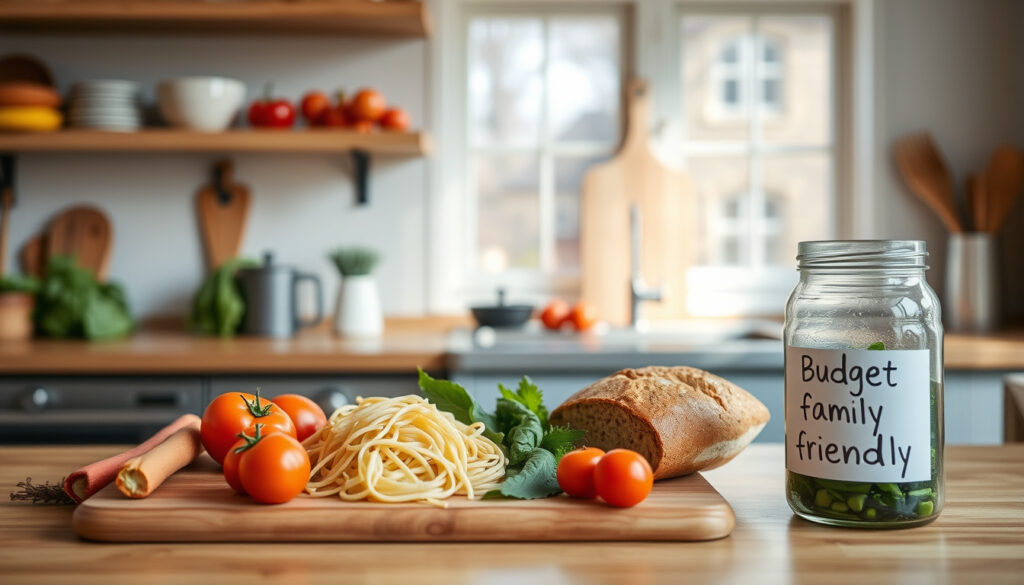
Cheap Dinner Ideas NZ: 10 Budget-Friendly Meals for Families
Feeding a family on a tight budget in New Zealand feels like a puzzle that changes every week. Grocery prices shift, specials rotate, and the kids are always hungry. But with a few smart strategies and some planning, you can put affordable, satisfying dinners on the table without breaking the bank.
Average weekly grocery bill for a family of 4 in NZ: $250–$300 ·
Cheapest protein per kg: Chicken drumsticks at $6/kg ·
Typical cost of a basic dinner for 2: Under $10 ·
Number of NZ households on a strict food budget: 1 in 3
Quick snapshot
- Pak’nSave is generally the cheapest supermarket in NZ (Pak’nSave discount supermarket)
- Chicken drumsticks are the cheapest meat per kg (Pams private-label grocery brand)
- The 3-3-3 rule is a popular budgeting method (Pams private-label grocery brand)
- Future price trends due to inflation and supply chain changes (Country to Live expat guide)
- Exact savings from loyalty programs vary by store (New World supermarket chain)
- New World releases seasonal meal plans quarterly (New World supermarket chain)
- Love Food Hate Waste NZ offers free seasonal planners each season (Love Food Hate Waste NZ government-funded food waste initiative)
- Use the Easy Choice Family Kai cookbook for weekly meal plans (Love Food Hate Waste NZ government-funded food waste initiative)
- Try Pak’nSave’s two-week budget meal plan (Pak’nSave discount supermarket)
These figures show the current landscape for family meal budgeting in New Zealand.
| Fact | Value |
|---|---|
| Average weekly grocery spend for NZ family of 4 | $250–$300 |
| Cheapest protein options | Chicken, eggs, canned beans, lentils |
| Most affordable vegetables | Potatoes, carrots, onions, frozen mixed vegetables |
| Typical cost of a basic dinner for 2 | Under $10 |
| Number of NZ households using a strict food budget | 1 in 3 |
The implication: planning around these cheap staples gives you the best chance of staying under budget.
What is the cheapest thing to make for dinner?
Some meals cost almost nothing per serving when you use pantry staples and cheap protein. Here are three of the cheapest dinner options in New Zealand, based on current supermarket prices.
- Spaghetti bolognese – under $8 for 4 servings (mince, pasta, canned tomatoes, onion). Pams private-label grocery brand recommends mince as a budget base.
- Lentil soup with vegetables – under $5 for 4 servings. Matamata Foodbank community food support lists lentil dishes as a go-to cheap meal.
- Egg fried rice with frozen veggies – under $4 for 2 servings. Recipes.co.nz recipe website includes fast flatbreads as a protein-packed option, but rice is even cheaper.
The pattern: meals that combine a starchy base (rice, pasta, potatoes) with a small amount of protein and vegetables are the most cost-effective. Kidspot NZ parenting resource emphasises batch cooking and repurposing ingredients like poached chicken across multiple meals.
Spending a little more on quality mince or free-range eggs can stretch further if you bulk them out with lentils or oats. The cheapest protein isn’t always the best value per meal.
What this means: focusing on meal patterns rather than individual recipes gives you more flexibility with what’s on special.
How to eat cheaply in NZ?
Grocery shopping tips
- Shop at Pak’nSave for bulk buys – it’s generally the cheapest supermarket chain. Pak’nSave discount supermarket offers a two-week budget meal plan for a family of 3 adults or 2 adults plus 2 young children.
- Use loyalty cards at Woolworths and New World to access exclusive specials. New World supermarket chain provides seasonal meal plans with shopping lists.
- Buy seasonal produce from local markets or supermarket specials. The Gas Hub lifestyle blog notes that New World’s plans are built around fresh seasonal produce.
Use of seasonal produce and bulk buying
- Potatoes, carrots, onions are the cheapest vegetables year-round and last for weeks.
- Frozen mixed vegetables (e.g., peas, corn, beans) cost around $2.50 per bag and are as nutritious as fresh.
- Buy meat in bulk when it’s on special, then portion and freeze. Pams private-label grocery brand advises buying meat in bulk and shopping seasonally.
What this means: a strategic shopping trip to Pak’nSave with a list based on the weekly specials can cut your grocery bill by 20–30% compared to an unplanned shop at New World.
How do you feed a family of 5 for $10?
Meal ideas for large families on a budget
Feeding five people for $10 requires careful planning and using cheap, filling ingredients. Here’s a sample menu:
- Mince-based dishes: savoury mince with mashed potato (mince and spud) – uses 500g mince, potatoes, onion, and gravy. Kidspot NZ parenting resource includes savoury mince in its budget family meal plan.
- Vegetable soup: lentil and vegetable soup with homemade bread – lentils are cheap and protein-rich. Matamata Foodbank community food support recommends soups and curries.
- Bulk cooking: make a large pot of pasta sauce or curry and freeze half. Kidspot NZ parenting resource emphasises batch cooking and leftover use.
Families of five often struggle to keep meals under $10. The secret is to use mince, lentils, and root vegetables as base ingredients, and to cook once for two meals. Love Food Hate Waste NZ government-funded food waste initiative offers free seasonal planners that show exactly how to do this.
The pattern: cooking in bulk and stretching protein with vegetables keeps per-meal costs low.
How to feed 2 people on $100 a week?
Weekly meal plan for two on a budget
For two adults, $100 a week for groceries is realistic if you plan meals around cheap staples. ShopIt online meal planning service published a plan called “seven dinners for under $100” that uses potatoes, chicken drumsticks, carrots, onion, oats, and rice. Here’s a sample weekly list:
- Chicken drumsticks (1kg) – $6
- Potatoes (3kg) – $4
- Carrots (1kg) – $2
- Onions (1kg) – $2
- Rice (2kg) – $4
- Frozen mixed vegetables (1kg) – $3
- Eggs (dozen) – $5
- Lentils (500g) – $3
- Canned tomatoes (4 cans) – $5
- Oats (1kg) – $3
- Total: $37 for core ingredients, leaving $63 for other items (bread, milk, fruit, snacks).
Meal prep ideas: cook a large batch of rice and freeze in portions; make soup from leftover vegetables; use poached chicken from one meal in sandwiches and salads the next day. Kidspot NZ parenting resource shows how to repurpose ingredients across multiple meals.
The catch: $100 a week for two people is tight but doable, especially if you skip takeaways and buy store brands. Pams private-label grocery brand emphasises writing a shopping list and sticking to it.
What is the 3-3-3 rule for groceries?
Explanation of the rule
The 3-3-3 rule is a budgeting method where you spend $3 on breakfast, $3 on lunch, and $3 on dinner per person per day. That’s $9 per day per person, or $63 per week for one person. Pams private-label grocery brand references the rule as a popular way to keep grocery costs low.
How to apply it in NZ
- Breakfast ($3): porridge oats with milk ($0.50), toast with peanut butter ($1), or a banana ($0.50).
- Lunch ($3): leftovers from dinner ($0), or a sandwich with canned tuna and salad ($2).
- Dinner ($3): lentil soup ($1.50), egg fried rice ($1.50), or spaghetti with canned tomatoes ($2).
The rule works best when you cook from scratch and use pantry staples. Pams private-label grocery brand advises planning meals around what’s already in the pantry to avoid waste.
The pattern: the 3-3-3 rule is a guideline, not a hard limit. It forces you to avoid expensive ingredients and pre-made meals. For a family of four, that’s $12 per day for dinner – still achievable with bulk cooking.
How to Build a Budget Meal Plan in New Zealand
Creating a meal plan that saves money is straightforward if you follow these steps. Love Food Hate Waste NZ government-funded food waste initiative provides free Easy Choice Family Kai planners that do the work for you.
- Check supermarket specials. Look at the weekly deals for Pak’nSave, Woolworths, and New World. Base your meals around the cheapest protein and vegetables.
- Write a list. Stick to it – avoid impulse buys. Pams private-label grocery brand says writing a list is one of the most effective budget tactics.
- Plan for leftovers. Cook extra per meal, then use it for lunch or another dinner. Kidspot NZ parenting resource shows how to repurpose poached chicken across multiple meals.
- Batch cook. Cook large batches of soup, curry, or pasta sauce on Sunday and freeze portions. Matamata Foodbank community food support recommends this for stretched budgets.
- Use seasonal produce. In summer, use zucchini, tomatoes, and capsicum. In winter, go for pumpkin, kumara, and silverbeet. New World supermarket chain offers free winter meal planners.
Don’t overbuy fresh produce – it spoils quickly. Frozen vegetables are just as nutritious and last months. Love Food Hate Waste NZ government-funded food waste initiative warns that food waste costs the average Kiwi family $1,500 a year.
What We Know and What’s Unclear
Confirmed facts
- Pak’nSave is generally the cheapest supermarket in NZ (Pak’nSave discount supermarket)
- Chicken drumsticks are the cheapest meat per kg (Pams private-label grocery brand)
- The 3-3-3 rule is a popular budgeting method (Pams private-label grocery brand)
What’s unclear
- Future price trends due to inflation and supply chain changes (Country to Live expat guide)
- Exact savings from loyalty programs vary by store (New World supermarket chain)
Real Stories from Kiwi Budget Cooks
“We started using the Easy Choice Family Kai planner and our grocery bill dropped by about $40 a week. It just makes you think about what you’re actually buying.”
– User of Love Food Hate Waste NZ government-funded food waste initiative
“I’m a student living on a budget. I eat a lot of rice and lentils, but I also make sure to treat myself with a cheap curry once a week. It’s totally doable if you plan.”
– Reddit user from r/newzealand community forum
For Kiwi families trying to stretch their grocery dollars, the choice is clear: plan ahead, buy in bulk, and cook from scratch, or risk overspending and food waste. The resources are there – from free supermarket meal plans to community food bank guides – and the savings are real.
Related reading: Old Fashioned Curried Sausages NZ Recipe – Kiwi Classic · Pak’nSave Guide: Online Shopping, Specials & Locations
Frequently asked questions
What is the cheapest meat in NZ?
Chicken drumsticks are the cheapest meat per kg at around $6, followed by mince and pork cuts. Pams private-label grocery brand confirms drumsticks are the most affordable.
How can I meal prep on a budget?
Cook large batches of base ingredients (rice, pasta, lentils) and freeze them. Use leftovers for lunches. Kidspot NZ parenting resource has a full meal plan built around this method.
Are store brands worth it for saving money?
Yes – store brands like Pams, Woolworths Essentials, and New World’s own range are often 20–30% cheaper than branded equivalents. Pams private-label grocery brand recommends them for pantry staples.
How to avoid food waste when cooking on a budget?
Plan meals around what you have, freeze leftovers, and use vegetable scraps for stock. Love Food Hate Waste NZ government-funded food waste initiative offers free planners to reduce waste.
Best budget supermarkets in New Zealand
Pak’nSave is generally cheapest for bulk, followed by Woolworths and New World. Pak’nSave discount supermarket provides budget meal plans.
Can I feed a family of 4 on $200 a week?
Yes, with careful planning. The average weekly grocery bill for a family of 4 is $250–$300, so $200 is tight but possible using cheap staples and bulk cooking. ShopIt online meal planning service has a plan for under $100 for a family of four.
What are the cheapest vegetables in NZ?
Potatoes, carrots, onions, and frozen mixed vegetables are the most affordable. They cost about $2–$3 per kg. Pams private-label grocery brand recommends them as budget staples.
More related posts
 Home loan interest rates NZ 2026: Compare rates & forecasts
 Cavalier King Charles Spaniel Guide for Irish Families
 How to Fix Loose Glasses: Quick DIY Adjustments for Perfect Fit
 Love it Loan it: Rent Designer Dresses in Dunedin, New Zealand
 One NZ Mobile Plans 2025: Prices, Coverage & Comparison
 Houses for Sale in Levin NZ: 3-Bedroom with Garage Under $500k
 What Would My Repayments Be? Mortgage Calculator Guide 2025
 Houses for Sale Christchurch NZ: Prices & Guide