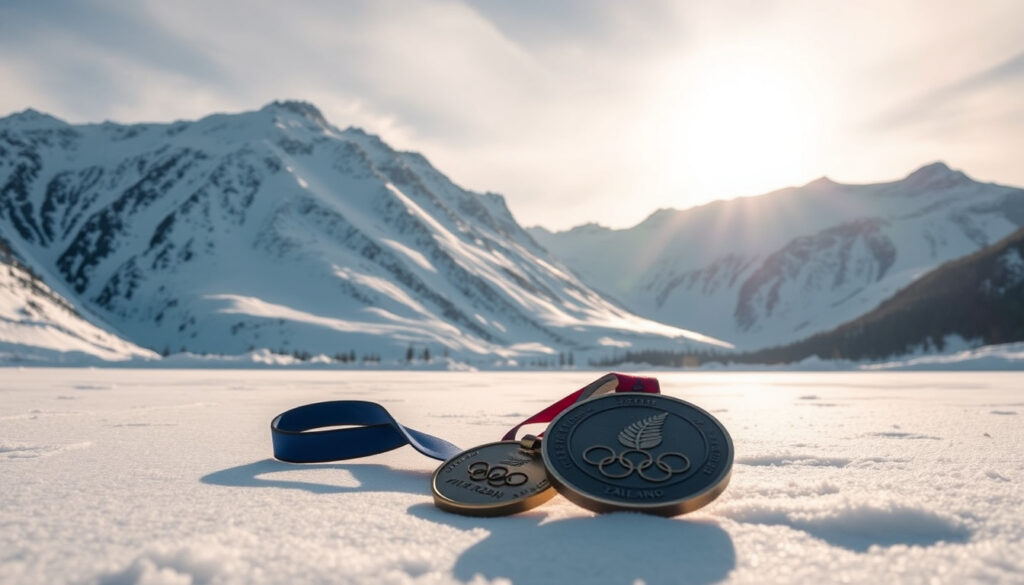
New Zealand at the Winter Olympics: Medals History & 2026 Outlook
Most nations that pile up Winter Olympic medals grow up on snow. New Zealand took 40 years to win its first, then turned a short run of freeski and snowboard results into a genuine podium streak — this is the story of those nine medals: the athletes who won them, the long gaps in between, and what a three-medal Beijing 2022 campaign means for the team heading to Milano Cortina 2026.
Total Winter Olympic medals: 9 · Gold medals: 0 · Most medals at one Games: 3 (2022) · Most decorated Winter Olympian: Zoi Sadowski-Synnott (3 medals) · First Winter Games participation: 1952 (Oslo) · First medal: 1992 (silver, Annelise Coberger)
Quick snapshot
- New Zealand has won 9 Winter Olympic medals — 0 gold, 3 silver, 6 bronze — through Beijing 2022. (Wikipedia)
- Zoi Sadowski-Synnott is the only New Zealander with multiple Winter Olympic medals. (NZOC)
- The three-medal 2022 campaign was New Zealand’s best Winter Games performance. (Olympedia)
- How the full nine-medal total breaks down across earlier Games; public records are inconsistent. (Te Ara)
- The exact make-up of the 2026 New Zealand team, which had not been officially announced as of early 2025. (NZ History)
- Whether New Zealand can finally convert its snowboard and freeski depth into a first Winter gold. (Olympedia)
- First Winter Games: Oslo 1952. (Te Ara)
- First medal: Annelise Coberger’s slalom silver, 1992. (NZ History)
- 2018: two medals in PyeongChang — the first podiums in 26 years. (Wikipedia)
- Milano Cortina 2026: snowboard and freeski athletes lead the qualification push. (Olympedia)
- Zoi Sadowski-Synnott is expected to lead the team. (Te Ara)
- A first Winter gold remains the open target. (Wikipedia)
New Zealand’s Winter Olympic record at a glance
Six decades of Winter history, one pattern: the medal count is small, it started late, and almost all of it has arrived since the 1990s.
| Fact | Record |
|---|---|
| First Winter Games | 1952, Oslo (Olympedia) |
| First medal (year, athlete, sport) | 1992 — Annelise Coberger, alpine skiing, silver (Te Ara) |
| Only multiple medalist | Zoi Sadowski-Synnott — 3 medals (Olympedia) |
| Best single-Games haul | 3 medals, Beijing 2022 (Wikipedia) |
| Total medals through 2022 | 9 — 0 gold, 3 silver, 6 bronze (Wikipedia) |
| First Southern Hemisphere Winter medallist | Annelise Coberger, 1992 (Manatū Taonga New Zealand History) |
| Athletes sent to Beijing 2022 | 15 (Olympedia) |
The table condenses 70 years into seven rows — and the constants are the long drought, the late start, and the recent acceleration.
Are there any New Zealanders in the Winter Olympics 2026?
Yes — New Zealand is expected to field a team at Milano Cortina 2026, though the official squad list was still being finalized as of early 2025. The New Zealand Olympic Committee (the national Olympic body) has kept qualification pathways active, and the strongest candidates come from the same sports that produced the recent medal run.
Qualification pathways and potential team size
- New Zealand typically sends 15–20 athletes to the Winter Games, and took 15 to Beijing 2022 (Olympedia).
- Snowboard slopestyle, big air and freeski halfpipe are the deepest qualification areas (NZ Olympic Committee).
- Alpine skiing, the sport of New Zealand’s first medal, also contributes team spots (Te Ara (national encyclopedia)).
Zoi Sadowski-Synnott is expected to headline the squad. Behind her, younger snowboarders and freeskiers are competing for the remaining quota spots, and the qualification pipeline points to the same action-sports pathway that produced the 2018 and 2022 podiums.
New Zealand’s Winter medal record is concentrated in a handful of athletes. If 2026 comes down to that same small group, one injury could erase the country’s most realistic shot at a first Winter gold — depth, not star power, is the real test.
The pattern: five of New Zealand’s nine Winter medals have arrived in the last two Games. The 2026 question is whether that acceleration continues on a bigger stage — or stalls just as the team becomes a genuine contender.
Which New Zealander has won the most Olympic medals?
Across Summer and Winter, New Zealand has won 166 Olympic medals — 157 in Summer sports and 9 on snow and ice (Wikipedia (crowdsourced encyclopedia)). The all-time leaderboard belongs to canoe sprint; the Winter leaderboard belongs to one snowboarder.
New Zealand’s top Olympic medalists (Summer and Winter)
- Summer: canoe sprint’s Lisa Carrington and Ian Ferguson top the country’s all-time medal list.
- Winter: Zoi Sadowski-Synnott leads with 3 medals.
- Team events: every New Zealand Winter medal has come in an individual event.
Focus on Winter Olympic medal leaders
- Zoi Sadowski-Synnott — 3 medals (2 silver, 1 bronze) (Olympedia)
- Annelise Coberger — 1 silver, New Zealand’s first Winter medal (Te Ara)
- Nico Porteous — 1 bronze (Te Ara)
- Four other athletes — 1 medal each, completing the nine-medal record (Wikipedia)
What this means: the Summer list is decades deep, but the Winter list is short enough that one strong Games can rewrite it. That is exactly what Beijing 2022 did.
Who are New Zealand’s greatest Olympians?
“Greatest” is a judgment call. By medal count, New Zealand’s Summer paddlers own the records. By historical impact, one Winter name changed the sport’s trajectory in the country: Annelise Coberger, the first Southern Hemisphere athlete to win a Winter Olympic medal (Manatū Taonga New Zealand History (government history agency)).
Criteria for greatness: medal count, longevity, impact
- Medal count: Carrington and Ferguson (Summer) versus Sadowski-Synnott (Winter) (Wikipedia).
- Longevity: Summer careers often span four Games; Winter action-sports careers are shorter and more injury-prone.
- Impact: Coberger’s 1992 silver created the pathway that today’s snowboarders and freeskiers follow (NZ History).
The comparison is lopsided. New Zealand has never finished near the top of a Winter medal table, and its Winter roster is measured in dozens, not hundreds. What has changed is momentum: the five medals from 2018 and 2022 are more than New Zealand won in its first six decades of Winter competition combined (Te Ara’s medal tables).
Greatness in New Zealand Winter sport is being defined in real time. The same shortness that makes the record fragile — a handful of athletes, a narrow set of disciplines — also means a single 2026 medal can move any athlete deep into the national record books.
Why this matters: New Zealand’s Winter greats are not set in stone. The 2026 edition will likely decide whether this era produces a genuine all-time icon or remains a promising chapter.
How many Winter Olympic medals has New Zealand won in total?
Nine, through Beijing 2022 — a split of 0 gold, 3 silver and 6 bronze (Wikipedia). Small beside the Summer tally, yes. But the direction of travel is what matters.
Medal count by sport
- Snowboarding: 4 medals (Olympedia)
- Alpine skiing: 2 medals (Te Ara)
- Freestyle skiing: 2 medals (Olympedia)
- Speed skating: 1 medal (Olympedia)
Eight of New Zealand’s nine Winter medals come from snowboarding, freestyle skiing and alpine skiing — sports with narrow athlete peaks, where one strong winter can change a country’s entire medal record.
Medal count by Games
- 1992: 1 medal — Annelise Coberger’s silver (Te Ara)
- 2018: 2 medals — the first podiums in 26 years (Te Ara)
- 2022: 3 medals — the best single-Games haul (Wikipedia)
The compiled nine-medal total also attributes medals to earlier Games, but public documentation varies on how those are itemized (Te Ara’s medal tables). The consistently documented sequence is 1992 → 2018 → 2022.
Why it matters: one medal in the first four decades, five in the last two Games. If that pace continues in 2026, New Zealand will clear double digits for the first time.
Who is New Zealand’s most successful Winter Olympian?
That title belongs to Zoi Sadowski-Synnott, the only New Zealander with more than one Winter Olympic medal. Her three podium finishes put her alone at the top.
Zoi Sadowski-Synnott’s career highlights
- 3 Olympic medals — 2 silver and 1 bronze (Olympedia)
- The only New Zealand athlete with multiple Winter medals (Olympedia)
- At 16, one of New Zealand’s two youngest-ever Olympic medallists, alongside fellow 2018 bronze winner Nico Porteous (Te Ara)
Sadowski-Synnott’s trajectory tracks the broader shift in New Zealand Winter sport: from alpine skiing’s lone 1992 breakthrough to a generation raised on snowboard and freeski competition. She arrived as a teenager, and the medal record she now leads did not exist a decade earlier.
Other notable Winter Olympians
- Annelise Coberger — first New Zealand Winter medal and first Southern Hemisphere Winter medal (NZ History)
- Nico Porteous — freeski halfpipe bronze at PyeongChang 2018 (Te Ara)
- Four remaining single-medal athletes — the rest of the nine-medal record (Wikipedia)
The catch: for all of Zoi’s success, no New Zealander has stood on top of a Winter podium. That is the one box left unticked — and the one 2026 could close.
New Zealand’s Winter Olympic timeline
The arc is short and late: four decades of waiting, then a rush of podiums.
- 1952 — New Zealand debuts at the Winter Games in Oslo (Olympedia).
- 1992 — Annelise Coberger wins silver in the women’s slalom at Albertville, New Zealand’s first Winter medal (Te Ara).
- 2018 — Two bronze medals in PyeongChang, both won by 16-year-olds: Zoi Sadowski-Synnott and Nico Porteous (Te Ara).
- 2022 — Three medals in Beijing, the country’s best single-Games haul (Wikipedia).
- 2026 (projected) — Milano Cortina, with snowboarders and freeskiers leading the qualification charge (NZ Olympic Committee).
The pattern: gaps between medals are shrinking — 26 years between the first and second, four between the second and third, and a genuine chance to build again in 2026.
What’s confirmed and what’s still uncertain
New Zealand’s Winter record is short enough to verify, but not every corner of it is equally clear.
Confirmed facts
- New Zealand has 9 Winter Olympic medals through 2022 — 0 gold, 3 silver, 6 bronze (Te Ara).
- Zoi Sadowski-Synnott is the most decorated Winter Olympian, with 3 medals (Olympedia).
- Beijing 2022 was the best single-Games performance, with 3 medals (Wikipedia).
- First participation 1952; first medal 1992 (Olympedia; Te Ara).
What’s unclear
- How the nine-medal total is itemized across every Games; the documentation is inconsistent (Te Ara).
- The full composition of the 2026 team, unconfirmed as of early 2025 (NZOC).
- Whether New Zealand wins its first Winter gold in 2026.
- Which athletes hold four of the single-medal spots in the nine-medal record.
- How many New Zealanders ultimately qualify for Milano Cortina 2026.
The distinction matters: the headline number is solid, but the details around it are looser than most short summaries admit.
What the record says
Three sourced statements capture the whole arc.
“New Zealand won no Winter Olympic medals between Coberger’s 1992 silver and the two bronze medals won in 2018.”
— Te Ara: The Encyclopedia of New Zealand
“Coberger became the first athlete from a Southern Hemisphere country to win a Winter Olympic medal.”
— Manatū Taonga New Zealand History
“New Zealand first competed at the Winter Olympics in Oslo in 1952.”
— Olympedia
The takeaway: a debut, a drought, a breakthrough — three lines that cover 70 years of Winter history. The 2026 chapter is still unwritten.
What the record means for 2026
New Zealand’s Winter Olympic record is no longer a curiosity. Nine medals, an accelerating timeline, and a medal pipeline built on snowboarding and freeskiing have turned the team into a realistic podium contender at Milano Cortina 2026. The gap between best-case and worst-case there is unusually wide: a full-strength squad has a legitimate chance to chase a first Winter gold, while a thin one risks leaving 2026 empty-handed. For the New Zealand Olympic Committee, the equation is clear: keep investing in the action-sports pathway that produced nine medals, or watch the momentum stall just as the podium window opens.
The implication is clear: the 2026 team has a chance to rewrite the record, but depth remains the open question.
nzhistory.govt.nz, teara.govt.nz, en.wikipedia.org, olympic.org.nz, 100years.olympic.org.nz, olympedia.org, teara.govt.nz
Frequently asked questions
When did New Zealand win its first Winter Olympic medal?
In 1992, when Annelise Coberger took silver in the women’s slalom at Albertville (Te Ara (national encyclopedia)). She was also the first athlete from the Southern Hemisphere to win a Winter Olympic medal (Manatū Taonga New Zealand History).
Which New Zealander has won the most Winter Olympic medals?
Zoi Sadowski-Synnott, with three medals — two silver and one bronze (Olympedia (Olympic historian database)). She is the only New Zealander with more than one Winter Olympic medal.
Has New Zealand ever won a gold medal at the Winter Olympics?
Not yet. New Zealand’s nine Winter medals through Beijing 2022 are three silver and six bronze (Wikipedia (crowdsourced encyclopedia)). A first Winter gold is a realistic target for Milano Cortina 2026.
What sports are New Zealand strongest in at the Winter Olympics?
Snowboarding leads with four medals, followed by alpine skiing (2), freestyle skiing (2) and speed skating (1) (Olympedia). Snowboard and freeski events have driven New Zealand’s recent podium run.
How many athletes does New Zealand typically send to the Winter Olympics?
Around 15–20. New Zealand took 15 athletes to Beijing 2022 (Olympedia).
When did New Zealand first compete at the Winter Olympics?
At Oslo in 1952 (Olympedia). New Zealand missed the 1956 and 1964 Games and has otherwise competed in every Winter edition through 2022.
More related posts
 Dove Body Wash NZ Review: Best Products & Lawsuit Guide
 Change Car Ownership NZ: Online Process, Costs & Requirements
 How to Season a Wok: Step-by-Step Guide for Beginners
 HP OfficeJet Pro 7740 Ink: Costs, Cartridges & Guide
 New Zealand Herald Quiz: How to Play & Share Scores
 Free Healthy Homes Assessment: How to Get Grants & Referrals
 Find Cheap Cars for Sale in Ireland: Budget Used Car Guide