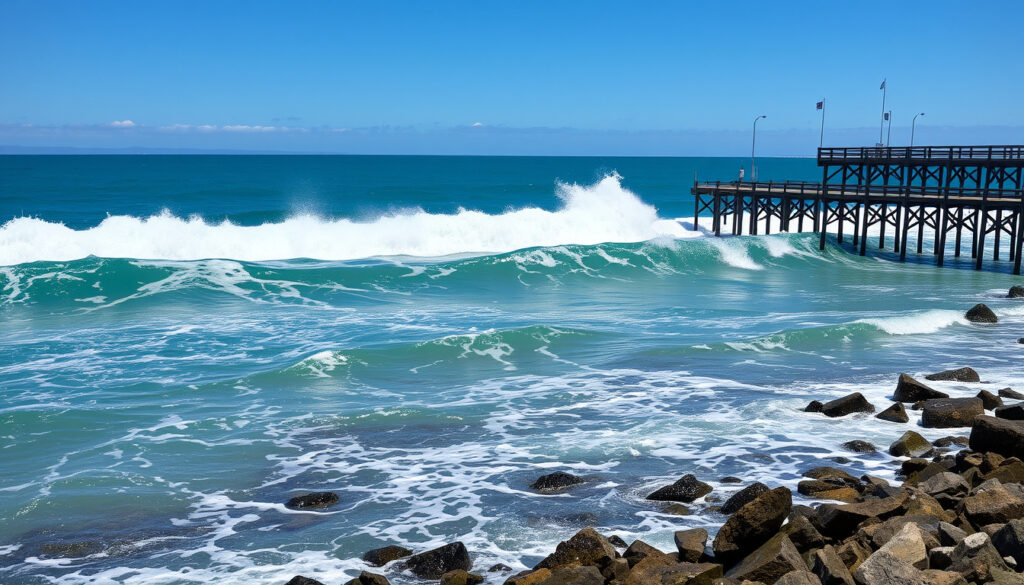
When Is High Tide – Today’s NZ Times for Auckland
For anyone heading to New Zealand’s coastline, knowing when high tide occurs is essential for planning beach activities, fishing trips, or coastal walks. Tidal patterns along New Zealand’s eastern coast follow predictable cycles, but specific times vary by location and date. This guide provides current tide information for key destinations, explains how tide predictions work, and points you toward the most reliable tools for checking times before you head out.
New Zealand experiences two high tides and two low tides each day, a pattern known as semi-diurnal tides. The timing and height of these tides shift daily by approximately 50 minutes, creating a continuously changing coastal environment. Understanding when high tide occurs helps ensure safe access to beaches, shellfish gathering areas, and coastal tracks.
When is High Tide Today in NZ?
Key Facts About Today’s Tides
- Auckland’s eastern coast recorded high tides of 3.02 metres (9.91 feet) on Thursday 16 April 2026, occurring at 6:08 AM and 6:37 PM NZST.
- Low tides today occurred at approximately 12:36 AM and 12:58 PM, creating roughly six hours between each high and low tide.
- Mount Maunganui and Maketu on the Bay of Plenty share similar semi-diurnal tidal patterns to Auckland but require location-specific forecasts due to local geography.
- Tide predictions for New Zealand are generated using hydrodynamic models and are typically accurate within 10 minutes of the predicted time.
- Spring tides, which produce higher highs and lower lows, occur approximately every two weeks when the sun and moon align.
- King tides represent extreme high water events influenced by the moon’s perigee and typically coincide with spring tide periods.
- For accurate local times, always consult NIWA or MetService rather than relying on general estimates.
| Location | Today’s High Tide (16 Apr) | Height | Tomorrow’s First High (17 Apr) |
|---|---|---|---|
| Auckland | 6:08 AM, 6:37 PM | 3.02 m (9.91 ft) | 6:56 AM (estimated) |
| Mount Maunganui | Location-specific forecast required | Varies by local geography | Check NIWA tool |
| Maketu | Location-specific forecast required | Varies by local geography | Check NIWA tool |
| East Auckland Coast (sample data) | ~5:06 AM, ~5:31 PM | 2.6–2.7 m | Check MetService |
| Historical Maximum (Auckland) | Recorded extreme | 3.7 m (referenced to MLLW) | Occasion-dependent |
| Recent Spring Tide Example | 21–22 April 2026 | Up to 3.34 m (10.96 ft) | Approximate period |
High Tide Times Tomorrow Across NZ Locations
For Friday 17 April 2026, Auckland’s first high tide is predicted at approximately 6:56 AM. The second high tide follows roughly 12 hours later in the evening, maintaining the standard semi-diurnal pattern of two daily highs. Low tides for tomorrow are scheduled around 12:36 AM and 12:58 PM, though these times may shift slightly based on ongoing monitoring data.
The 50-minute daily shift in tide times occurs because the moon rises approximately 50 minutes later each day. As the moon’s gravitational pull drives tidal cycles, this daily progression means tide times change consistently but require regular checking for accurate planning. Marine forecasts from MetService provide updated predictions that account for any minor variations from theoretical models.
Why Tide Times Shift Daily
Tidal movements result from the gravitational interaction between Earth, the moon, and the sun. The moon’s position relative to a coastal location determines when high tide occurs at that site. Since the moon completes one orbit around Earth in approximately 24 hours and 50 minutes, high tides arrive about 50 minutes later each successive day. This predictable pattern allows for accurate forecasting, though local geography, ocean depth, and weather conditions can introduce minor variations.
While Auckland and the Bay of Plenty share similar tidal rhythms, Mount Maunganui and Maketu experience distinct local timing differences. The shape of the Bay of Plenty coastline and underwater topography cause these variations. Always use location-specific forecasts rather than applying Auckland times to nearby beaches.
High Tide in Auckland, Mount Maunganui, and Maketu
Auckland’s tide times are among the most frequently checked in New Zealand, given the city’s large coastal population. The Waitemata Harbour and Hauraki Gulf experience predictable semi-diurnal tides with heights typically reaching 2.5 to 3.0 metres during normal conditions. Today’s high tides of 3.02 metres indicate moderate conditions, well below historical maximums but substantial enough to affect beach access at lower-lying areas.
Mount Maunganui, located on the Bay of Plenty approximately 170 kilometres southeast of Auckland, shares the same semi-diurnal tidal pattern but with local variations. The tide times at Mount Maunganui do not precisely match Auckland’s schedule. Specific forecasts for this area require checking NIWA’s tide prediction tool, which provides location-specific data for the Bay of Plenty coastline.
How to Find Tide Times Near You
- Visit NIWA’s tide prediction utility and select your specific location from the map.
- Use MetService’s marine tide tables for East Auckland Coast forecasts.
- Download a reputable tide app that sources data from official New Zealand hydrographic services.
- Check local council websites, which sometimes provide tide calendars for popular beaches.
- Look for tide clocks at coastal locations such as boat ramps, yacht clubs, and fishing supply stores.
If you’re planning a beach walk or shellfish gathering, aim to visit during low tide when exposed sand and rocks are safest. Avoid Stranded areas by checking both today’s and tomorrow’s tide times before setting out. Coastal conditions can change rapidly during spring tide periods.
Best Apps and Tools for NZ Tide Predictions
Several tools provide reliable tide predictions for New Zealand coastal locations. The choice depends on whether you need simple tide times, extended forecasts, or integration with weather data for comprehensive trip planning.
Official Sources
NIWA Tides offers the most authoritative tide prediction tool available to the public. The free web utility covers all New Zealand coastal waters within the Exclusive Economic Zone and provides forecasts up to 28 days ahead. Users can select any location on an interactive map and download or view custom predictions. NIWA’s predictions use hydrodynamic modelling based on data from Land Information New Zealand (LINZ) tidal benchmarks.
MetService Marine combines tide predictions with weather forecasts, making it particularly useful for planning boating, fishing, or coastal walks where wind and sea conditions matter alongside tidal timing. The service provides tide tables for multiple locations along the East Auckland Coast, including sample data showing high tides at 5:06 AM (2.7 metres) and 5:31 PM (2.6 metres).
Third-Party Options
Third-party applications like Tide Forecast and Tides Chart compile tide data into accessible formats and may offer convenient features such as push notifications for upcoming high or low tides. However, these applications typically source their underlying data from official agencies rather than generating predictions independently. For critical timing needs, verify information against NIWA or MetService directly.
Third-party tide apps may display sample or historical data rather than current predictions. For real-time and future-dated forecasts, always access NIWA or MetService directly. Check the data timestamp and source attribution before relying on any tide application for safety-critical decisions.
When Do High Tides Occur? Patterns and Types
Understanding tidal patterns helps explain why high tide times change daily and why some tides reach higher levels than others. New Zealand’s tides follow the semi-diurnal model, meaning two high tides and two low tides occur each day, with the two highs typically reaching similar heights.
Spring Tides
Spring tides occur approximately every two weeks when the sun, Earth, and moon align during full and new moon phases. During these periods, the combined gravitational pull produces higher high tides and lower low tides than average. The term “spring” refers to the tidal surge, not the calendar season. Recent observations show spring tide highs reaching 3.34 metres (10.96 feet) around 21–22 April 2026, compared to the 3.02 metres recorded for mid-April 2026.
King Tides
King tides represent extreme high water events that occur when spring tides coincide with the moon at perigee—its closest approach to Earth. This combination maximises gravitational pull, producing the highest predicted tides of any given period. The historical maximum recorded high tide for Auckland reached 3.7 metres (referenced to Mean Lower Low Water), though such extremes are uncommon. King tide events typically last only a day or two before normal tidal ranges resume.
Neap Tides
Between spring tides, neap tides occur when the moon is at first or third quarter and its gravitational pull partially cancels the sun’s effect. Neap tides produce lower high tides and higher low tides, resulting in a smaller tidal range. These quieter tidal conditions suit certain activities such as exploring rock pools, though they still follow the same twice-daily pattern.
New Zealand’s tidal range varies significantly by location. The Auckland region typically experiences ranges of 2.5 to 3.0 metres, while some eastern North Island locations see greater ranges. Bay of Plenty locations like Mount Maunganui and Maketu generally experience slightly smaller ranges but maintain the same semi-diurnal pattern.
7-Day Tide Pattern Overview
A typical week of tidal activity along New Zealand’s eastern coast demonstrates the predictable progression of high and low tides. The following overview illustrates how tide times and heights shift across consecutive days.
- Thursday 16 April 2026: High tides at 6:08 AM and 6:37 PM, reaching 3.02 metres. Moderate spring tide influence building.
- Friday 17 April 2026: First high tide at approximately 6:56 AM. Second high tide follows approximately 12 hours later. Daily shift of roughly 50 minutes from previous day.
- Saturday 18 April 2026: Tide times continue shifting later by approximately 50 minutes. Tidal range remains moderate.
- Sunday 19 April 2026: Approaching first quarter moon phase. Tidal range beginning to decrease toward neap conditions.
- Monday 20 April 2026: Tide times shift later. Neap tide conditions reducing high tide heights slightly below spring levels.
- Tuesday 21 April 2026: Pre-spring tide period. Tidal range increasing as lunar alignment approaches.
- Wednesday 22 April 2026: Spring tide period begins. High tides reaching up to 3.34 metres based on recent observations. Significant tidal range.
The seven-day cycle demonstrates how planning for coastal activities requires checking tide predictions for the specific date of your visit rather than relying on memory of previous visits. The 50-minute daily shift means yesterday’s high tide time will not match today’s.
What We Know and What Remains Uncertain
| Established Information | Factors Requiring Monitoring |
|---|---|
| Auckland high tides on 16 April 2026 at 6:08 AM and 6:37 PM (3.02 m) | Precise times for Mount Maunganui and Maketu on the same dates |
| Tomorrow’s first high tide in Auckland at approximately 6:56 AM | Weather-related impacts on actual tide heights |
| Semi-diurnal tidal pattern (two highs, two lows daily) | Storm surge effects during severe weather events |
| Spring tides occur roughly every two weeks | Exact timing of next king tide event |
| NIWA and MetService provide authoritative predictions | Long-term sea level rise impacts on future tidal patterns |
| Daily tide time shift of approximately 50 minutes | Localised variations due to underwater topography |
Official tide predictions from NIWA and MetService are typically accurate within 10 minutes of the actual event. However, extreme weather conditions, storm surges, and unusual oceanographic events can cause deviations from predicted times and heights. During severe weather, monitor real-time conditions alongside static predictions.
Why Tides Matter for Coastal Activities
Understanding tidal patterns affects numerous coastal activities throughout New Zealand. Beach safety depends significantly on knowing whether access routes will be submerged at high tide. Many popular walking tracks along cliff bases and rocky shores become impassable during high water. Shellfish gatherers need to time their visits for low tide when exposed rocks and sand provide safe access to gathering areas.
Fishing communities monitor tides closely because many species move with tidal flows. Boating safety requires knowledge of both high and low tide times—shallow draft vessels may ground at low tide, while high winds during spring tides can create hazardous conditions in exposed harbours. Coastal erosion patterns and sediment transport also correlate with tidal cycles, making tides relevant to property owners near shorelines.
During periods of New Zealand Severe Weather – Red Warnings Across Regions, tidal conditions compound the hazards posed by heavy rain, large swells, and storm surge. Coastal residents and visitors should monitor both weather warnings and tide predictions during these events.
Official Sources and Data Attribution
Tide predictions for New Zealand originate from two primary official sources. Land Information New Zealand maintains the underlying tidal benchmarks and hydrographic data that enable accurate forecasting. The National Institute of Water and Atmospheric Research develops hydrodynamic models that translate this data into location-specific predictions, providing the NIWA tide prediction service.
“NIWA’s tide prediction tool covers all New Zealand coastal waters within the Exclusive Economic Zone, providing forecasts up to 28 days ahead using validated hydrodynamic models.”
— NIWA Tides Service Description
MetService integrates tidal data from these authoritative sources with weather forecasting to provide marine-specific predictions. The MetService marine tide tables offer combined tide and weather information particularly valuable for maritime activities.
“MetService marine forecasts include tide predictions for the Auckland East Coast, providing high and low times and heights alongside weather conditions for planning coastal activities.”
— MetService Marine Division
Summary: Finding High Tide Times for Your Location
Today’s high tide in Auckland occurred at 6:08 AM and 6:37 PM, reaching 3.02 metres. Tomorrow’s first high tide is expected around 6:56 AM. For Mount Maunganui, Maketu, and other Bay of Plenty locations, use NIWA’s tide prediction tool to obtain location-specific forecasts. The semi-diurnal pattern means two high tides occur daily, with times shifting approximately 50 minutes later each day.
Spring tides and king tides produce higher-than-average high tides roughly every two weeks, with king tides occurring when spring conditions coincide with lunar perigee. For comprehensive trip planning, consult New Zealand Severe Weather – Red Warnings Across Regions alongside tide predictions to account for weather impacts on coastal conditions.
Frequently Asked Questions
When do low tides occur in New Zealand?
Low tides occur roughly six hours after each high tide, following the semi-diurnal pattern of two high and two low tides each day. On 16 April 2026, Auckland’s low tides occurred at approximately 12:36 AM and 12:58 PM. Specific low tide times for your location are available through NIWA’s tide prediction service.
How often do spring tides occur?
Spring tides occur approximately every two weeks, coinciding with full and new moon phases when the sun and moon’s gravitational pulls combine. Recent observations show spring tide conditions producing highs of 3.34 metres around 21–22 April 2026, compared to the 3.02 metres recorded for mid-April.
How often do king tides occur?
King tides occur when spring tide conditions coincide with the moon at perigee (closest approach to Earth). These extreme events happen several times per year, typically during the same two-week periods as spring tides but with notably higher water levels. The historical maximum for Auckland reached 3.7 metres.
What is the best app for checking New Zealand tides?
NIWA Tides and MetService Marine offer the most authoritative tide predictions for New Zealand. NIWA provides up to 28 days of forecasts with location-specific data, while MetService combines tide and weather information for comprehensive trip planning. Third-party apps are convenient but should be verified against official sources.
Why do tide times change every day?
Tide times shift daily because the moon rises approximately 50 minutes later each day. Since the moon’s gravitational pull drives tidal cycles, high tide occurs about 50 minutes later with each successive day. This predictable progression allows for accurate forecasting but requires checking current predictions rather than relying on previous days’ times.
Are Auckland tide times the same as Mount Maunganui?
No, tide times at Mount Maunganui and Maketu differ from Auckland despite sharing the same semi-diurnal pattern. Local geography, coastline shape, and underwater topography create distinct local timing variations. Always use location-specific forecasts from NIWA rather than applying one location’s times to another.
More related posts
 ASB Bank Interest Rate Changes 2026: Current Rates & Forecast
 Stanley Bay School Principal Resigns After Complaint
 Matariki Stars Names and Meanings: Complete Guide to the 9 Whetū
 Places to Visit in Auckland for Free: Top Picks
 Fiordland Heavy Rain Watch: Status, Warnings & Safety Tips
 NZD to VND Exchange Rate: Compare Wise, Remitly & Banks
 Fix Slow Computer Windows 11: Proven Steps to Speed Up Your PC