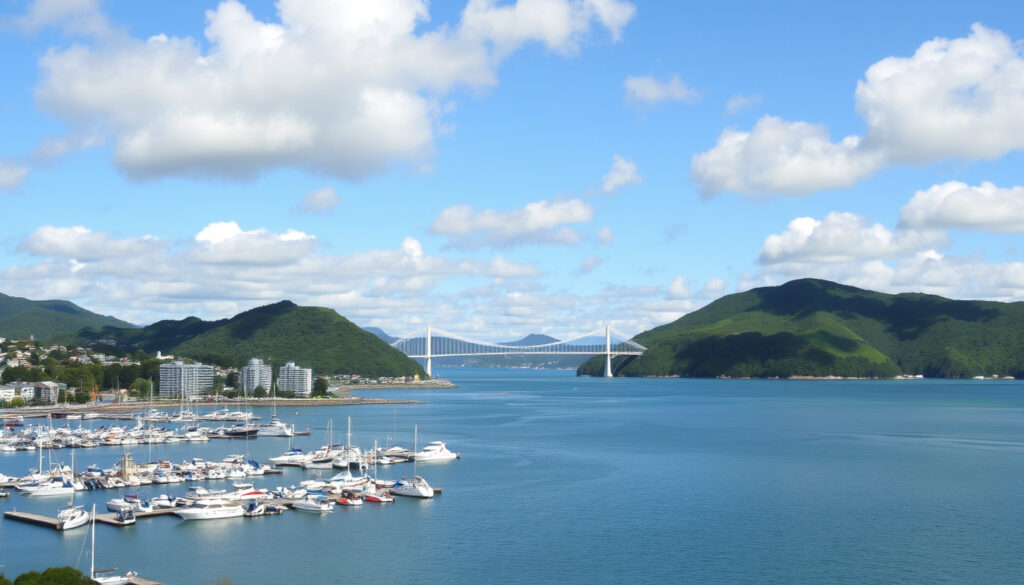
What to Do in Tauranga: Best Activities & Attractions
Ask anyone who’s visited Tauranga what they remember first, and chances are they’ll mention the climb up Mauao — the extinct volcanic cone that watches over the city. But as any local will tell you, the Bay of Plenty’s largest city offers far more than its iconic summit. With 240 sunny days a year and the largest export port in New Zealand, Tauranga quietly delivers a surprisingly varied travel experience that rewards those who look beyond the obvious.
Population (2023): 158,300 ·
Annual sunny days: 240 ·
Distance from Auckland: 2.5-hour drive ·
Port rank: Largest export port in New Zealand ·
Mount Maunganui summit elevation: 232 m
Quick snapshot
- Mount Maunganui is an extinct volcanic cone (Tourism Bay of Plenty)
- Tauranga handles the largest export volume in New Zealand (Tourism Bay of Plenty)
- City averages 240 sunny days per year (Tourism Bay of Plenty)
- Mount Maunganui summit track is 3.4 km return (Tourism Bay of Plenty)
- Whether Tauranga or Rotorua is better depends entirely on traveler preferences
- The exact number of free activities shifts with seasonal events and local programming
- Mauao walking tracks were closed after a weather event on 21 January 2026 — check current status before visiting (Tourism Bay of Plenty)
- Summer season (Dec–Mar) brings peak crowds and the best beach weather
- New walking trails and cycleways continue to open across the city
The table below summarizes Tauranga’s key facts at a glance.
| Category | Details |
|---|---|
| Region | Bay of Plenty, North Island |
| Population | 158,300 (2023 estimate) |
| Main airport | Tauranga Airport (TRG) |
| Best time to visit | December to March for warm weather |
| Famous for | Mount Maunganui, kiwifruit, port |
| Number of sunny days per year | 240 |
How do I spend a day in Tauranga?
Morning on Mount Maunganui
Start early with the summit walk up Mauao. The 3.4 km return track typically takes about an hour and rewards you with panoramic views of the Bay of Plenty coastline (Tourism Bay of Plenty). Note that access was temporarily closed after a weather event in January 2026, so check the current status before you go.
Midday at the beach or art gallery
Descend to the Mount Maunganui Main Beach for a swim, or head into the city centre to visit the Tauranga Art Gallery. The gallery offers free entry for some exhibits and features interactive displays for children (Tourism Bay of Plenty).
Afternoon at McLaren Falls or the Mount Hot Pools
A 15-minute drive from town brings you to McLaren Falls Park, where a 30-minute walk leads to the waterfall. The park is free to enter and popular for picnics, fishing, and kayaking (Tourism Bay of Plenty). Alternatively, soak at the Mount Hot Pools, which stay open until late evening.
Evening dining and sunset
The Strand waterfront in Tauranga has a large playground with slides and rope swings, plus a row of restaurants and bars overlooking the harbour. Grab a table at Pilot Bay for a classic summer evening picnic spot (Tourism Bay of Plenty).
A single day in Tauranga can comfortably cover a summit hike, a beach session, a cultural stop, and a waterfront dinner — all within a 15-minute radius of the city centre. The catch: you’ll want a second day.
What this means: the compact layout makes it easy to pack in variety without wasting time on travel between stops.
Is Tauranga worth visiting?
Pros: sun, beaches, outdoor activities
Tauranga averages 240 sunny days per year, making it one of New Zealand’s sunniest cities. Mount Maunganui is consistently ranked among the country’s most popular beaches, and the network of free parks — including Memorial Park, Fergusson Park, and Yatton Park — offers plenty of space for families (Tourism Bay of Plenty). The TECT All Terrain Park has forest tracks for walking, cycling, and mountain biking (Tourism Bay of Plenty).
Cons: limited nightlife, crowded in summer
Nightlife in Tauranga is quieter than in larger cities. The Strand offers a handful of bars and restaurants, but those seeking a club scene will find limited options. Summer crowds pack the beaches and popular trails, especially around Mount Maunganui.
Who will enjoy it most?
Tauranga suits travelers who value outdoor recreation, coastal scenery, and a relaxed pace. Families appreciate the free playgrounds, safe swimming beaches, and interactive art gallery exhibits. Couples can enjoy sunset picnics at Pilot Bay and quiet estuary walks. Solo travelers will find a welcoming hostel scene and easy access to nature.
Comparison with Rotorua
Rotorua offers geothermal parks and Māori cultural experiences, while Tauranga focuses on beaches, hiking, and laid-back coastal relaxation. Rotorua is about a 1-hour drive from Tauranga, making it feasible to visit both on a single trip. Tauranga generally has warmer, sunnier weather.
Tauranga trades nightlife and cultural intensity for sunshine and outdoor freedom. For the beach-and-hike crowd, it’s an easy win. For those craving geothermal drama and Māori cultural immersion, Rotorua is the better pick.
The implication: your choice between these two Bay of Plenty neighbors hinges on whether you’d rather end the day with a beach stroll or a soak in a hot spring.
What is Tauranga best known for?
Mount Maunganui
Mauao — commonly called Mount Maunganui — is an extinct volcanic cone that rises 232 metres above the harbour. The summit track is the city’s most popular walk, and the surrounding beaches draw visitors year-round (Tourism Bay of Plenty).
Bay of Plenty beaches
The region’s mild climate supports a string of beaches along the coast: Mount Maunganui Main Beach, Papamoa Beach, and the quieter Waihī Beach. The headland walk from Waihī Beach to Orokawa Bay is a well-marked free nature activity (Tourism Bay of Plenty).
Port of Tauranga
The Port of Tauranga handles the largest volume of exports in New Zealand. It’s a major gateway for kiwifruit, timber, and dairy products, and the city is a regular stop for cruise ships (Tourism Bay of Plenty).
Kiwifruit and horticulture
Tauranga sits at the centre of New Zealand’s kiwifruit industry. Orchards blanket the surrounding hills, and the region’s mild climate and fertile soils make it a powerhouse for horticulture.
“Tauranga is a year-round destination because the weather holds up even outside summer. You can hike, swim, or kayak in most months — that’s rare in New Zealand.”
— Local tourism official, Tourism Bay of Plenty
What are the best free things to do in Tauranga?
Hike Mount Maunganui
The summit walk is free and open daily (weather permitting). The 3.4 km track takes about an hour return and offers sweeping views (Tourism Bay of Plenty).
Walk along the beach and estuary
Mount Maunganui Main Beach, Pilot Bay, and the estuary walk are all free. The Strand waterfront has a large playground with slides and rope swings (Tourism Bay of Plenty).
Visit McLaren Falls Park
McLaren Falls Park has no entry fee. It features bushwalks, a 30-minute walk to the waterfall, picnic areas, fishing spots, and kayaking (Tourism Bay of Plenty).
Explore the Tauranga City Centre and public art
The city hub has street art and murals to explore. Tauranga Art Gallery has free entry days, and the nearby Historic Village on 17th Avenue offers a free wander through heritage buildings. Te Puna Quarry Park is free to enter, open every day during daylight hours, and managed entirely by volunteers — it has walkways, panoramic views, gardens, ponds, sculptures, and a butterfly house (Tourism Bay of Plenty).
Attend local markets
The Saturday morning market at Tauranga Historic Village is free to browse. It runs weekly and features local produce, crafts, and food stalls.
Is Rotorua or Tauranga better?
Five key differences, and one pattern: the choice depends entirely on what kind of experience you want. The table below breaks down the contrasts.
| Aspect | Tauranga | Rotorua |
|---|---|---|
| Climate | Warm, 240 sunny days per year (Tourism Bay of Plenty) | Cooler, fewer sunny days |
| Main attractions | Beaches, hiking, Mount Maunganui, waterfront | Geothermal parks, Māori cultural experiences, geysers |
| Vibe | Relaxed, coastal, outdoor-focused | Active, cultural, geothermal |
| Best for | Beach lovers, hikers, families, couples | Culture seekers, geothermal fans, adventure travelers |
| Drive time from Auckland | 2.5 hours | 2.5 hours |
The pattern: Tauranga wins on sunshine and coastal calm; Rotorua wins on cultural depth and geothermal drama. For a short trip, choose based on whether you’d rather end the day on a beach or in a hot spring.
Upsides
- Consistently warm, sunny weather
- Outstanding beaches and coastal walks
- Many free activities and parks
- Excellent for families and couples
- Easy day-trip distance from Auckland
Downsides
- Limited nightlife and evening entertainment
- Summer crowds at popular spots
- Less cultural and geothermal attractions compared to Rotorua
- Public transport within the city is limited
How to plan your Tauranga day trip
- Check the weather and track status. Tauranga’s outdoor activities depend on clear skies. Confirm Mauao track access via the Tourism Bay of Plenty site before heading out.
- Start early with the summit walk. Arrive by 7:00–8:00 AM to avoid heat and crowds. The 3.4 km loop takes about an hour.
- Pack a picnic or plan a beach stop. Pilot Bay and Fergusson Park have free picnic tables and shade. The Strand playground is a hit with kids.
- Include one indoor backup. The Tauranga Art Gallery and the Historic Village are good options if the weather turns.
- Book dinner in advance during summer. Waterfront restaurants at The Strand and Mount Maunganui fill up quickly in peak season.
Confirmed facts
- Mount Maunganui is an extinct volcanic cone (Tourism Bay of Plenty)
- Tauranga is the largest export port in New Zealand (Tourism Bay of Plenty)
- The city averages 240 sunny days per year (Tourism Bay of Plenty)
- Mount Maunganui summit track is 3.4 km return (Tourism Bay of Plenty)
- McLaren Falls is about a 15-minute drive from Tauranga (Tourism Bay of Plenty)
- Te Puna Quarry Park is free and volunteer-managed (Tourism Bay of Plenty)
What’s unclear
- Whether Tauranga or Rotorua is better depends on traveler preferences
- The exact number of free activities may change with events and season
“I’ve been to both cities multiple times. Tauranga is where you go to reset — the beach, the walks, the relaxed pace. Rotorua is where you go for an experience. They complement each other, but they’re not the same trip.”
— Travel blogger, personal comparison of Tauranga and Rotorua
“The street art walk in the city centre is something most visitors miss. It’s free, takes about 30 minutes, and gives you a real sense of the local creative scene.”
— Local tourism official, Tourism Bay of Plenty
The real question isn’t whether Tauranga is worth visiting — it’s whether you’ll give yourself enough time to see past the Mount. For travelers from Auckland and abroad who want reliable sunshine, free outdoor access, and a genuinely relaxed coastal pace, Tauranga delivers exactly what it promises. The trade-off is clear: swap geothermal intensity and cultural immersion for 240 days of sun and a beach that actually lives up to the postcard. Beach-and-hike travelers will find the choice easy.
Related reading: **Tauranga to Wellington Flights**
bayofplentynz.com, bayofplentynz.com, tripadvisor.com, newzealandsky.co.uk, 10best.co.nz, bayofplentynz.com, nationalgeographic.com, nzonline.org.nz, bayofplentynz.com, newzealand.com, tourism.org.nz
For those coming from the South Island, direct flights from Christchurch offer a convenient way to start your Tauranga adventure.
Frequently asked questions
How do I get from Auckland to Tauranga?
The drive takes about 2.5 hours via State Highway 2. Buses run daily from Auckland’s SkyCity bus terminal to Tauranga. Flights from Auckland to Tauranga Airport (TRG) take about 40 minutes. For longer onward journeys, check Tauranga to Wellington Flights.
What is the best time of year to visit Tauranga?
December to March offers the warmest weather and the best beach conditions. The city averages 240 sunny days per year, so even autumn and spring are pleasant for outdoor activities.
Are there any free parking areas in central Tauranga?
Yes, there is free parking at Fergusson Park and along some beachfront streets. The city centre has paid parking meters, and the Tauranga i-SITE at 1 Devonport Road can advise on current free parking options.
Is Tauranga safe for solo travelers?
Yes, Tauranga is generally considered a safe city for solo travelers. The city centre, beaches, and walking tracks are well-trafficked during daylight hours. Standard precautions apply at night.
Can I swim at Mount Maunganui all year?
Swimming is possible year-round, but water temperatures are most comfortable from December to March. The main beach is patrolled by lifeguards during summer months.
What is the cost of a typical activity in Tauranga?
Many of the best activities are free: the summit walk, beaches, parks, and street art. Paid activities include the Mount Hot Pools (around NZ$15–20 per adult), entry to some gallery exhibits, and guided tours.
Are there any must-do tours in Tauranga?
The Tourism Bay of Plenty visitor guide offers free pick-ups from the Tauranga i-SITE. Popular tours include kiwifruit orchard visits, harbour cruises, and guided walks of Mauao.
More related posts
 Wealth Management Firms CompoundWealthNZ – NZ Boutique Profile
 Art for Kids Hub: Who is Rob Jensen, Ages, Free Lessons & More
 Why Do Dogs Lick You? Affection, Communication, Taste and More
 Best Hair Curlers 2026: 10 Expert-Tested & Reviewed
 Gentle Dental Lower Hutt: Comfort & Affordable Care
 Auckland Airport Flight Cancellations: What to Do
 New Zealand Sea Lion: Facts, Population, and Safety Guide