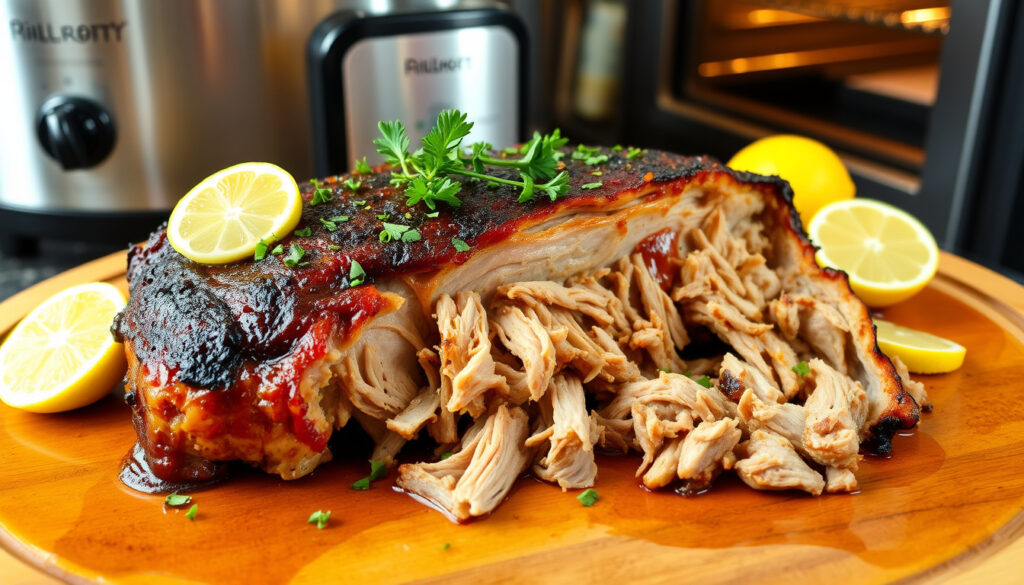
Slow Cooked Pork Shoulder: Oven, Slow Cooker & Greek-Style Guide
Anyone who has tried to make a pork shoulder that shreds like pulled pork without drying out knows the balance between heat and time can be fussy. This guide compares the slow cooker and oven methods, offers a Greek-style twist, and explains the science behind the temperatures that break down collagen, so you can get tender results every time.
Optimal cooking time in slow cooker: 8–10 hours on low or 6–7 hours on high · Ideal internal temperature for shredding: 200–205°F (93–96°C) · Typical pork shoulder weight: 2–4 kg (4–8 lbs)
Quick snapshot
- Low and slow cooking breaks down collagen into gelatin, making meat tender (A Cedar Spoon)
- Pork shoulder must reach at least 200°F (93°C) for shredding (Fifteen Spatulas)
- Exact optimal time varies by slow cooker model and whether the roast is bone-in or boneless (The Dizzy Cook)
- A 4‑pound pork shoulder hits 200°F internal after about 8 hours on low (Dishing Delish)
- After cooking, remove meat, shred, and optionally thicken the juices with a cornstarch slurry on high for 10–15 minutes (Foodess)
Three key facts, one pattern: collagen breakdown is temperature‑driven, not time‑driven, but time at temperature determines how fully that breakdown happens.
These key facts summarize the essential numbers for cooking pork shoulder.
| Fact | Value |
|---|---|
| Ideal internal temp for shredding | 200–205°F (93–96°C) (Fifteen Spatulas) |
| Average cook time per pound (slow cooker low) | 1.5–2 hours per 0.45 kg (The Dizzy Cook) |
| Best pork cut | Boston butt or shoulder, bone‑in or boneless (A Cedar Spoon) |
How long does it take to cook a pork shoulder in a slow cooker?
What is the recommended cooking time for a 4‑pound pork shoulder?
- For a 3‑lb roast, 10–12 hours on low is typical (A Cedar Spoon). A 4‑lb roast generally needs 8–10 hours on low (The Dizzy Cook).
- Heavier or bone‑in cuts may require 1–2 additional hours (The Dizzy Cook).
Can I cook pork shoulder on high in the slow cooker?
- Yes. Most recipes give a high‑heat window of 6–7 hours (Foodess) or 6–8 hours (The Dizzy Cook).
- Low heat yields noticeably more tender meat because collagen has longer to break down (A Cedar Spoon).
Low heat is the safer bet for shred‑ready results; high heat can work but risks a dryer finish because connective tissue has less time to convert to gelatin.
The implication: choosing low heat is a deliberate trade‑off for texture over speed.
Can you slow cook a pork shoulder in the oven?
What oven temperature is best for slow roasting pork shoulder?
- An oven braise at 215°F (102°C) until fork‑tender is one tested alternative (Grassroots Coop).
- Higher temperatures (around 275°F) also produce good results, though cooking times shorten and moisture loss increases.
How long do you slow roast a pork shoulder in the oven?
- Cooking time depends on weight. A 4‑lb shoulder roasted at 215°F may take 6–8 hours; check internal temperature rather than the clock.
- Use a covered Dutch oven or roasting pan to hold in steam (Grassroots Coop).
Oven slow‑roasting mimics a slow cooker but gives you the option of a dry‑heat finish for browning. The trade‑off: you need to monitor liquid levels and oven temperature more closely.
The catch: oven slow‑roasting demands more active supervision than a slow cooker.
What is Greek‑style slow cooked pork shoulder?
What ingredients go into a Greek‑style pork shoulder marinade?
- Olive oil, lemon juice, garlic, oregano, and sometimes red wine vinegar form the base (Foodess notes that slow‑cooker pork shoulder accommodates many seasoning profiles).
- The meat is cooked low and slow until it pulls apart, then served with tzatziki, pita, and fresh vegetables rather than barbecue sauce.
How does Greek‑style differ from traditional pulled pork?
- Classic pulled pork uses a sweet‑spicy dry rub and smoked or BBQ sauce. Greek‑style relies on bright, acidic marinade and is typically served as a sandwich or platter.
- Both methods share the same low‑temperature collagen‑breakdown principle, just different flavor directions.
How to make slow cooker pork shoulder with crackling?
How do you get crackling crispy when slow cooking?
- A slow cooker alone cannot crisp skin because it traps moisture. The solution is to finish the pork under a hot oven or broiler at 450°F (232°C) for 15–20 minutes (Fifteen Spatulas recommends a high‑heat finish for browning).
- Before cooking, pat the skin dry and rub generously with salt to draw out moisture (The Dizzy Cook underscores that dry skin is essential for crisping).
Can you achieve crackling in a slow cooker?
- Not directly. Even with a dry rub, the moist environment prevents the skin from reaching the high surface temperature needed for puffing and crisping.
- A two‑step method – slow cook until tender, then oven‑blast the skin – is the only reliable way.
If you attempt crackling in the slow cooker alone, the skin will turn rubbery. Plan for an extra 15–20 minutes in the oven and a well‑ventilated kitchen.
The pattern: crackling is a high‑heat finish that requires a separate step after slow cooking.
What is the best recipe for slow cooked pulled pork?
What cut of pork is best for pulled pork?
- Boston butt (the upper part of the shoulder) is the top choice because of its marbling and connective tissue (Dishing Delish).
- Bone‑in or boneless both work; bone‑in may add slight flavor and requires a longer cook time (The Dizzy Cook).
How do you season pulled pork shoulder?
- A classic dry rub includes brown sugar, paprika, salt, pepper, and optional cumin or chili powder.
- Season generously and let the rub sit for at least 30 minutes before cooking.
Step‑by‑step method
- Pat the shoulder dry and apply the dry rub, pressing it into the meat.
- Sear the shoulder in a hot skillet (optional but adds flavor).
- Place in a slow cooker with ½ cup liquid (apple cider, broth, or water).
- Cook on LOW for 9–10 hours or HIGH for 6–7 hours until internal temperature reaches 200–205°F (Foodess).
- Remove meat, let rest 15 minutes, then shred with two forks.
- Optionally thicken cooking liquid with cornstarch slurry on HIGH for 10–15 minutes (Foodess).
- Serve with your favorite BBQ sauce, on buns, or with coleslaw.
Confirmed facts
- Low and slow cooking breaks collagen into gelatin (A Cedar Spoon).
- Pork shoulder must reach 200°F for shredding (Fifteen Spatulas).
- Slow cooker low yields more tender meat than high (A Cedar Spoon).
What’s unclear
- Whether bone‑in adds significant flavor is debated among home cooks.
- Whether oven roasting at 275°F consistently gives the same results as 215°F braising remains untested in published side‑by‑side trials.
The takeaway: the core principle is consistent across methods — low heat and a thermometer are the only guarantees.
“Low and slow is key to achieving fall‑apart tender pork.”
BBC Good Food recipe notes
“Cover and slow cook on LOW for 9–10 hours or HIGH for 6–7 hours until pork is tender.”
Foodess recipe author
For home cooks balancing dinner timing and weekend projects, the choice is clear: invest in a meat thermometer, commit to low heat, and plan for the longer window. The difference between a mediocre pork shoulder and one that earns requests at every barbecue is rarely a secret ingredient—it’s the patience to let 200°F do its work.
Related reading: Slow Cooker Pork Shoulder Roast Recipe · Slow Cooker BBQ Pulled Pork
For a variation that yields similarly tender results, try this pulled pork slow cooker recipe which uses the same low-and-slow method with slightly different seasonings.
Frequently asked questions
Can I freeze slow cooked pork shoulder?
What sides go well with slow cooked pork shoulder?
How do I reheat leftover pork shoulder?
Can I use a boneless pork shoulder?
Is it necessary to sear the meat before slow cooking?
What is the difference between pork shoulder and pork butt?
How much pork shoulder do I need per person for pulled pork?
More related posts
 DoubleTree Hilton Karaka: Heated Pool, Amenities & Reviews
 Barfoot & Thompson Manurewa: Sales, Rentals & Reviews
 Art for Kids Hub: Who is Rob Jensen, Ages, Free Lessons & More
 SPCA Masterton Centre Adoption: Process, Fees & Discounts
 Melbourne Cup Field 2025: Favourite, Barrier Draw & Form
 Lindt Dubai Chocolate NZ: Where to Buy & Availability
 Gene Hackman Cause of Death: Autopsy Heart Disease, Alzheimer’s
 Angry Ramen Lower Hutt: Menu, Reviews, Location Guide