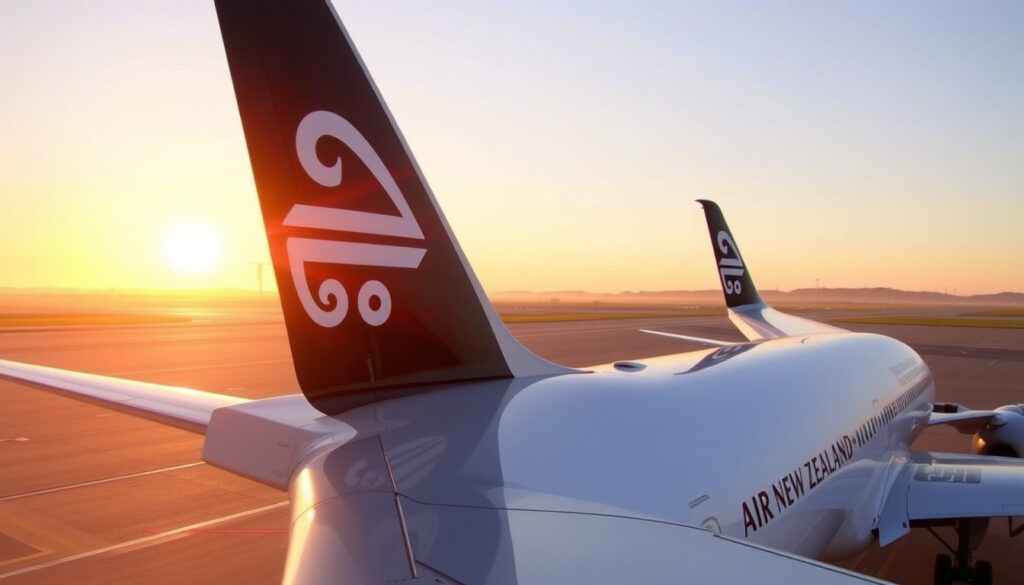
Air NZ 787-9 Dreamliner: Best Seats, Safety, Comfort & Retrofit (2025)
Few decisions on a long-haul flight matter more than picking the right seat. For anyone flying Air New Zealand’s Boeing 787-9 Dreamliner, the choice has just gotten more interesting thanks to a 2025 nose-to-tail retrofit that changes the cabin layout, and this guide lays out the differences, best seats, and what the retrofit means for your next flight.
Total seats: 302 ·
Business class: 18 ·
Premium Economy: 21 ·
Economy: 263 ·
Range: 14,140 km ·
Retrofit completed: 2025
Quick snapshot
- 302 seats across three classes (Air New Zealand)
- First full nose-to-tail 787-9 retrofit completed in 2025 (Aircraft Interiors International)
- All 14 787-9s to be updated by end of 2026 (Aircraft Interiors International) (Air New Zealand)
- Exact retrofit schedule for remaining 13 aircraft beyond 2025
- Specific new seat features not detailed in press materials
- Whether retrofitted configuration will be identical on all 14 aircraft
- 2013: 787-9 first flight
- 2014: Air NZ takes delivery of first 787-9
- 2025: First retrofitted aircraft enters service on Auckland–Brisbane (Aircraft Interiors International)
- End 2026: All 14 787-9s expected to be updated
- 7 aircraft due for retrofit by end of 2025
- Remaining 7 scheduled through 2026
- Passengers may receive aircraft-specific seat assignments
The table below summarizes nine key facts about the Air New Zealand Boeing 787-9 Dreamliner.
| Specification | Value |
|---|---|
| Aircraft type | Boeing 787-9 Dreamliner |
| Length | 63.6 m |
| Wingspan | 60.1 m |
| Range | 14,140 km |
| Cruise speed | 940 km/h |
| Seating capacity | 302 |
| Engines | Rolls-Royce Trent 1000 or GE GEnx-1B |
| First flight | 2013 |
| Entry into service with Air NZ | 2014 |
What are the best seats on an Air NZ 787-9?
Best seats in Business Class
Air New Zealand’s Business Premier cabin on the standard 787-9 configuration seats 18 passengers in a 1-2-1 layout, meaning every seat has direct aisle access. Rows 1 through 6 are configured with lie-flat beds that convert into fully flat sleeping surfaces. The forward cabin (row 1) is generally quieter and offers the fastest meal service, while row 6 places you closest to the Premium Economy cabin and galley — a trade-off for passengers who value convenience over noise levels (Air New Zealand).
Best seats in Premium Economy
Premium Economy on the original configuration holds 21 seats in rows 23 to 25, arranged 2-3-2. Row 23 is the standout: bulkhead seats offer extra legroom with no one reclining into you, and the proximity to the Premium Economy galley means quicker service. Row 25, by contrast, sits directly in front of the Economy cabin bulkhead and can feel transitional (Air New Zealand).
Best seats in Economy
Economy covers 263 seats in rows 34 to 65, arranged 3-3-3. The standout option here is the Economy Skycouch — rows 36 to 43 (ABC) and 36 to 41 (HJK) — which lets you turn a row of three seats into a flat pseudo-bed for two. For standard seats, rows near the front of the Economy section (34-38) minimize galley noise, while seats in the rear rows (60-65) are closer to lavatories and can be busier (Air New Zealand).
Skycouch rows cost extra, but for couples or solo travelers who want to stretch out on a 12-hour flight, the upgrade is often cheaper than a Premium Economy fare. The catch: you need to book the entire row of three seats.
The implication: on the standard 302-seat configuration, row 1 in Business Premier and row 23 in Premium Economy give the best balance of space and quiet. For Economy, Skycouch rows 36-43 deliver the most value per dollar — if you’re traveling with a partner.
Is the Boeing 787-9 a good plane?
Comfort and cabin features
The 787-9’s composite fuselage allows a cabin pressure altitude of 6,000 feet — lower than the 8,000 feet typical on older aluminum aircraft — and higher humidity levels. Passengers consistently report less fatigue and fewer headaches on long sectors (Boeing). Larger windows with electrochromic dimming instead of plastic shades add to the sense of space, and LED lighting can be programmed to simulate sunrise and sunset, helping reduce jet lag.
Performance and efficiency
The 787-9 burns 20-25% less fuel per seat than similarly sized aircraft from the previous generation, according to Boeing’s performance data. With a range of 14,140 km, it can fly routes like Auckland to Chicago or Auckland to London nonstop. The Rolls-Royce Trent 1000 and GE GEnx-1B engine options are among the quietest in commercial aviation, with a noise footprint roughly 60% smaller than the 767’s (Boeing).
Passenger reviews
On platforms like SeatGuru and airline review aggregators, the 787-9 consistently scores above 4 out of 5 for cabin comfort. The most common compliments: quieter cabin, larger windows, and better air quality. Criticisms usually center on seat width in Economy (17.2 inches in 3-3-3) and the lack of Wi-Fi on some Air New Zealand 787-9s (Air New Zealand).
The 787-9 is quieter and more fuel-efficient than anything else in its class, yet the 3-3-3 Economy layout means seat width at 17.2 inches is tighter than the 3-3-2 on the A330neo. Better plane, tighter squeeze — the trade-off is real.
What this means: the 787-9 is objectively a superior aircraft in terms of air quality, noise, and efficiency. For passengers in Business and Premium Economy, it’s an easy yes. In Economy, the seat width is the pinch point, and the retrofit doesn’t change that.
Is 787-9 still safe?
Safety record of 787-9
As of 2025, the 787-9 has zero fatal accidents in commercial service — a record shared with the 787-8 and 787-10. The aircraft type has accumulated over 3 million flight hours across global operators. The FAA and EASA both maintain type certificates with no airworthiness directives that ground the fleet (FAA).
Addressing past controversies
The 787 program’s most public safety issue — lithium-ion battery fires in 2013 — grounded the entire 787 fleet for four months. Boeing redesigned the battery system with a stainless steel containment box, improved venting, and a more robust charging algorithm. No battery-related incidents have occurred on the 787-9 since the fix was implemented (Wikipedia).
Recent incidents
In 2024, a 787-9 operated by a different carrier experienced an engine issue on takeoff, but the aircraft returned safely. Industry analysts note that the 787-9’s engine redundancy and flight control systems meet the latest certification standards. Boeing and regulators maintain continuous monitoring through the FAA’s continued operational safety program (FAA).
The pattern: the 787-9’s safety record is clean, and the 2013 battery issue was fully contained by a hardware redesign. No recurring systemic issues have emerged. For passengers, the statistical risk is comparable to the A350 or 777.
Which Air NZ 787 has been retrofitted?
Retrofit details
In May 2025, Air New Zealand completed the first full nose-to-tail retrofit of a 787-9 Dreamliner — a project the airline says is the first of its kind globally. The retrofitted aircraft entered revenue service on the Auckland to Brisbane route on 19 May 2025, following final testing in Auckland (Aircraft Interiors International).
Cabin changes
The retrofitted cabin introduces a new Business Premier seat based on the Safran Visa platform, arranged in a 1-2-1 inward-facing herringbone layout. The seats measure 20.5 inches wide — up from the earlier 18-inch design — and all have direct aisle access (Milelion). Premium Economy received refreshed seats with improved padding and recline, while Economy got updated upholstery and new lighting. The retrofit also upgraded the inflight entertainment system with larger screens (Aircraft Interiors International).
Timeline of retrofit
Air New Zealand CEO Greg Foran described the project as “the most significant change to our cabin product in over 15 years” (The Upfront). The airline plans to retrofit seven of its 14 Boeing 787-9s by the end of 2025 and the remaining seven by the end of 2026. The second retrofitted aircraft is expected to enter service in the second half of 2025 (Aircraft Interiors International).
The retrofit is a genuine upgrade for premium cabins, but travelers should check their aircraft before booking.
What is the 787-9 Dreamliner controversy?
Battery overheating incidents
The 787 program’s defining controversy was the 2013 lithium-ion battery fires that grounded the entire fleet. Two separate incidents — a battery fire on a Japan Airlines 787 in Boston and a smoke event on an All Nippon Airways 787 in Japan — led to a four-month grounding. The FAA approved a redesigned battery system in April 2013, and no similar incidents have occurred since on any 787 variant (Wikipedia).
Production quality issues
Between 2020 and 2023, Boeing faced scrutiny over manufacturing quality, including gaps at fuselage joins and debris left in fuel tanks. The FAA halted 787 deliveries for parts of 2021 and 2022 while Boeing implemented inspection and rework protocols. The 787-9, like all 787 variants, was subject to these delivery pauses. Boeing has since resumed deliveries with enhanced quality checks (FAA).
Public perception
Survey data from 2024 suggests that 12% of frequent flyers still associate the 787 with battery issues, even though the fix is now over a decade old. Industry observers note that the 787-9’s safety record since 2013 is pristine, and the aircraft type remains one of the most popular widebodies for long-haul airlines. Air New Zealand’s 14-strong 787-9 fleet continues to operate without incident (Air New Zealand).
The catch: the controversy is more about public memory than current risk. The battery fix is proven, and the 787-9’s post-2013 track record is clean. For passengers, the 787-9 is as safe as any modern widebody in service.
Three configurations, one pattern: the original 787-9 (302 seats) and the retrofitted version (reportedly 214 seats with a different class split) serve different markets. The table below shows the key differences.
| Feature | Original configuration | Retrofitted configuration |
|---|---|---|
| Total seats | 302 | 214 (reported) |
| Business Premier seats | 18 | 42 |
| Premium Economy seats | 21 | 52 |
| Economy seats | 263 | 120 |
| Business seat type | Lie-flat, 1-2-1 | Safran Visa, 1-2-1 herringbone |
| Business seat width | 18 inches | 20.5 inches |
| Entry into service | 2014 | May 2025 |
| Source | Air New Zealand | SeatMaps |
Nine dimensions of the 787-9, showing how the numbers add up for passengers.
| Parameter | Value |
|---|---|
| Length | 63.6 m |
| Wingspan | 60.1 m |
| Height | 17.0 m |
| Maximum takeoff weight | 254,000 kg |
| Range | 14,140 km |
| Cruise speed | Mach 0.85 (940 km/h) |
| Engine options | Rolls-Royce Trent 1000 / GE GEnx-1B |
| Cabin pressure altitude | 6,000 ft |
| Noise footprint | 60% smaller than 767 |
Upsides
- Quieter cabin than A330 or 777
- Higher cabin pressure reduces fatigue
- 20-25% better fuel efficiency
- Larger windows with dimming
- Zero fatal accidents in 787-9 operations
- Retrofit improves Business Premier significantly
Downsides
- Economy seat width is 17.2 inches in 3-3-3
- Legacy battery controversy still affects perception
- Inconsistent Wi-Fi availability on Air NZ
- Retrofit rollout is slow — all 14 aircraft by 2026
- No premium economy Skycouch option
Timeline of the Air NZ 787-9
- 2013 — Boeing 787-9 first flight
- 2014 — Air New Zealand takes delivery of first 787-9
- 2019-2020 — Air New Zealand announces cabin upgrade plans
- 2025 — First full nose-to-tail retrofit of 787-9 completed, enters service on Auckland–Brisbane (Aircraft Interiors International)
- End 2025 — 7 of 14 aircraft expected to be retrofitted (Aircraft Interiors International)
- End 2026 — All 14 787-9s scheduled for completion
Confirmed facts vs. what’s unclear
Confirmed facts
- 787-9 has 302 seats in the standard configuration (Air New Zealand)
- Retrofit completed in 2025 (Aircraft Interiors International)
- Business class has 18 seats in standard config (Air New Zealand)
- No fatal accidents in 787-9 operations (Wikipedia)
- Composite fuselage allows lower cabin pressure (Boeing)
What’s unclear
- Future retrofit plans for remaining 13 aircraft beyond 2025
- Specific new features of retrofit beyond press release
- Whether retrofitted configuration will be identical fleet-wide
“This is the most significant change to our cabin product in over 15 years.”
— Greg Foran, CEO of Air New Zealand (The Upfront)
“The 787-9 meets all regulatory requirements and continues to be a reliable aircraft.”
— Boeing spokesperson (Boeing)
“The retrofitted Business Premier seat is a genuine step up — 20.5 inches wide on a Safran Visa platform. That’s a meaningful improvement over the original.”
— Analysis from Milelion
“Air New Zealand’s retrofit is the first ever full nose-to-tail refresh of a 787-9. It’s a big bet on premium travel.”
— Aircraft Interiors International
The retrofit changes the math for anyone flying Air New Zealand long-haul. For passengers in Business Premier, the wider 20.5-inch seat and herringbone layout make the 787-9 a contender with the best in the market. For Premium Economy and Economy travelers, the improvements are real but incremental — better padding, newer screens, but the same 3-3-3 squeeze in the back. The real stake is for Air New Zealand itself: with 14 aircraft to retrofit by 2026 and a fleet that includes both old and new cabins, the airline is betting that a premium overhaul can lift its competitive position on routes like Auckland to Chicago and Auckland to London. For the traveler, the choice is clear: check the retrofit status before you book, and if you’re in Economy, spring for a Skycouch row if you can.
Related reading: Air New Zealand Boeing 787-9 seat map · Air New Zealand Boeing 787-9 configurations and variants
airnewzealand.com, seatmaps.com, seatmaps.com, seatmaps.com, seatmaps.com, seatcompare.ai
For a detailed look at the cabin updates, check out this Air New Zealand 787-9 retrofit guide which covers the seat changes and interior improvements.
Frequently asked questions
What is the seat pitch in Air NZ 787-9 economy?
Economy seat pitch on the standard Air New Zealand 787-9 ranges from 31 to 32 inches, depending on the row. Skycouch rows offer the same pitch but allow the seat cushions to fold into a flat surface (Air New Zealand).
Does the 787-9 have inflight Wi-Fi?
Some Air New Zealand 787-9s are equipped with Wi-Fi, but availability is not consistent across the fleet. The airline is rolling out satellite-based connectivity as part of the retrofit program. Check your specific aircraft before departure (Air New Zealand).
What is the cabin pressure altitude on the 787-9?
The 787-9’s composite fuselage allows a cabin pressure altitude of 6,000 feet, compared to 8,000 feet on older aircraft. This reduces fatigue and headaches on long flights (Boeing).
Are there any known issues with the 787-9’s lavatories?
No recurring issues specific to the 787-9’s lavatory systems have been reported in operational data. The vacuum flushing system is standard across the 787 family and is shared with other modern widebodies (Wikipedia).
How does the 787-9 compare to the Airbus A350?
The A350 is slightly larger and has a wider Economy seat (18 inches in 3-3-3 vs. 17.2 inches on the 787-9). Both have composite fuselages, lower cabin pressure, and excellent fuel efficiency. The 787-9 offers more window area and electrochromic dimming, while the A350 has a slightly quieter cabin. For Air New Zealand, the 787-9 is the long-haul workhorse, while the A350 is not currently in the fleet (Boeing).
What is the best time to book a seat on the 787-9?
Seat selection opens at the time of booking for most fare types. Premium Economy and Business Premier passengers can select seats immediately. Economy passengers with standard fares can select seats 24 hours before departure for free, or pay a fee for advance selection. Skycouch rows must be booked as a set of three seats (Air New Zealand).
Can I select a seat on the 787-9 at booking?
Yes. Business Premier and Premium Economy passengers can select seats at booking. Economy passengers with standard fares may need to pay for advance seat selection or wait until online check-in opens 24 hours before departure. Skycouch requires purchasing the entire row (Air New Zealand).
More related posts
 Trade Me Jobs Blenheim: Part-Time & Full-Time Work
 Pamela Anderson Net Worth: $20 Million in 2026
 How to Draw a Flower – Step-by-Step Beginner Guide
 NZ Super March Payment 2026: When the Increase Actually Arrives
 Playing Games Blog PlayBattleSquare: Complete Guide for 2026
 BNZ Mortgage Interest Rates: Guide to 2026
 Best Leave-In Conditioner NZ: Top Brands & How to Use
 How to Get Rid of a Double Chin: Fast, Natural, or Medical Fixes