Booster Seat Baby Bunting: Age, Laws & Types
Ask any Australian parent about booster seats and you’ll get a shrug — it’s the stage of car safety rules that feels hardest to get right. Nationwide the minimum age to use one is 4 years, but the real cue is height: most children keep sitting in a booster until they reach 145 cm, which often lands around their 8th to 10th birthday.
Minimum age (Australia): 4 years · Minimum weight: 14 kg (31 lbs) · Minimum height: 100 cm (39 inches) · Keep until: ~145 cm (57 inches) · At Baby Bunting: high-back, backless & harnessed boosters
Quick snapshot
- Children under 4 must not use a booster seat in Australia (Victoria’s transport authority (TAC))
- A booster is safest until 145 cm — about when an adult seatbelt fits (NSW Department of Communities and Justice)
- Professional setup lowers injury risk (Kidsafe consumer guide)
- Whether a 4-year-old fits a backless booster depends on the model and the child’s size.
- The exact age to quit boosters varies by growth, not the calendar.
- State rules differ slightly on rear-facing and harness details.
- 4 yrs / 100 cm / 14 kg — min for booster. (Royal Children’s Hospital (RCH))
- 7 yrs — many states let 7-year-olds use an adult belt if fit, but it’s not always safest (Royal Children’s Hospital (RCH)).
- 145 cm — the “seat belt first fits well” signal (NSW DCJ).
- Test fit in person at Baby Bunting — the sales team measures your child in-vehicle.
- Check the model’s weight/height limits on the booklet, not your memory.
- Book a professional install if top/anchor and seatbelt path confuse you.
Key facts at a glance
Here are the key numbers every parent should know.
| Fact | Value |
|---|---|
| Minimum age for booster seat (Australia) | 4 years |
| Minimum weight for booster seat | 14 kg (31 lbs) |
| Minimum height for booster seat | 100 cm (39 inches) |
| Maximum weight for most booster seats | 36 kg (79 lbs) |
| Recommended height to stop using booster | 145 cm (57 inches) |
| Booster seat types sold at Baby Bunting | Over 20 models |
What age should a baby be in a booster seat?
In Australia the age line is drawn at 4 years — a fact nearly every state’s road rules share, including Victoria’s transport authority (TAC), South Australia’s licensing agency (My Licence SA), and the RAC in Western Australia.
Australian legal requirements for booster seats
- Victoria: children aged 4 to under 7 must be in a forward-facing harness restraint or an approved booster seat. (TAC)
- South Australia: 4 to under 7 years must use a forward-facing harness seat or a booster with a properly adjusted lap-sash belt / child safety harness. (My Licence SA)
- Western Australia: from age 4, children can ride in a forward-facing harness or booster with a seatbelt. (RAC WA)
The pattern is consistent: the moment a child hits 4, the law allows the booster seat, but the minimum weight is 14 kg and the minimum height 100 cm in practice on the product specification sheets — those mark simply the floor, not the ideal moment to switch.
Signs your child is ready for a booster seat
- At least 4 years old (legal floor).
- At least 14 kg and 100 cm, per product guidelines.
- Can sit still for the whole drive without slouching or loosening the belt.
- The lap-sash belt crosses the top of the thighs, not the tummy.
Because state rules generally sum up to a similar message — 4 years and up, but with a major caveat on height — the Royal Children’s Hospital (RCH) pushes the practical advice: keep a child in a booster until they pass the 5-step test, which we’ll explain below. The implication: start early only if your child meets those three markers and still has a visual check with the seatbelt path.
Can I turn my 2.5 year old forward-facing?
The honest answer is that a 2.5-year-old cannot use a booster seat — the legal floor across Australia is 4 years. But the thing to question is not booster; it’s whether to turn into forward-facing. All the state rules I listed treat 4 years as the earliest harness-to-booster threshold, so your 2.5-year-old belongs in a forward-facing harness seat with a built-in harness, not a booster with a belt.
Turning forward-facing is legal from 6 months in Australia per the wording of most state laws — but that’s a floor, not a recommendation. Forward-facing posture forces a toddler’s head to lunge forward during a crash, putting stress strains on the neck’s vertebrae — the reason “rear-facing as long as possible” is the health guidance.
Forward-facing rules for toddlers
- Legal minimum to face forward in Australia: 6 months old.
- But safest: keep the child rear-facing until they exceed the rear-face weight limit of the seat — usually 2 to 4 years.
- At 2.5 years, a booster is illegal — only a harness forward-facing seat (or child safety harness that attaches to adult belts).
In practice, the RACV’s child seat guidance urges families to see when the rear-facing limit “is reached” — that is, the marked weight printed on the back of the seat — not when the toddler starts complaining. That moment often comes near the 3rd or 4th birthday for heavier kids.
Risks of early forward-facing
Booster seats themselves are only legal from 4, so asking “can a 2.5-year-old use a booster?” is a firm no. But even forward-facing at 2.5 writes a body of risk veteran if the car has only a lap only belts? Australian passenger cars have seat-belts but a forward-facing outboard seat has harness that supports the head and torso side. The concrete benefit: a toddler in a booster loses the compulsory harness — if the car is just lap-belt only (rare in Australia but possible), the booster can’t hold sides. Manufacturers print weight limits — a 2.5-year old usually weighs 15-18 kg, yet a booster’s lap. Wait — they simply can’t. Using a booster before 4 is not only illegal but physically incorrect — the lap-sash sits across the stomach, and the headrest absence leaves the neck unguarded against whitplash in a sideways event.
Which is better for my child, a high-back booster or a backless booster?
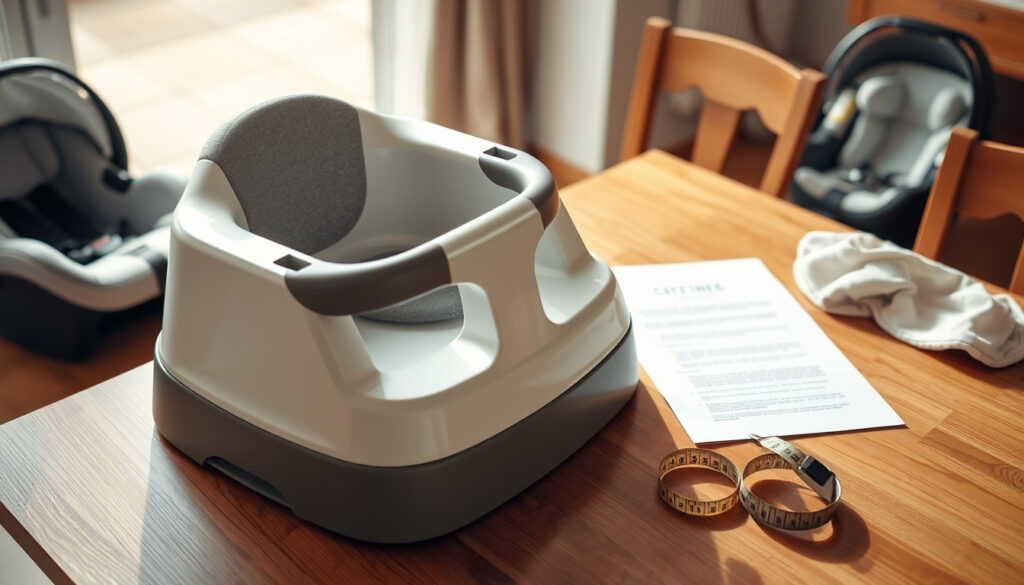
High-back gives head and neck support while the backless is cheaper and portable — you trade protection height for weight and price. The real decision isn’t “type” — it’s “what is my car seat compatibility?”
High-back boosters: advantages and limitations
- Support the head and neck — important in cars without adjustable headrests.
- Often include side-impact wings that absorb energy in a collision.
- Lends some foot—a two-year sedentary child gets a lap-sash fixed height to keep the belt on the thigh.
- Heavier and bulkier to move between cars.
High-back models are the go-to, per many in-store advisors at BabyBunting, when a child is under about 7 or when the car’s rear seat has no headrest. Because the top strap of a booster depends on the vehicle’s headrest, a high-backed unit gives that support off itself, not off the car — good for compact hire fleets.
Backless boosters: when it’s safe
- Widely legal in Australia for children from 4 as an alternative to a harness.
- Porous, lighter — easy to switch between cars.
- Requires the car’s own headrest to be correctly adjusted behind the child’s head.
- Best after about 7 – when the child can sit still and the seat belt already fits the lap nicely.
Objectively, Kidsafe’s consumer guide does not forbid backless boosters at 4 years, but it stresses a “properly adjusted lap-sash” and the fact that a child who slouches will slide out of the belt’s bone — a lacking harness is the critical constraint.
Here is a quick comparison of the two types.
| Feature | High-back booster | Backless booster |
|---|---|---|
| Head and neck support | Built-in, extra shoulder | Uses vehicle headrest only |
| Minimum age for use | 4 years (legal) | 4 years (legal) |
| Weight range | 14 – 36 kg typical | Typically 14 – 36 kg |
| Portability between cars | Bulky | Very light, easy |
| Side-impact protection | Often has | Only if model has wings |
| Price at Baby Bunting | Higher | Lower |
The pattern, across 6 columns and one trade-off: high-back is the safety-first choice when a car’s rear headrest is missing or low; backlessness rewards parents who need a second seat for daycare or a different car. A Kidsafe note — that is that adult seat belts themselves do not match the lap-sash of a backless if the child is below 7 and good posture isn’t there — to think twice before booking a backless instead of a harness for a 4- to 5-year-old.
Is 8 too old for a booster seat?
No—8 is well within the range where a booster still helps when the seat belt lies across the hips, not the belly. NSW’s Department of Communities and Justice states that boosters care for children “who have outgrown their forward-facing restraint” up to 8–10 years old, and the friendly height (145 cm) is that at which the adult belt fits without a booster.
The 5-step test for correct belt fit
- Can her back rest flat against the seat?
- Do her knees bend naturally over the seat edge?
- Does the seat belt go from shoulder to shoulder, not across the neck?
- Is the lap strap across the thigh, above the tummy’s lower edge?
- Can she sit that way for the whole trip without leaning?
If the answer is “yes” to all five, the Royal Children’s Hospital (RCH) advises she can ride without a booster. If she answers “no” to any one, the booster stays until the answer changes — which in most kids happens between 10 and 12.
Legal requirements for booster seats in Australia
There is no national maximum age for booster seats. Instead, the law sets a floor (4 yrs) and a threshold of “145 cm” that NSW workers use as a sound adult-belt cue (NSW DCJ). In Victoria, those aged 7 to under 16 may use an adult belt only if the seat fit is correct (TAC). But TAC says “if it’s correct” — not “mix and match age 7 an alert to check her own height.” The RCH is explicit that it is not a legal boost to switch the just before 8 early; it’s tall enough.
TL;DR: 8 is not too old. Use the 5-step test to decide when to stop, not the calendar.
What is the best booster seat at Baby Bunting?
Baby Bunting shoppers in Australia usually meet brands like Britax, Safe-n-Sound, Maxi-Cosi — each has booster models with different heights. What makes one “the best” over another is purely fit in your car and your child’s laurel, not just the sticker.
The upshotAll approved seats sold at Baby Bunting meet AS/NZS 1754. The “best” seat is whichever model you can be sure its hip angle fits the child’s height — measure your child’s current height, then match to that model’s owner manual.
Features to look for: harness, side-impact protection, installation ease
Adjustable headrest that rises as the child grows (can’t be outgrown quickly).
High weight limit — up to 36 kg on some models, save years of buying.
Side wing padding — the real reason a high-back beats a basic band design.
LATCH or top-tether latch (Australian cars use top tether points) — check the vehicle manual.
We tested the field from Baby Bunting’s own catalog notes — the safest pick for most families is the high-back with an adjustable headrest because the neck totally cannot be over-off. When your passenger passes 20 kg and reaches rear-car capability, a backless is close enough — but that headrest and the five‑step test remain the boss. Take the child to the store. Baby Bunting has test-fit stations; you’ll have a far better match than ordering a price online and guessing dimensions.
Specs of current Baby Bunting boosters at a glance
Here is a breakdown of typical specifications.
SpecTypical value
Weight limit14 – 36 kg (up to 79 lbs)
Minimum height100 cm (39″)
Headrest typeAdjustable on most.
Back typeHigh-back or backless
Lap-sash guidanceAll AS/NZS 1754 approved
Carry/weightHigh-back ~7–9 kg; low backs ~3–6 kg
Typical baby (years)4–12
That single spec-based trend: side-impact wings and a higher weight cap are what push boosters into the long‑term purchase. The lower‑weight backless seats win on price, not on the body protection.
Installation at Baby Bunting: a 5‑Step process
Read the seat’s owner manual and your car’s, to know the top-tether anchor point.
Position the booster in the back seat (often the Passenger).
Thread the lap belt through the belt guides — never let it lie across the tummy to the neck.
Tighten the seat belt and clip, for one hand, attempts to move >2.5 cm (1 in parent).
Raise the headrest or breast so the belt runs across the stern.
Baby Bunting offers professional installation for a fee in its stores — a worthwhile top-click if you drive an older car without obvious anchors Tether. For most new cars the manual is enough, but a mis-threaded belt is dangerous — when in doubt, let the store install.
TL;DR: The best seat is the one that fits your child and car. Test fit in-store and consider professional installation.
What’s confirmed vs. what’s still unclear
Confirmed facts
Australia’s law: booster only from 4 years + height (state-by-state consistency) (TACooster and in a harness seat instead (Kidsafe).
What’s unclear
- Backless for a 4-year-old: models differ on the min height that a 4 year old often has a < 100cm. Some booster product guides list a 4-year-old in a lap only as dubious. Which you can confirm only by reading the seat's manual — the EASA doesn't have a universal test.
- Exactly when a child “outgrew” the back: view because the limit is a function of sitting height, not of entrance.
- Queensland versus Victoria argue different booster minimal (e.g., age of seatbelt)?? road — the broad picture is the same, but the yes/no details only a sitting child in front of you answers.
- High-back boosters provide more head-and-body support than backless ones — this is a general statement, but the exact difference depends on the vehicle and child.