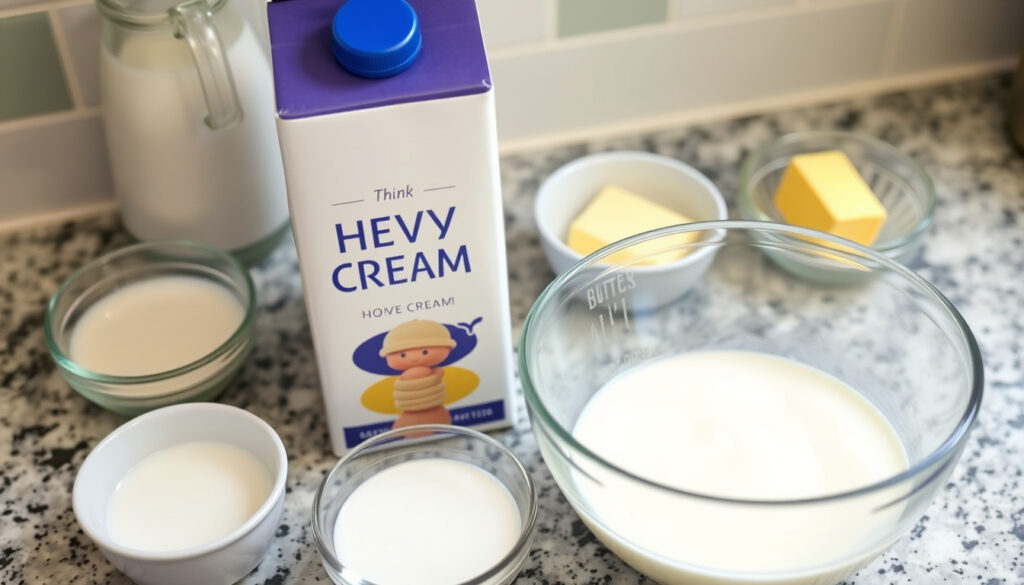
What Is Heavy Cream? Definition, Substitutes, and How to Make It
Fat content is the single variable that separates heavy cream from every other dairy cream. In the U.S., heavy cream sits between whipping cream and double cream on a spectrum defined entirely by milk fat percentage — and that difference dictates stability, richness, and how each behaves in a recipe.
Fat content of heavy cream: 36–40% milk fat · Calories per tablespoon (15 ml): 52 calories · Difference with whipping cream: Whipping cream has 30–36% fat · Shelf life (unopened, refrigerated): 2–3 weeks
Quick snapshot
- A dairy product with 36–40% milk fat (U.S. Dairy (industry authority))
- Also called heavy whipping cream in some regions (U.S. Dairy (industry authority))
- Used for whipping, sauces, soups, and desserts (U.S. Dairy (industry authority))
- Whipping cream has 30–36% fat (U.S. Dairy (industry authority))
- Heavy cream is more stable for stiff peaks (U.S. Dairy (industry authority))
- Whipping cream is lighter and preferred in some recipes (U.S. Dairy (industry authority))
- Milk + butter (1 tbsp butter per 1 cup milk)
- Half-and-half (10–18% fat) – thinner result
- Coconut cream for dairy-free
- Buttermilk (tangy flavor, less fat)
- Melt butter and combine with whole milk (Mashed (food journal))
- Use a blender for emulsification (Mashed (food journal))
- Can also reduce milk with added butterfat (Mashed (food journal))
Heavy cream’s fat content — 36% to 40% — determines how it behaves in the kitchen, from stiff-peak whipped cream to stable sauce emulsions.
| Attribute | Value |
|---|---|
| Milk fat content | 36–40% by weight |
| Serving size (USDA reference) | 1 tablespoon (15 ml) |
| Calories per serving | 52 kcal |
| Total fat per serving | 5.5 g (8% DV) |
| Saturated fat per serving | 3.5 g (18% DV) |
| Protein per serving | 0.3 g |
Is double cream and heavy cream the same?
A common question from anyone following a British or Australian recipe. The short answer: not exactly, but they’re close cousins.
What is double cream?
- British double cream is commonly around 48% milkfat, making it richer and thicker than U.S. heavy cream (U.S. Dairy (industry authority)).
- Australian double cream is typically 45% to 50%+ milk fat (Better Homes & Gardens Australia (lifestyle publication)).
What is heavy cream called in the UK?
In the UK, “heavy cream” is not a standard term. The closest equivalent is double cream, though it is significantly thicker. For U.S. recipes, British cooks often use whipping cream (around 38% fat) or double cream diluted slightly.
Are heavy cream and double cream interchangeable?
They can be swapped with caution. Double cream produces a denser, richer result and holds peaks more firmly. If substituting double cream for heavy cream, you may need to thin it with a splash of milk. Conversely, using heavy cream in place of double cream may yield a looser texture.
The pattern: The fat gap (36–40% vs 48%) changes mouthfeel and stability. Choose double cream when richness matters more than precision; stick with heavy cream for controlled whipping.
What is the difference between heavy cream and whipping cream?
Within the U.S. dairy aisle, this is the most common fork in the road.
What is the fat content of heavy cream?
Heavy cream, also sold as heavy whipping cream, contains 36–40% milk fat by weight (U.S. Dairy (industry authority)).
What is the fat content of whipping cream?
Whipping cream contains 30–36% milk fat (U.S. Dairy (industry authority)). The 6-point difference changes how each behaves in cooking.
When to use heavy cream vs whipping cream
- Heavy cream is better for sauces and soups because higher fat stabilises emulsions and prevents curdling (Chemistry LibreTexts (academic reference)).
- Whipping cream whips into lighter, fluffier peaks, ideal for toppings where you want less density.
Why this matters: If your recipe requires stiff peaks that hold shape under piping, heavy cream is the safe bet. For a soft, airy finish on desserts, whipping cream works without overloading fat.
What is a substitute for heavy cream?
Running out of heavy cream is common, but several pantry staples can step in.
Can I use milk instead of heavy cream?
Yes, but with adjustments. Whole milk (3.5% fat) alone will produce a thinner, less rich result. To compensate, add 1 tablespoon of melted unsalted butter per cup of milk (Mashed (food journal)).
Can I use buttermilk instead of heavy cream?
Buttermilk is lower in fat (1–2%) and has a tangy flavour. It can replace heavy cream in baked goods that benefit from acidity, but not in sauces or whipped preparations.
What is a good vegan substitute for heavy cream?
Coconut cream (the thick part of canned coconut milk) has a fat content similar to heavy cream — around 34–38% — and works well in curries, soups, and even whipped desserts. For a neutral flavour, blended silken tofu with a little oil can also mimic the richness.
The trade-off: Every substitute changes fat, flavour, or thickness. Match the substitute to the recipe: butter + milk for general cooking, coconut cream for dairy-free, buttermilk for tangy bakes.
For cooks in the U.S., butter-enriched milk is the most reliable emergency swap — it hits nearly the same fat range as heavy cream without altering flavour. For vegan and lactose-sensitive households, coconut cream delivers comparable richness with a distinct taste profile.
How do I make heavy cream if I don’t have it?
You can approximate heavy cream in minutes with common ingredients. The method relies on combining a fat source (butter) with a liquid base (milk) to reach roughly 35% fat.
How to make heavy cream with milk and butter
Recipe: Combine 1 tablespoon of melted unsalted butter with 1 cup of whole milk. Stir vigorously or blend for 10 seconds. This yields about 1 cup of cream at approximately 35% fat (Mashed (food journal)). Use immediately for cooking or sauces; for whipping, chill thoroughly first.
How to make whipped cream from heavy cream
If you do have heavy cream, making whipped cream is straightforward: chill the cream, bowl, and beaters for 15 minutes. Beat on medium-high until soft peaks form (about 1–2 minutes), then add sugar or vanilla if desired. Continue to stiff peaks for piping.
Can you make heavy cream from powdered milk?
Reconstituted powdered milk is too low in fat (0.5–1%) to mimic heavy cream. However, you can add melted butter to rehydrated powdered milk — use 1 tablespoon butter per 1 cup prepared milk — to raise the fat content into the heavy cream range.
The catch: Homemade heavy cream works well for cooking and baking, but it may not whip into stiff peaks as reliably as store-bought, because the butterfat dispersion is coarser. For whipped toppings, splurge on the real thing.
What happens if I use milk instead of heavy cream?
Milk has only 3.5% fat compared to heavy cream’s 36%+ — a tenfold difference. The effect on your dish can be dramatic.
Will milk affect the texture of my recipe?
Yes. Using milk alone results in thinner, less rich dishes and reduces mouthfeel (Chemistry LibreTexts (academic reference)). Soups lack body, sauces may break, and whipped preparations are impossible.
How to thicken milk when you don’t have heavy cream?
Two common fixes: add a tablespoon of melted butter per cup of milk (follow the substitution above), or use a cornstarch slurry — 1 tablespoon cornstarch mixed with 2 tablespoons cold milk per cup of milk. Heat gently until thickened.
What can I add to milk to make it like heavy cream?
Butter is the most direct fix because it adds fat without altering flavour. For a non-dairy option, blend silken tofu with a splash of oil. Neither will whip, but both improve texture in cooked dishes.
Using milk in place of heavy cream for whipping is futile — the low fat content prevents stable foam formation. Even with gelatin (a common internet hack), results are unpredictable and rarely hold.
For home cooks: The simplest route is butter enrichment. It turns milk into a rough heavy cream equivalent without extra ingredients. For vegan needs, coconut cream is the closest substitute in fat and texture.
The three primary cream types form a spectrum governed by fat percentage.
| Attribute | U.S. Heavy Cream | U.S. Whipping Cream | UK Double Cream |
|---|---|---|---|
| Fat content | 36–40% | 30–36% | ~48% |
| Common uses | Sauces, soups, stiff whipped peaks | Toppings, mousses, lighter desserts | Puddings, scones, rich custards |
| Availability | Widely in U.S. supermarkets | Widely; often labelled “whipping cream” | Standard in UK, also in Australia, NZ |
| Can you whip it? | Yes, holds stiff peaks | Yes, lighter peaks | Yes, very dense peaks |
Heavy cream, whipping cream, and double cream form a spectrum — the fat percentage dictates everything from stability to richness.
Here is a summary of heavy cream’s key specifications.
| Specification | Value |
|---|---|
| Milk fat content | 36–40% |
| Calories (per tbsp) | 52 kcal |
| Saturated fat (per tbsp) | 3.5 g (18% DV) |
| Protein (per tbsp) | 0.3 g |
| Shelf life (unopened, refrigerated) | 2–3 weeks |
| Difference vs whipping cream | 6 percentage points more fat |
Confirmed facts vs. what’s unclear
Confirmed facts
- Heavy cream contains 36–40% milk fat (USDA standard) (U.S. Dairy (industry authority)).
- Heavy cream and whipping cream differ only in fat content (U.S. Dairy (industry authority)).
- Milk can be thickened with butter to approximate heavy cream (Mashed (food journal)).
What’s unclear
- The exact conversion from milk to heavy cream by weight is not officially standardized — home methods vary.
- Some recipes claim you can whip milk with gelatin, but stable foam is not guaranteed.
What experts say
“Heavy cream is defined as having at least 36% milk fat.”
— U.S. Dairy (industry authority)
“Double cream is 48% fat; heavy cream is 36% to 38%.”
— Allrecipes (food publisher)
Editor’s note: Heavy cream sits in the middle of the fat spectrum — richer than whipping cream, leaner than double cream. For home cooks, the single most practical takeaway is the butter-and-milk fix, which brings you within 2–3% of true heavy cream without a trip to the store. For bakers in the U.S. looking to replace double cream in British recipes, dilute double cream with a little milk — or accept a slightly thinner result. The choice between heavy and whipping cream comes down to whether you need stiff peaks (heavy) or a lighter touch (whipping).
Related reading: **4 Tbsp Butter to Grams** · **Christmas Crack Recipe NZ**
whatscookingamerica.net, chowhound.com, foodrepublic.com, bcdairy.ca, onesarcasticbaker.com, bitget.com, getmecooking.com
Frequently asked questions
What to use if you don’t have milk or heavy cream?
Use coconut cream for dairy-free richness, or blend silken tofu with a splash of oil. Neither will whip, but both work in cooked dishes.
How much milk is equal to heavy cream?
By volume, 1 cup of milk plus 1 tbsp melted butter approximates 1 cup of heavy cream. By fat content, milk alone has 3.5% vs. 36% — they are not interchangeable without fat adjustment.
Can you give me a recipe for heavy cream?
Melt 1 tablespoon unsalted butter, whisk it into 1 cup whole milk. That yields about 1 cup of ~35% fat cream substitute. Use immediately for cooking; chill for whipping.
Can I freeze heavy cream?
Yes, heavy cream freezes well for up to 3 months. Thaw in the fridge and whisk to re-emulsify. It may separate slightly but is fine for cooking; whipped cream does not freeze well.
Does heavy cream need to be refrigerated?
Yes. Heavy cream must be kept refrigerated at 40°F or below. Unopened, it lasts 2–3 weeks past the sell-by date; once opened, use within 7–10 days.
How long does heavy cream last?
Unopened: 2–3 weeks refrigerated. Opened: 7–10 days. Signs of spoilage include sour smell, curdled texture, or mold.
More related posts
 New Zealand China Tourism MOU – Faster Visas, Expanded Options
 Fiordland Heavy Rain Watch: Status, Warnings & Safety Tips
 Jenny-May Clarkson: Biography, Family, and Why She Left Breakfast
 What Is Accounts Receivable? Definition, Examples, and Recording
 What Does the Green Dot Mean on Snapchat
 Christchurch to Invercargill Flights: Times, Prices & Booking
 Dog Years to Human Years: Calculate Your Dog’s Real Age
 Christmas Crafts for Kids: 75+ Easy Ideas & Fun Projects