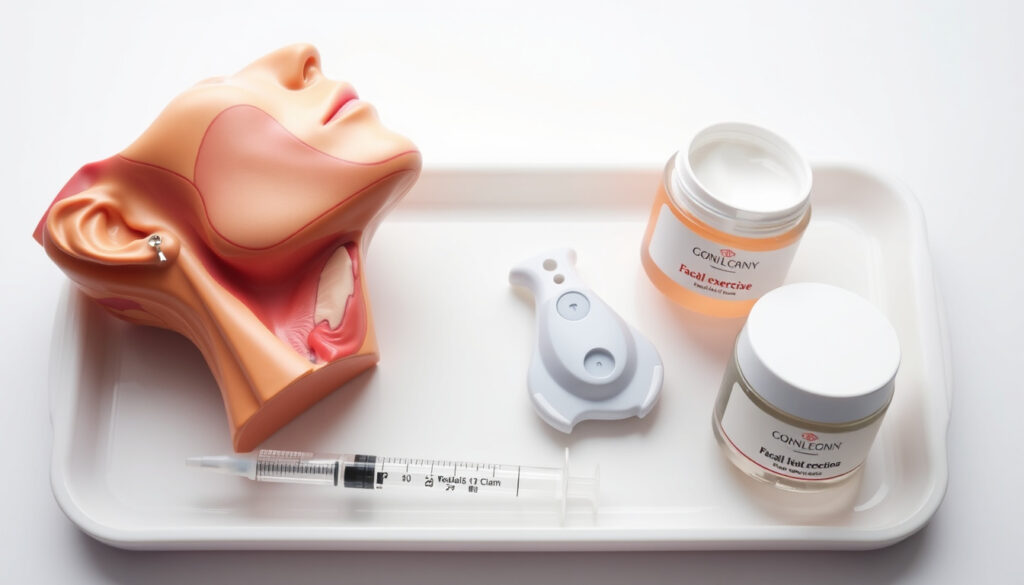
How to Get Rid of a Double Chin: Fast, Natural, or Medical Fixes
Few cosmetic frustrations live closer to the surface than a double chin — it shows up in photos, video calls, and sometimes even when your posture is perfect. It isn’t always about weight: Medical News Today (health journalism outlet) points to genetics and posture as two overlooked causes of submental fullness. The difference between what actually works — exercises, diet changes, injectables, surgery — and internet filler comes down to matching the fix to the real cause.
Adults affected: Roughly 30% of adults have a noticeable double chin ·
Body-fat lever: A 5–10% drop in total body fat often visibly reduces chin fat ·
Injectable satisfaction: Clinical studies report up to 80% satisfaction with deoxycholic acid
Quick snapshot
- Submental fullness can come from excess fat, loose skin, or both (Cleveland Clinic (clinical health resource)).
- Genetics can direct fat to the chin even at a normal body weight (Medanta (multispecialty hospital)).
- Diet and exercise are first-line measures when weight is the cause (WebMD (consumer health publisher)).
- Whether any single exercise can spot-reduce chin fat — the evidence says no.
- The exact body-fat percentage that erases a double chin for every person.
- Whether chewing gum does anything beyond working the jaw muscles.
- Surgery gives immediate structural results; non-surgical treatments take weeks.
- Consistent lifestyle changes typically show in 4–8 weeks.
- Injectable treatments work gradually, often across multiple sessions.
- If weight is the driver: sustained calorie deficit plus regular exercise.
- If posture is the driver: chin tucks and screen-height fixes.
- If genetics or skin laxity is the driver: explore injectables or liposuction.
Six facts set the table for everything that follows — what the condition is called, what causes it, and how different treatments compare on permanence.
| Fact | Detail |
|---|---|
| Medical name | Submental fat, described clinically as submental fullness (IDCC Health (dermatology clinic)). |
| Primary causes | Excess fat from weight gain, genetics, posture, or age-related skin laxity. |
| Non-surgical gold standard | Injections of deoxycholic acid (Kybella) to destroy fat cells. |
| Surgical gold standard | Liposuction or neck lift. |
| Exercise effectiveness | Strengthens chin muscles and improves appearance but does not reduce fat. |
| Time to visible lifestyle results | Usually 4–8 weeks with consistent diet and exercise. |
| First-line lifestyle plan | Healthy diet and regular exercise. |
| Age factor | Loose skin from aging can mimic a double chin. |
How can I lose my double chin fast?
The honest answer: fast is possible, but only with a medical procedure. Liposuction changes the chin profile in one session, while non-surgical methods like injectable deoxycholic acid work over weeks. Anything promising “no double chin in 5 days” without a clinic visit is not physiology.
Realistic timelines for non-surgical methods
- Surgical liposuction of the submental area: immediate fat removal in one session, followed by weeks of swelling.
- Injectable deoxycholic acid (Kybella): destroys fat cells gradually; most people need several sessions over weeks.
- Lifestyle changes: 4–8 weeks of consistent diet and exercise before the profile visibly shifts.
The useful mental model is that surgery removes fat, injectables dissolve it, and lifestyle shrinks it. Only the first is truly fast. What doesn’t work is exercising a specific body part into submission — the Cleveland Clinic (clinical health resource) notes that no single exercise can remove fat from just one area of the face.
That makes “fast” a trade-off question: how much money, recovery time, and procedure risk are you willing to exchange for a quicker jawline?
Exercises that target submental fat
- Chin tucks: strengthen the deep neck flexors and encourage a longer, straighter neck line.
- Platysma stretches and neck tilts: target the thin muscle sheet under the chin.
- Facial yoga and tongue presses: improve muscle tone and circulation in the lower face.
These exercises are worth doing, but they firm the muscles under the skin — they don’t shrink the fat pad above them. Looking down at phones or laptops can weaken neck muscles and exaggerate fullness under the chin, according to Dr. Sterry (aesthetic surgery practice), so posture work is the part of this list with a real mechanism.
Dietary changes for quick fat loss
- Cut excess calories: a high-calorie diet contributes to fat accumulation under the chin.
- Limit processed foods and unhealthy fats: diet patterns built on them tend to drive overall weight gain.
- Eat more whole foods: fruits, vegetables, and whole grains are the standard first-step guidance.
There is no “double chin diet,” because the chin doesn’t get a separate digestive system. Lower your total calorie intake, and your body draws from all its fat stores — the chin usually becomes less prominent simply because it’s part of the whole.
Before-and-after images that promise a “double chin gone in 5 days” are usually angle, lighting, and a tighter camera crop. No exercise spot-reduces chin fat, and no diet can outrun that rule — if a fix doesn’t mention calories or a clinic, treat it as marketing.
The trade-off is the whole story: you can have fast and invasive, or slow and natural. What you can’t have is fast and natural — biology doesn’t negotiate that.
Do double chins ever go away?
Yes, but “goes away” means different things depending on the cause. Weight-related fullness can disappear with sustained fat loss; genetic, structural, and skin-related fullness needs a specific treatment.
Can a double chin resolve on its own?
- Weight gain is not always the cause of a double chin, but it can contribute to it (Medical News Today).
- Even a few extra pounds can make submental fat more prominent in some people, according to Portland Plastic Surgery Group (cosmetic surgery practice).
- A double chin caused by weight gain usually fades when the weight stays off.
If your double chin tracks with your weight, the pattern is straightforward: reduce total body fat, and the chin reduces with it. That’s exactly why healthy diet and regular exercise are the first-line lifestyle measures recommended by WebMD (consumer health publisher) for weight-related fullness.
Medical treatments that permanently remove fat
- Injectable deoxycholic acid (Kybella): destroys fat cells under the chin permanently.
- Liposuction: physically removes submental fat in one session.
- Neck lift: removes excess skin for the laxity cases that fat treatments can’t fix.
The word that matters is “permanent.” Once deoxycholic acid or liposuction removes fat cells, they don’t regenerate — although the fat cells that remain can still expand if you gain weight later.
When lifestyle changes are not enough
- Loose skin from aging can contribute to the appearance of a double chin.
- Genetics can keep chin fat present even at a healthy body weight.
- There is no way to alter genetics, but there are ways to correct the double chin itself.
This is the group that gives the double chin its unfair reputation: people who dieted, exercised, and still see fullness in the mirror. The cause simply isn’t fat in their case.
Why do I have a double chin but I’m skinny?
This is the question that breaks the weight-loss advice loop. If you’re lean and still have submental fullness, genetics, posture, or skin are usually responsible.
Genetic predisposition to submental fat
- Genetics can cause fat to deposit under the chin even when overall body weight is normal (Medanta).
- Some women who inherit a tendency to store fat beneath the chin notice it regardless of body type or lifestyle, according to Dr. Sterry (aesthetic surgery practice).
- Genes play a role in fat distribution everywhere on the body, the chin included.
The genetic picture is straightforward: your body decides where fat is stored, and for some people the chin is a preferred location. That’s also why two people at the same height and weight can have very different jawlines.
Poor posture and weakened chin muscles
- Forward head posture can create the appearance of a double chin even without excess fat.
- Improving posture may reduce the visual appearance of a double chin, especially when you slump or angle the chin toward the chest (Portland Plastic Surgery Group).
- Long sessions looking down at screens put the neck in exactly that slumping position.
The “tech neck” version of a double chin is posture, not fat. Raise your screen, sit tall, and take a side-angle photo — the difference can be dramatic.
Loose skin from aging or weight loss
- Loose skin from aging can contribute to the appearance of a double chin (Healthline).
- Excess fat or laxity in the area can distort the profile of the chin and jawline (RealSelf, patient review platform).
- A recessed jaw can also make a normal amount of fullness look far more prominent.
Aging shifts where soft tissue sits. A small amount of laxity under the chin reads visually as fullness, which is why many “double chins” in older adults are really loose skin.
A 5–10% reduction in total body fat is the threshold where most people’s chin profiles start to change — photograph your profile monthly in the same light, so you can see progress before you feel it.
The implication: lean doesn’t mean immune. If you’re skinny with a double chin, the cause is probably genetic, postural, or structural — and the fix is posture work, skin treatments, or jawline procedures, not another diet.
Does chewing gum reduce double chin?
Short answer: no — and the longer answer is about why the myth persists.
What chewing gum actually does
- Chewing gum primarily strengthens the masseter muscles, the jaw muscles used for biting.
- It does not significantly reduce submental fat.
- The calorie burn from gum chewing is negligible for fat loss, according to Healthline (medically reviewed publisher).
Muscle vs. fat — the key distinction
- Submental fat sits beneath the skin and above the deeper muscle layers.
- Chewing changes the jaw muscle, not the fat pad under the chin.
- No credible study shows that gum chewing alone reduces a double chin.
Think of it this way: chewing gum is exercise for a muscle, and the fullness you want to remove is fat. Strengthening the muscle behind the fat doesn’t burn the fat in front of it.
What the evidence actually says
- Facial exercises can tighten muscles and improve contour.
- There is no evidence that gum specifically reduces chin fat.
- The realistic role of gum is jaw muscle tone, not fat loss.
If you enjoy chewing gum, keep chewing it — just don’t expect the mirror to change. The muscles you’re working aren’t the ones holding the fat.
The verdict: gum is for the masseter, not the submental fat. Anyone claiming gum melts chin fat is mixing up two unrelated mechanisms.
At what body fat does a double chin go away?
People want a number. Biology gives a range — and then overrides it with genetics.
The role of body fat percentage
- Most men lose visible chin fat below 18% body fat; most women below 25%.
- Fat distribution is highly individual; some people keep a double chin at very low percentages.
- A 5–10% reduction in total body fat often leads to a visible reduction in chin fat.
The 18% and 25% figures are useful anchors, but they’re not rules. The body-fat percentage at which your chin “clears” depends on where your body prefers to store fat.
Individual variability and genetic factors
- Genetics can cause submental fat even at a normal body weight.
- Fat distribution is highly individual — the chin doesn’t follow a universal schedule.
- Lifestyle steps such as a healthy diet and regular exercise can positively affect overall body composition, which may reduce double-chin prominence for some people (Portland Plastic Surgery Group, cosmetic surgery practice).
Two people can train the same, eat the same, and reach the same body-fat percentage — and still have different chins. The difference is genetics.
Estimating your personal threshold
- Track the pattern: does your chin fullness change when your weight changes?
- If yes, a modest 5–10% total body-fat reduction is the most reliable test.
- If no, genetics, posture, or skin laxity is likely in control.
Use a side-profile photo from the same distance and angle, in the same light, every four weeks. That’s a far better gauge than a body-fat scale.
The pattern: body fat sets the baseline, but genetics owns the details. If you’re at a healthy percentage and the double chin remains, the scale was never the variable.
Which double chin treatment should you choose?
Four approaches, one pattern: the faster the visible change, the more clinical and expensive the route.
| Approach | How it works | Time to visible results | Permanence |
|---|---|---|---|
| Diet and exercise | Reduces overall body fat through a calorie deficit and daily activity — the first-line plan for weight-related fullness (WebMD (consumer health publisher)) | 4–8 weeks of consistency | Durable while body fat stays lower |
| Facial exercises and posture work | Strengthens the chin and neck muscles and improves resting head position | 4–12 weeks for better tone | Requires an ongoing routine |
| Injectable deoxycholic acid (Kybella) | Destroys submental fat cells through a series of injections | Gradual, over weeks and sessions | Permanent fat-cell removal |
| Liposuction or neck lift | Surgically removes fat or lax skin under the chin | Immediate structural change; weeks for swelling to settle | Permanent structural change |
The trade-off: you can spend weeks on lifestyle, months on injectables, or one day in surgery. The right choice depends less on what’s fastest and more on what your chin is actually made of — fat, skin, or posture.
A step-by-step plan to reduce a double chin
The order that avoids wasted money and false starts:
- Document your profile. Take a side-view photo in natural light from the same distance, and repeat it every four weeks.
- Fix your screen posture. Long hours looking down at screens weaken neck and jaw muscles; raise the screen to eye level and add chin tucks to your daily routine.
- Run a 4–8 week calorie deficit. Healthy diet and regular exercise are the first-line lifestyle measures when weight is the driver.
- Do facial exercises for tone, not fat loss. Exercise changes muscle, not the fat sitting on top of it.
- Reassess at week 8 with the same camera angle. If the profile changed, continue; if not, move to step 6.
- Consult a dermatologist or plastic surgeon about injectable deoxycholic acid or liposuction for fat that won’t budge at a healthy weight.
The implication: this is a two-month experiment, not a weekend challenge. Give each step a fair trial, and you’ll know exactly which cause you’re dealing with.
What we know vs. what’s still unclear
Medical reviews are clearer about what causes a double chin than about which fix works for every person. Here’s the honest scorecard.
Confirmed facts
- Weight loss reduces submental fat.
- Genetics play a role in where fat accumulates under the chin (Medical News Today).
- Injectable deoxycholic acid permanently destroys fat cells under the chin.
- Facial exercises can tighten chin muscles and improve contour.
What’s unclear
- Whether any single exercise can spot-reduce chin fat — the evidence suggests no.
- The exact body-fat percentage that eliminates a double chin for every individual.
- Whether chewing gum can meaningfully reduce chin fat — no credible study supports it.
- Whether posture correction removes fullness or mostly reduces its appearance.
- Whether any specific diet can target chin fat beyond general weight management.
The pattern: the claims that survive scrutiny are boring — weight matters, genetics matter, and permanent fat removal is a medical procedure, not a home remedy.
Expert voices on double chin solutions
Two medical sources frame the debate better than any comment section.
“You can’t lose fat from one specific area by doing exercises for that area.”
“Eat more fruits and vegetables, replace refined grains with whole grains, and avoid processed foods.”
The connection between the two quotes is the whole article: exercise changes structure, diet changes fat, and knowing which one you need is the actual skill.
A double chin is not one problem. It’s a fat problem, a posture problem, a genetics problem, or a skin-laxity problem — and the fix only works when it matches the cause. The evidence-backed options are well documented: calorie deficits for weight gain, chin tucks and screen height for posture, injectables and surgery for fat and skin that won’t move. For the skinny person whose double chin survives every diet, the implication is clear: see a dermatologist, or keep losing time to DIY fixes aimed at the wrong cause.
medicalnewstoday.com, drfoudaneel.com, cutislaserclinics.com, portlandplasticsurgerygroup.com, realself.com, drsterry.com, skinworksny.com
Frequently asked questions
Can a double chin be removed without surgery?
Yes. Injectable deoxycholic acid (Kybella) destroys fat cells under the chin and is the main non-surgical route, while diet and exercise help when excess weight is the cause.
What is the best exercise to get rid of a double chin?
No exercise has been shown to spot-reduce chin fat, so “best” is really about muscle tone and posture: chin tucks, neck tilts, and tongue presses strengthen the area and improve how the jawline sits.
How long does it take for Kybella to work?
It works gradually. Most people need multiple sessions over several weeks, with visible improvement appearing as the body clears the fat cells destroyed by each injection.
Do chin exercises work for a double chin?
They tighten the muscles and improve contour, which helps posture-related fullness. They don’t shrink the fat pad itself — that requires overall fat loss or a targeted treatment.
Is liposuction for double chin safe?
It is a surgical procedure, so it carries the usual risks of anesthesia and recovery. A qualified plastic surgeon should assess whether your anatomy and health history make it a reasonable option.
Can drinking water help reduce double chin?
No direct effect. Water supports overall health and skin elasticity, but it cannot target fat under the chin. The recognized causes of a double chin are weight gain, genetics, posture, and aging — not dehydration.
What foods cause double chin?
No single food creates a double chin. But a diet high in calories can contribute to fat accumulation under the chin, according to Medanta (multispecialty hospital), and eating patterns built on processed foods and unhealthy fats tend to drive overall weight gain.
Does sleeping position affect double chin?
Sleeping position isn’t listed among the recognized causes in clinical reviews. The usual contributors are weight, genetics, posture during waking hours, and skin laxity.
The through-line: if a double chin fix sounds too simple to be true, it’s probably aimed at the wrong cause.
More related posts
 Whittakers Chocolate Banana Caramel: Review, Buy & Recipe
 Booster Seat Baby Bunting: Age, Laws & Types
 Gluten Free Beer NZ: Certified & Reduced Options Guide 2025
 She’s All That Cast: Main Actors and Characters (1999)
 Cast of Bridge to Terabithia: Full 2007 Movie Actors List
 Air New Zealand Carry-On Size: Official Rules and Limits
 Auckland Airport Flight Cancellations: What to Do
 Exchange Rate NZD to Thai Baht Today: Live Rate & Converter