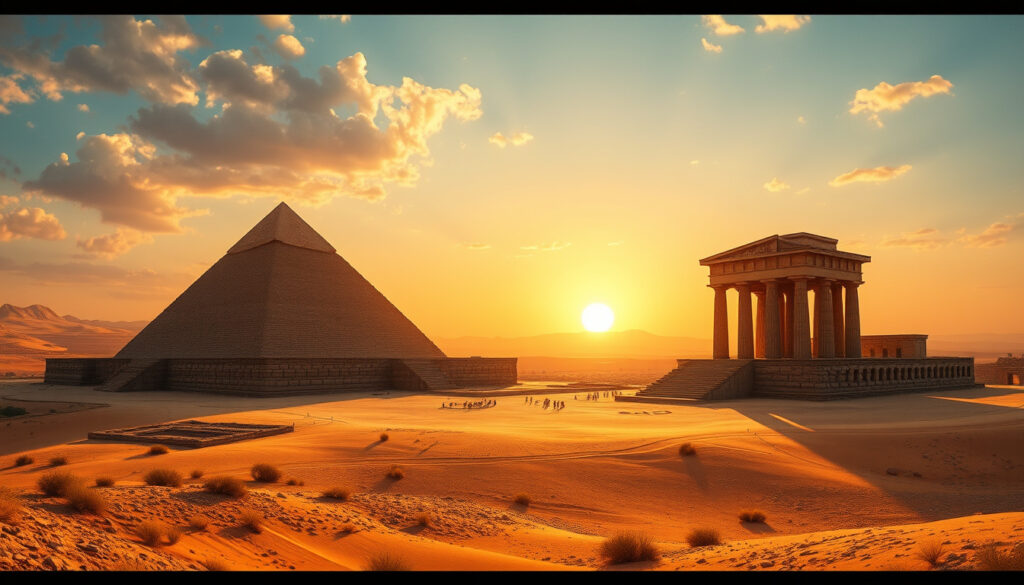
Original 7 Wonders of the World: Complete Guide & List
You’ve probably heard of the Seven Wonders of the World, but the list you grew up with might not be the one your grandparents used. The original 7 wonders of the ancient world were compiled by Greek historians like Antipater of Sidon around the 2nd century BCE, and only one—the Great Pyramid of Giza—still stands today.
Original 7 wonders of the ancient world: 7 sites listed by ancient Greek historians · Only original wonder still standing: Great Pyramid of Giza · New 7 wonders of the world (2007): 7 sites chosen via global poll
Quick snapshot
- Great Pyramid of Giza is the only surviving ancient wonder (Britannica, authoritative encyclopedia)
- The New 7 Wonders list was chosen by popular vote in 2007 (7 Wonders Official, campaign organization)
- Niagara Falls is not on any authoritative ancient or modern wonder list (Britannica, authoritative encyclopedia)
- Exact appearance of the Hanging Gardens of Babylon (Britannica, authoritative encyclopedia)
- Whether all original 7 wonders ever existed simultaneously (Biblical Archaeology Society, archaeological research)
- Which natural wonders list is considered “official” (none are universally accepted) (Britannica, authoritative encyclopedia)
- 2nd century BCE: Antipater of Sidon compiles the first known list (Biblical Archaeology Society, archaeological research)
- 225 BCE: Colossus of Rhodes destroyed by earthquake (Britannica, authoritative encyclopedia)
- AD 1303: Lighthouse of Alexandria destroyed by earthquake (Britannica, authoritative encyclopedia)
- 1997: CNN/USA Today poll creates “7 Natural Wonders of the World” (Britannica, authoritative encyclopedia)
- 2007: New7Wonders Foundation announces New 7 Wonders (7 Wonders Official, campaign organization)
- Continued interest in ancient wonders tourism (HISTORY, historical channel)
- Potential new lists from organizations like UNESCO (HISTORY, historical channel)
- Digital reconstructions of lost wonders via archaeology (HISTORY, historical channel)
Five key facts summarize the core differences between the many wonder lists that circulate today.
| Fact | Value |
|---|---|
| Number of ancient wonders still standing | 1 |
| Year new 7 wonders were announced | 2007 |
| Original list creator | Antipater of Sidon (2nd century BCE) |
| Most visited wonder (modern) | Great Wall of China (~10 million/year) |
| Niagara Falls on official list? | No |
Which are the original 7 wonders of the world?
The standard ancient list, first recorded by Greek writers like Antipater of Sidon (Biblical Archaeology Society, archaeological research), includes seven monumental constructions from the Mediterranean and Middle East. They are:
- Great Pyramid of Giza (Egypt) – built around 2560 BCE, the only one still standing (HISTORY, historical channel)
- Hanging Gardens of Babylon (Iraq) – exact location and appearance unknown (Britannica, authoritative encyclopedia)
- Statue of Zeus at Olympia (Greece) – created by Phidias around 430 BCE, destroyed by fire (Britannica, authoritative encyclopedia)
- Temple of Artemis at Ephesus (Turkey) – famous for its size and art, destroyed by fire (Britannica, authoritative encyclopedia)
- Mausoleum at Halicarnassus (Turkey) – tomb of King Mausolus, built by his widow, destroyed by earthquakes (Britannica, authoritative encyclopedia)
- Colossus of Rhodes (Greece) – bronze statue commemorating a military victory, destroyed by earthquake in 225 BCE (Britannica, authoritative encyclopedia)
- Lighthouse of Alexandria (Egypt) – built on Pharos island around 280 BCE, destroyed by earthquake in AD 1303 (Britannica, authoritative encyclopedia)
The Hanging Gardens of Babylon remain the most elusive wonder. No archaeological evidence confirms their location, and some historians suggest they may have been a literary invention (Britannica, authoritative encyclopedia).
The implication: the ancient list is a historical snapshot of what Greek travelers considered extraordinary, not a fixed canon set in stone.
Do any of the original 7 wonders of the world still exist?
Only one: the Great Pyramid of Giza. The rest were destroyed by earthquakes, fires, or human conflict. However, remnants do survive for some—rubble from the Mausoleum, for example, can still be seen in Bodrum, Turkey (Britannica, authoritative encyclopedia).
- Great Pyramid of Giza – still stands, largely intact, near Cairo (National Geographic Kids, educational publisher)
- Other six – all destroyed; the Colossus and Lighthouse fell to earthquakes, the Temple of Artemis and Statue of Zeus to fires, and the Mausoleum to a combination of wars and earthquakes (Britannica, authoritative encyclopedia)
What this means: The ancient wonders were fragile, and the Great Pyramid’s survival is exceptional. Early lists were not always fixed—some variants included the Walls of Babylon instead of the Lighthouse (Biblical Archaeology Society, archaeological research).
What are the new official 7 wonders of the world?
In 2007, the New7Wonders Foundation conducted a global poll to select a modern set of wonders. The result is often confused with the ancient list, but it is a separate creation (Britannica, authoritative encyclopedia). The winners are:
- Great Wall of China (China)
- Petra (Jordan)
- Christ the Redeemer (Brazil)
- Machu Picchu (Peru)
- Chichen Itza (Mexico)
- Colosseum (Italy)
- Taj Mahal (India)
The New7Wonders list is not endorsed by UNESCO. Many of the sites are UNESCO World Heritage sites, but the list itself holds no official status (Britannica, authoritative encyclopedia).
The pattern: the New7Wonders list reflects early-21st-century travel accessibility and popular taste, not a historical canon.
Has the list of 7 wonders changed?
The original ancient list is a historical artifact—it hasn’t changed because it’s a fixed set from antiquity. Modern lists, like the New 7 Wonders (2007) and the 7 Natural Wonders (1997), are separate creations. Confusion arises when people assume only one list exists (World History Encyclopedia, historical reference).
- Ancient list – fixed, no revisions
- New 7 Wonders (2007) – chosen by popular vote, not a replacement
- 7 Natural Wonders (1997) – from a CNN/USA Today poll, also unofficial
The pattern: each new list reflects the era’s values—travel accessibility in 2007, environmental awareness in 1997—but none supersedes the original.
What were the original 7 Natural Wonders of the world?
In 1997, CNN and USA Today sponsored a poll that produced a list of “7 Natural Wonders of the World.” It is not an ancient or official designation, but it remains popular in travel media (Britannica, authoritative encyclopedia). The list includes:
- Grand Canyon (USA)
- Great Barrier Reef (Australia)
- Harbor of Rio de Janeiro (Brazil)
- Mount Everest (Nepal/Tibet)
- Aurora Borealis (Arctic)
- Paricutin Volcano (Mexico)
- Victoria Falls (Zambia/Zimbabwe)
Other organizations have since created competing natural-wonder lists. None has universal authority. The catch: “natural wonders” are a marketing category, not a historical canon.
Is Niagara Falls a 7 wonder?
No. Niagara Falls does not appear on the original ancient list, the New 7 Wonders list, or the 1997 natural wonders list. It is sometimes called a “wonder” in tourism promotions, but that is a descriptive label, not a formal classification (Britannica, authoritative encyclopedia).
The catch: the confusion persists because of old travel guides that listed regional wonders. Yet no authoritative source—from antiquity to the present—has placed Niagara Falls among the seven wonders.
Why is Niagara Falls no longer a wonder of the world?
It never was part of an authoritative list. The belief that it was “removed” stems from a misunderstanding of local or regional lists that were never globally recognized. Historical consensus is clear: Niagara Falls belongs to the category of “unofficial wonders” (Britannica, authoritative encyclopedia).
The implication: if you’re looking for a wonder to visit, the Great Pyramid or the New 7 Wonders sites are the recognized ones. Niagara Falls is a spectacular natural attraction, but it’s not on the canonical list.
Three lists, one pattern: each serves a different purpose—history, modern popularity, or natural beauty. The original ancient list remains the only one rooted in classical literature.
| List | Year Established | Authority | Notable Examples |
|---|---|---|---|
| Original 7 Wonders (Ancient) | 2nd century BCE | Greek historians (Antipater of Sidon) | Great Pyramid, Hanging Gardens, Colossus |
| New 7 Wonders of the World | 2007 | New7Wonders Foundation (popular vote) | Great Wall, Petra, Christ the Redeemer |
| 7 Natural Wonders of the World | 1997 | CNN/USA Today poll | Grand Canyon, Great Barrier Reef, Aurora Borealis |
Timeline: How the seven wonders lists evolved
- 2nd century BCE – Antipater of Sidon compiles the first known list of Seven Wonders (Biblical Archaeology Society, archaeological research)
- 225 BCE – Colossus of Rhodes destroyed by earthquake (Britannica, authoritative encyclopedia)
- AD 1303 – Lighthouse of Alexandria destroyed by earthquake (Britannica, authoritative encyclopedia)
- 1997 – CNN/USA Today poll creates “7 Natural Wonders of the World” (Britannica, authoritative encyclopedia)
- 2007 – New7Wonders Foundation announces New 7 Wonders of the World (7 Wonders Official, campaign organization)
Clarity: What we know and what remains uncertain
Confirmed facts
- Great Pyramid of Giza is the only surviving ancient wonder (Britannica, authoritative encyclopedia)
- The New 7 Wonders list was chosen by popular vote in 2007 (7 Wonders Official, campaign organization)
- Niagara Falls is not on any authoritative ancient or modern wonder list (Britannica, authoritative encyclopedia)
What’s unclear
- Exact appearance of the Hanging Gardens of Babylon (Britannica, authoritative encyclopedia)
- Whether all original 7 wonders ever existed simultaneously (Biblical Archaeology Society, archaeological research)
- Which natural wonders list is considered “official” (none are universally accepted) (Britannica, authoritative encyclopedia)
The standard ancient Seven Wonders list consists of the Great Pyramid of Giza, Hanging Gardens of Babylon, Statue of Zeus at Olympia, Temple of Artemis at Ephesus, Mausoleum at Halicarnassus, Colossus of Rhodes, and Lighthouse of Alexandria.
— Britannica, authoritative encyclopedia
The modern New 7 Wonders campaign is distinct from the ancient list and was created to select a new set of wonders by public vote.
— 7 Wonders Official, campaign organization
For travelers planning a trip to see the world’s wonders, the choice is clear: visit the Great Pyramid to see the only surviving ancient wonder, or explore the New7Wonders sites for a more accessible experience. The original list remains a historical snapshot, not a travel bucket list—and that’s precisely what makes it timeless.
Related reading: Ovation of the Seas Guide · Free Places to Visit Auckland
en.wikipedia.org, en.wikipedia.org, scalarchives.com, en.wikibooks.org, encyclopedia.com, education.nationalgeographic.org
Frequently asked questions
What is the difference between the original and new 7 wonders?
The original list is from classical antiquity and includes sites like the Great Pyramid and Hanging Gardens. The new list was chosen by popular vote in 2007 and includes modern landmarks like the Great Wall and Petra.
How were the new 7 wonders chosen?
Through a global public vote organized by the New7Wonders Foundation in 2007. Over 100 million votes were cast.
Are the new 7 wonders UNESCO World Heritage sites?
Many of them are UNESCO World Heritage sites, but the New7Wonders list itself is not an official UNESCO designation.
Is the Great Pyramid of Giza part of the new 7 wonders?
No. The Great Pyramid was an honorary candidate but was not included in the final New7Wonders list to avoid confusion with the ancient list.
Can you still visit any of the original 7 wonders?
Yes—the Great Pyramid of Giza is open to visitors. Archaeological remnants of the Mausoleum and Temple of Artemis also exist.
Why is the Grand Canyon sometimes called a wonder?
It was included in the 1997 CNN/USA Today poll of “7 Natural Wonders of the World,” but that list is not ancient or official.
What are the criteria for being a wonder of the world?
There are no universal criteria. The ancient list emphasized monumental scale and artistic achievement; modern lists often rely on popularity or natural beauty.
Which wonder of the world is most visited?
The Great Wall of China attracts approximately 10 million visitors per year, making it the most visited site among the New7Wonders (Britannica, authoritative encyclopedia).
More related posts
 What Time Does It Get Dark? Sunset & Twilight Explained
 In the Lost Lands (2025) Review: Worth Watching
 Wellington to New Plymouth: Flight, Drive, or Bus Options (2025)
 Miss Universe 2025 Winner Fátima Bosch: Controversy & Facts
 Southern Cross Hospital Wellington – Location, Parking, Services
 Jenny-May Clarkson: Biography, Family, and Why She Left Breakfast
 Bike it Now Wanaka: Hours, Reviews, and Cycle Trails Guide