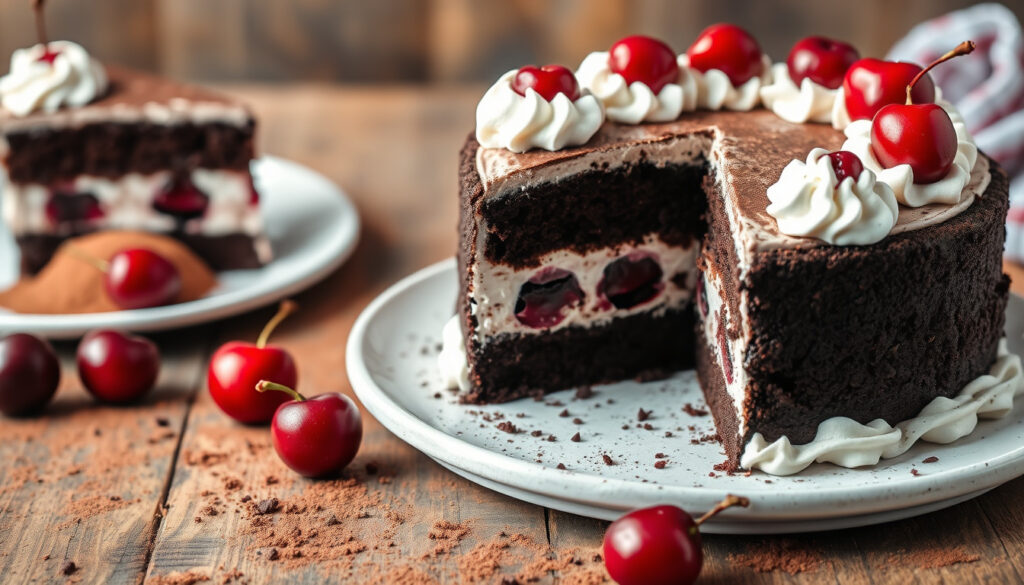
Black Forest Cake Recipe – Authentic Step-by-Step Guide
How Do You Make Black Forest Cake?
Black Forest cake, known as Schwarzwälder Kirschtorte in German, is a layered dessert combining chocolate sponge, Morello cherries, whipped cream, and kirschwasser (cherry brandy). While the traditional version requires several steps, an accessible approach using canned cherries and simple substitutions can yield impressive results at home.
The process divides into four main phases: preparing the chocolate sponges, macerating the cherries, whipping the cream, and assembling the layers. Each stage demands attention, particularly the cream stabilization and proper cooling of cake layers to prevent sogginess.
At a Glance
Key Insights
- Room-temperature ingredients ensure optimal batter rise and even baking
- Stabilizing whipped cream with cornstarch or gelatin prevents collapse during assembly
- Three thin sponge layers create better distribution than a single thick cake
- Allowing assembled cake to chill for 4+ hours lets flavors meld properly
- Cherry juice with almond extract effectively mimics kirsch flavor without alcohol
- Shaving chocolate directly over the cake ensures fresh curls rather than pre-chopped pieces
- Best consumed within 1–2 days for optimal cream and cherry texture
| Attribute | Detail |
|---|---|
| Origin | Germany (Black Forest region) |
| Key Flavors | Chocolate, cherry, cream |
| Traditional Alcohol | Kirschwasser (cherry brandy) |
| Typical Calories per Slice | Approximately 450 |
| Storage Duration | 3–4 days refrigerated |
| Freezer Life | Up to 2 months (without toppings) |
What Are the Ingredients for Black Forest Cake?
The authentic version relies on five core components that create its distinctive character. Each element serves a specific purpose, from structure to flavor balance.
Chocolate Sponge
The foundation consists of eggs, sugar, flour, cocoa powder, and butter. Traditional recipes call for six eggs beaten with sugar until they reach the ribbon stage—a point where the batter falls in thick ribbons from the whisk. This aeration step determines the final texture of the cake layers.
Cherries
Morello or sour cherries provide the signature tartness that contrasts with the sweet cream. These may be jarred, fresh, or frozen, but must be soaked in kirschwasser to absorb the distinctive almond-cherry notes. For non-alcoholic versions, cherry juice combined with almond extract provides a suitable approximation.
Whipped Cream
Heavy cream, powdered sugar, and vanilla form the primary filling and frosting. German standards permit gelatin for stabilization, though home bakers often use cornstarch as a vegetarian alternative. The cream must reach stiff peaks to support the layered structure without wilting.
Kirschwasser
This clear cherry brandy distilled from Black Forest cherries distinguishes the authentic preparation. The European Union granted geographical indication status to the name in 2013, requiring genuine kirsch from the region for official authenticity—a detail that matters significantly for European producers.
Toppings
Shaved dark chocolate and whole cherries with stems complete the presentation. The chocolate curls serve both decorative and flavor purposes, adding bittersweet notes to each slice.
EU regulations mandate kirschwasser combined with whipped cream or buttercream for a dessert to legally bear the Schwarzwälder Kirschtorte name in Europe. Substitutions produce delicious results but technically yield a Black Forest-style cake rather than the authentic article.
What Is Black Forest Cake and Its History?
Schwarzwälder Kirschtorte originated in the Black Forest (Schwarzwald) region of southwestern Germany. The dessert combines chocolate sponge layers with cherries, whipped cream, and kirschwasser, finished with chocolate shavings and whole cherries. Its distinctive appearance—dark chocolate against white cream with red cherry accents—may have inspired one of the competing theories about its name’s origin.
The earliest documented mention of “Schwarzwälder Kirschtorte” appeared in 1915 in Brandenburg an der Havel. However, the invention remains disputed among historians, with multiple claims competing for recognition.
Competing Claims of Origin
Pastry chef Josef Keller (1887–1981) is credited by some sources with creating the cake in 1915 at Café Ahrend in Bad Godesberg, where he allegedly combined kirsch schnapps, whipped cream, and cherries. A 1927 recipe archived in Radolfzell is frequently cited as evidence for this claim. Keller later relocated to Radolfzell, strengthening that town’s association with the recipe.
Tübingen archivist Udo Rauch attributes the invention to Erwin Hildenbrand, suggesting he created the cake in 1930 at Café Walz in Tübingen. The historical record remains incomplete, and definitive proof of either claim continues to elude researchers.
Name Origins
Two main theories explain the cake’s name. The first connects it to Kirschwasser production in the Black Forest region—cherry cultivation has flourished there for centuries. The second theory suggests the cake resembles traditional Black Forest dress: the dark chocolate mimics the black skirt, cream represents the white blouse, and red cherries echo the costume’s distinctive pom-poms.
The recipe gained widespread popularity after Dr. Oetker published their version in 1951, introducing the dessert to home bakers across Germany and eventually worldwide. This standardization helped establish the modern understanding of the cake’s components.
Can You Make Black Forest Cake Without Alcohol?
Absolutely. While kirschwasser provides authentic flavor, several substitutions produce excellent results suitable for children, those avoiding alcohol, or anyone preferring an alcohol-free dessert.
Effective Replacements
Cherry juice serves as the most straightforward substitute—simply use the liquid from canned cherries instead of kirsch. For enhanced flavor complexity, combine cherry juice with almond extract, vanilla, or a touch of lemon juice to approximate the almond-cherry notes kirsch provides. Cherry syrup offers another option, though it adds sweetness that may require adjusting other ingredients.
Egg-Free Adaptations
The aquafaba method uses chickpea liquid whipped with sugar and vinegar to replace eggs entirely. This technique mimics the aeration properties of beaten eggs and works well in the sponge batter when combined with baking powder and baking soda. No gelatin is required, keeping the entire recipe vegetarian-friendly.
Vegetarian Considerations
Traditional recipes sometimes include gelatin to stabilize whipped cream layers. Replacing gelatin with cornstarch or unflavored powdered gelatin alternatives maintains structure without animal products. The remaining ingredients—flour, cocoa, cherries, cream, and sugar—are inherently vegetarian.
Substituting kirsch significantly changes the flavor profile. The almond notes in kirschwasser are difficult to replicate perfectly; readers should experiment with small batches to find their preferred balance before committing to a full cake.
How to Store Black Forest Cake?
Proper storage preserves both safety and quality. The primary concern is the dairy-based whipped cream, which limits how long the assembled cake remains at its best.
Refrigeration Guidelines
Covered loosely with plastic wrap or stored in an airtight container, the cake keeps refrigerated for 3–4 days. Beyond this window, the cream begins to wilt and separate, compromising both appearance and texture. The chocolate sponge itself holds well, but the cumulative effect makes shorter storage preferable.
Freezing Recommendations
The assembled cake freezes adequately for up to two months if prepared without toppings. Freeze without the chocolate shavings and whole cherry garnish—add these fresh after thawing. Place the cake in the refrigerator overnight to thaw gradually, maintaining the cream’s consistency better than room-temperature thawing. For a truly authentic experience, you can find a detailed recipe for Black Forest cake at $Are You There God It’s Me Margaret.
Optimal Serving Timing
Freshness matters significantly with this dessert. The cherries remain plump and the cream stays fluffy for the first 1–2 days. Planning to serve the cake within this window ensures the best eating experience. If hosting an event later in the week, consider freezing the unfrosted layers and assembling fresh.
Step-by-Step Preparation Timeline
Understanding the sequence helps organize baking day effectively. Each phase builds upon the previous one.
- Preparation phase (45 minutes): Gather all ingredients, bring to room temperature, grease three 9-inch pans, and measure components. Position oven rack in the center.
- Baking phase (25–35 minutes): Mix batter, divide among pans, and bake at 350°F (175°C) until a toothpick emerges clean. Cool completely on wire racks—this cannot be rushed.
- Cherry preparation (30 minutes): Drain canned cherries, reserve liquid, combine with sugar, and allow to macerate while layers cool.
- Cream preparation (10 minutes): Whip heavy cream with sugar and vanilla to stiff peaks. Reserve plain portion for outer frosting; optionally fold cocoa into filling portion.
- Assembly and chilling (4+ hours): Layer sponges with cherry juice syrup, cherries, and cream. Apply final frosting coat and garnish. Refrigerate to set before serving.
Making the sponges a day ahead saves time on serving day. Wrap cooled layers tightly and refrigerate overnight. The slightly drier sponges actually absorb syrup more readily during assembly.
What Distinguishes Authentic Black Forest Cake?
The question of authenticity involves both established facts and areas where certainty remains elusive.
| Established Information | Uncertainties |
|---|---|
| Kirschwasser is the traditional alcoholic component | Whether Josef Keller or Erwin Hildenbrand invented the cake |
| Chocolate, cherries, and cream form the core elements | Whether the name references kirsch production or folk costume |
| The cake emerged from southwestern Germany in the early 20th century | Whether 1915 represents creation or merely documentation |
| EU protected designation requires Black Forest cherries since 2013 | Whether earlier 16th-century desserts directly influenced the modern recipe |
| Dr. Oetker’s 1951 recipe standardized home baking | Complete accuracy of specific archived recipes from the 1920s |
Why Black Forest Cake Matters in Baking Culture
The dessert occupies a unique position in European patisserie, representing both technical complexity and regional identity. Its layered construction demands proficiency in multiple techniques—sponge aeration, cream stabilization, and careful assembly—making it a benchmark for intermediate bakers.
The disputed origins actually enhance its cultural significance, reflecting how beloved recipes often evolve through multiple hands and regions before achieving standardized form. The 2013 EU geographical indication status formally recognized this heritage.
Beyond tradition, the cake’s enduring popularity stems from its flavor balance—bitter chocolate against sweet cream and tart cherries creates complexity that satisfies diverse palates. The visual appeal, with contrasting colors and textures, adds presentation value that makes it suitable for special occasions.
Expert Perspectives on Black Forest Cake
The cake’s beauty lies in its contrasts—dark and light, bitter and sweet, the warmth of chocolate against the coolness of cream. In proper German baking tradition, restraint guides the sugar; the fruit and kirsch provide character, not overwhelming sweetness.
Using fresh Morello cherries when available transforms the cake, but canned versions work remarkably well year-round. The key is properly macerating the fruit to absorb the kirsch or its substitute, ensuring every bite carries cherry flavor throughout.
The Complete Black Forest Experience
Making Black Forest cake at home rewards patience and attention to detail. The process, while moderately complex, produces results that commercial versions rarely match—fresh components, proper assembly, and the satisfaction of creating something traditional in your own kitchen.
Whether following the authentic German method with kirschwasser or adapting with accessible substitutions, the essential character remains intact. Like many traditional recipes, the cake invites personal interpretation while honoring its heritage. The journey from ingredient selection through final presentation becomes part of the enjoyment.
Frequently Asked Questions
Can I make Black Forest cake in one day?
Yes. Plan approximately 5–6 hours total, including preparation, baking, cooling, and assembly. The chilling period of 4+ hours is essential, so beginning early in the day allows evening serving.
What’s the difference between Black Forest cake and Black Forest gateau?
Essentially the same dessert. “Gâteau” is the French term often used in English-speaking countries, while “Torte” is the German term. Both refer to layered chocolate-cherry-cream cakes following the Schwarzwälder Kirschtorte tradition.
Can I use frozen cherries instead of canned?
Frozen sour cherries work well if thawed and thoroughly drained before maceration. Fresh Morello cherries, when available, offer the best results but require pitting and may need additional sugar to balance tartness.
How do I prevent my whipped cream from collapsing?
Ensure the cream is very cold before whipping. Add stabilizer (cornstarch slurry or gelatin) during the final stages. Stop whipping at stiff peaks—overworking turns cream into butter. Work quickly during assembly to minimize exposure to room temperature.
Can I reduce the sugar in the recipe?
The traditional German approach uses less sugar than many international versions. You can reduce powdered sugar in the cream by 25–30% without compromising structure. The cherries may also need less sugar depending on their natural sweetness.
Is Black Forest cake suitable for diabetics?
Standard recipes contain significant sugar from multiple sources (batter, macerated cherries, sweetened cream). Diabetic-friendly modifications would require sugar substitutes throughout and careful cherry selection. Consult specific dietary guidelines for appropriate adjustments.
How many layers should a Black Forest cake have?
Traditional recipes specify three layers, though some versions use two thicker layers. Three layers provide better cream-to-cake ratio and easier handling. For taller presentations, some bakers split each layer horizontally, creating six thin layers with cream between each.
Can I add other flavors to Black Forest cake?
Common additions include chocolate shavings between layers, espresso-soaked sponges, or a thin layer of cherry jam. These complement rather than replace the core flavors. Avoid adding too many elements, as the classic combination relies on deliberate simplicity.
More related posts
 Gale Force Winds South New Zealand: Warnings & Safety
 Valentino Born in Roma: Popularity, Reviews & Ireland Guide
 Business Interruption Insurance NZ – What It Covers and How to Claim
 Change of Car Ownership NZ: Official NZTA Guide & Steps
 Grow a Garden Stocks: Rarest Seeds and Stock Trackers
 Benfica vs Real Madrid: Head-to-Head History & 2026 Results
 Star Wars Battlefront 3: Cancellation, Status, and Fan Hopes
 New Zealand Herald Quiz: How to Play & Share Scores